Tips & tricks · October 1, 2026 · 11 min read
Spicy Pickled Onions: A Friendly Guide to Quick Recipes
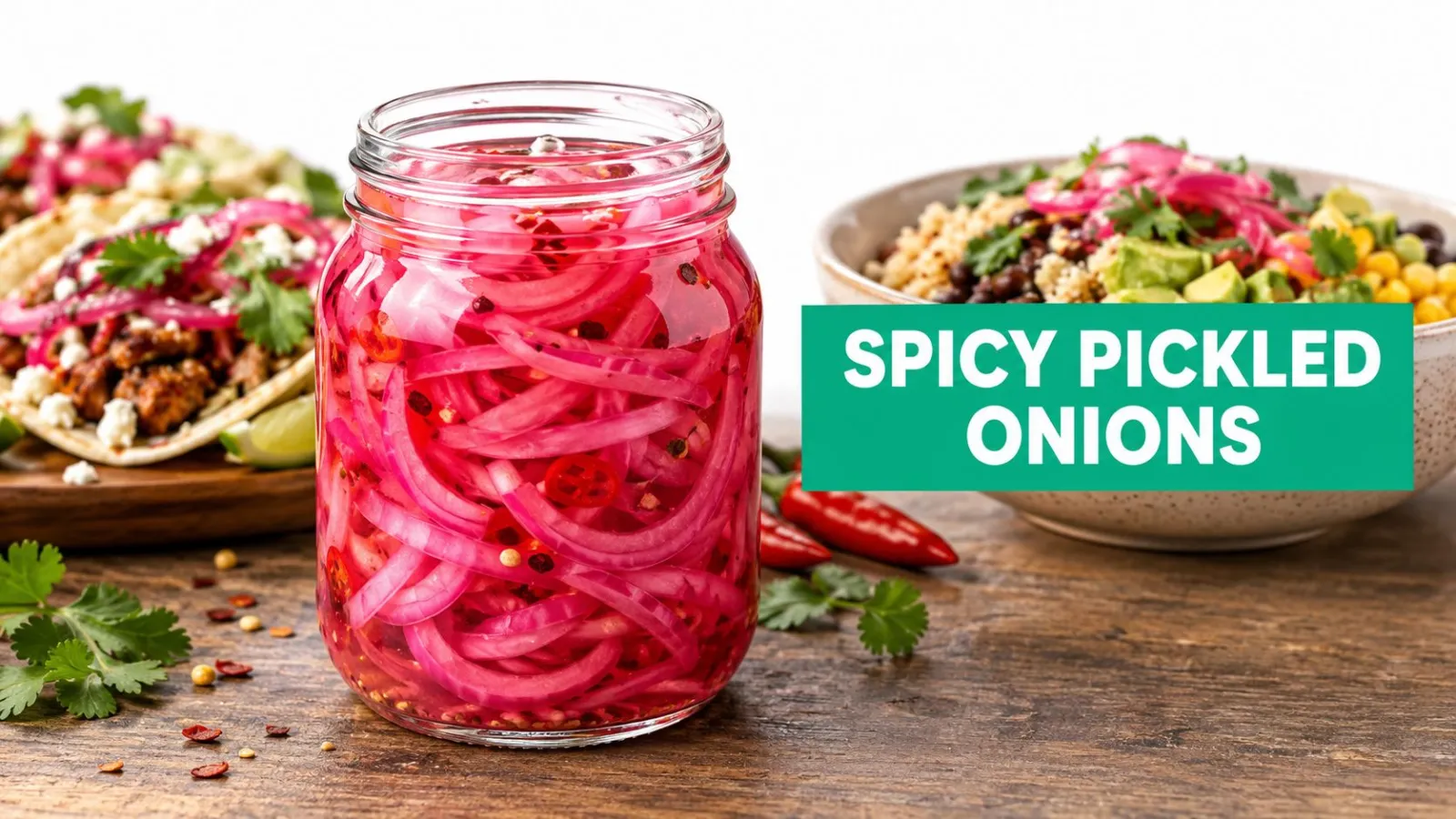
After a long Las Vegas shift, dinner can become a negotiation between an empty stomach and whatever's still in the refrigerator. I like having a jar of bright, chili-stained onions ready for that mome
On this page
- Why a Jar of Spicy Pickled Onions Saves Weeknight Dinners
- Brine Ratios and Ingredients That Actually Work
- How to Quick-Pickle Spicy Onions in Under an Hour
- Quick Pickle Versus True Fermentation
- Flavor Variations from Mild to Seriously Hot
- Storage, Texture, and Serving Suggestions
- Final Thoughts and a Few Honest Kitchen Reminders
After a long Las Vegas shift, dinner can become a negotiation between an empty stomach and whatever's still in the refrigerator. I like having a jar of bright, chili-stained onions ready for that moment. A spoonful over tacos, rice bowls, scrambled eggs, or a sandwich can make a tired meal taste deliberate in under a minute.
I'm Prinal Glassman, an independent Thermomix® Consultant in Las Vegas and a home cook, not a chef. My motto is, “Thermomix? It's a chef... I'm not!” This guide keeps that spirit: practical shortcuts, honest texture advice, and two paths to spicy pickled onions, a quick vinegar pickle for tonight and a true ferment for cooks who want a deeper, slower flavor.
Why a Jar of Spicy Pickled Onions Saves Weeknight Dinners
The best condiment is the one you'll reach for. Spicy pickled onions bring acidity, crunch, color, and heat to food that might otherwise taste flat, especially when the main dish came from leftovers, a meal kit, or a last-minute grocery run.
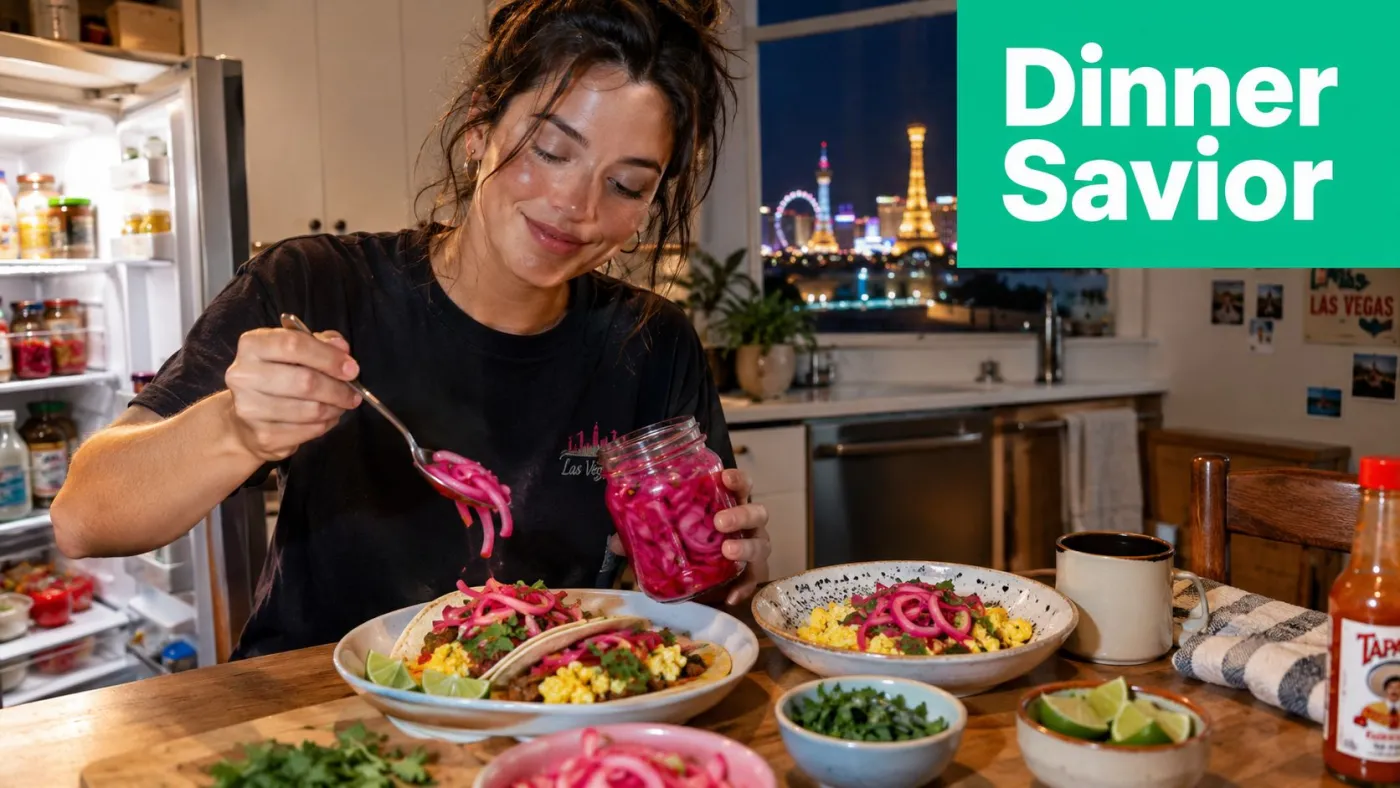
The jar does more than add heat
A taco needs something sharp against rich fillings. A rice bowl benefits from a crisp, sour topping that wakes up beans, chicken, or roasted vegetables. Eggs become more interesting with a few pink onion strands and a spoonful of their spicy brine.
That's why I treat this as a refrigerator essential rather than a special-project recipe. You can make a small batch with pantry basics, adjust the chili level for your household, and use the onions while deciding whether you want to explore fermentation later.
The history behind the technique is surprisingly long. Pickling methods are thought to date to around 2400 BC in Mesopotamia, while the Romans are credited with bringing onions and pickling practices to Britain after AD 43. By the 1700s, pickled onions were gaining popularity there, and Sarah Harrison's 1739 cookbook described soaking small onions in salt water before pickling them in seasoned white wine vinegar. That history of pickled onions makes my weeknight jar feel less like a trend and more like a very durable kitchen habit.
Practical rule: If dinner needs rescuing, add something acidic before adding more salt. Spicy pickled onions often solve the problem faster.
The rest comes down to choosing a brine, slicing evenly, and storing the jar sensibly. You don't need chef technique. You need onions thin enough to absorb flavor and a container you'll remember to open.
Brine Ratios and Ingredients That Actually Work
For a quick pickle, my dependable starting point is a 1:1 ratio of vinegar to water. That balance gives the onions a clear acidic lift without making them taste like they've been marinated in straight vinegar. The water also helps the chili, salt, and sugar distribute rather than concentrating in one harsh mouthful.
Sugar is optional, but I usually add a little when serving the onions with tacos, burgers, or rich bowls. It doesn't need to make the onions sweet. It rounds the sharp edge so the chili and onion can taste more distinct.
True fermentation uses a different foundation. Use salt at 2 percent by weight of the vegetables and any water included in the fermenting mixture. That isn't a vinegar substitute. Salt creates the environment for lacto-fermentation, so weighing the onion and water is more reliable than guessing with a spoon.
Method | Vinegar to Water | Salt Amount | Sugar (optional) | Best Vinegar |
|---|---|---|---|---|
Quick pickle | 1:1 | To taste | Yes, for balance | White distilled |
Quick pickle, softer flavor | 1:1 | To taste | Yes, use lightly | Apple cider |
Quick pickle, delicate profile | 1:1 | To taste | Optional | Rice vinegar |
True fermentation | No vinegar baseline | 2 percent by weight | No | Not required |
White distilled vinegar keeps the brine clean and bright. Apple cider vinegar adds fruity softness, while rice vinegar suits a gentler chili profile. Use non-iodized salt, fine sea salt, or pickling salt for the most predictable results. Coarse crystals can dissolve unevenly if you don't stir well.
Las Vegas tap water can be hard enough to cloud a brine, so filtered water is a sensible small upgrade when the finished jar looks dull. For aromatics, garlic gives savory depth, peppercorns add a dry bite, bay leaves bring a woodsy note, and fresh chilies provide direct heat. Keep the combination restrained at first. A crowded jar can make it difficult to tell what you like.
For more practical kitchen ideas, browse these tips and tricks for everyday cooking.
How to Quick-Pickle Spicy Onions in Under an Hour
Start with a red onion for the classic vivid color, or use a white onion when you want a cleaner, more direct onion flavor. Trim the ends, halve it, and slice from top to bottom into thin, even pieces. Uniform slices matter more than perfect knife work because thick pieces stay harsh while thin ones absorb the brine quickly.
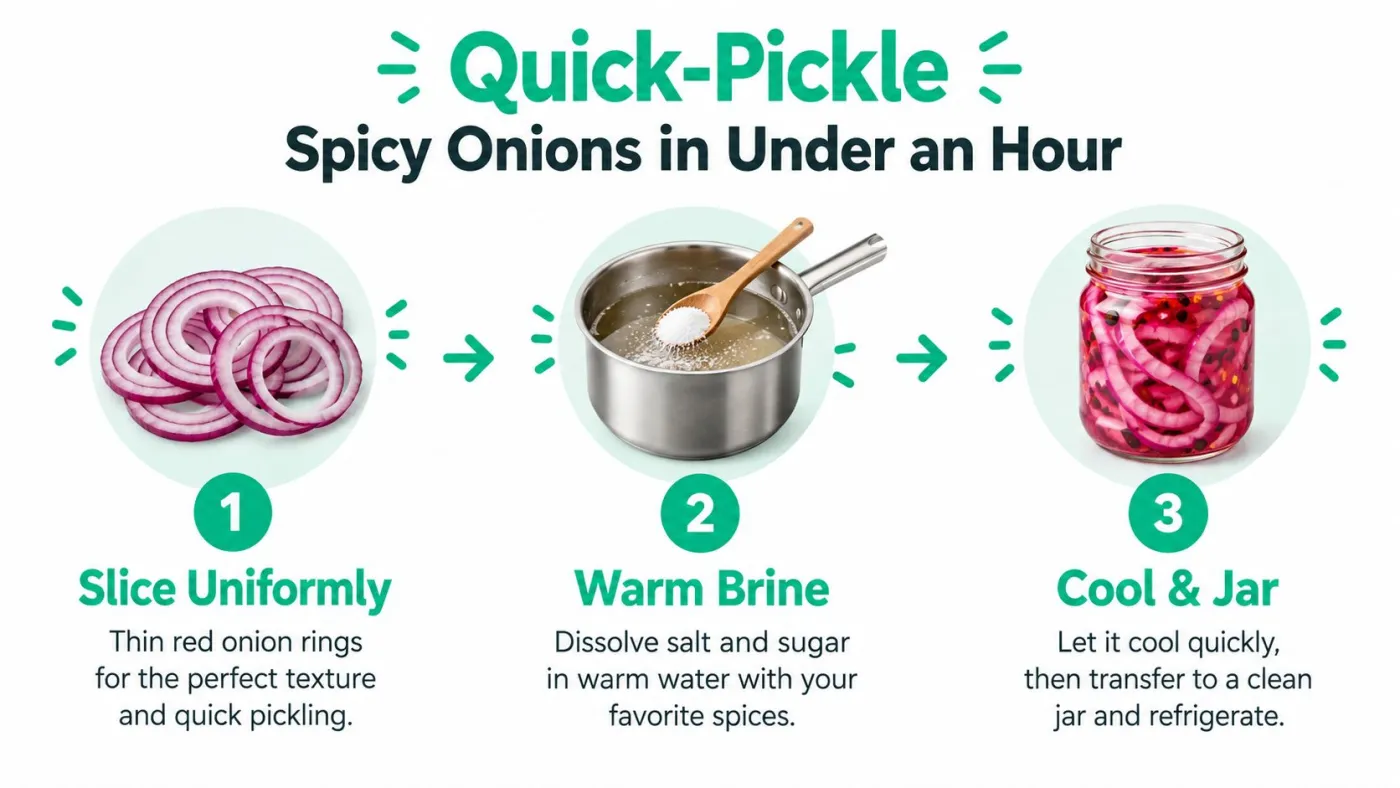
Put the vinegar, water, salt, and sugar in a small saucepan. Warm the mixture until the salt and sugar dissolve. You don't need a rolling boil. Excessive heat can flatten delicate aromatics, and the onions don't need aggressive cooking to pickle.
Add the sliced onions to a clean, nonreactive glass jar with the chilies, garlic, peppercorns, or other spices. Pour the warm brine over the top, pressing the onions down so they're fully covered. Leave about 1/2 inch of headspace, then let the jar cool before closing it tightly and moving it to the refrigerator.
The most common failure is incomplete contact. Floating onion pieces stay sharp because the brine never reaches them evenly.
Taste at 15 to 30 minutes if you sliced very thinly and the onions are submerged. The earliest bite may be bright and sharp, but the texture should already be softening. At the 30-minute mark, you can use them for tacos or eggs. Taste again at one hour, when they should be crisp-tart with more even heat.
The chili flavor often builds as the jar rests. Fully chilled onions usually taste rounder, and by day two the brine has had more time to move through the layers. If thick pieces still taste aggressively raw, slice the next batch thinner rather than adding more sugar.
A tight lid helps keep the refrigerator from smelling like an onion locker. Keep the onions cold after they've cooled, and use a clean fork when serving. For more recipe ideas that fit this method, visit these everyday Thermomix recipes.
Quick Pickle Versus True Fermentation
Vinegar quick-pickling and lacto-fermentation produce different foods, even though both can live in a jar with chilies. The quick version relies on an acidic brine. Fermentation relies on salt, time, and naturally occurring lactic-acid bacteria.
A quick pickle is the practical choice when dinner is close. Very thin onions can become usable within 15 to 30 minutes, while a true ferment needs a slower room-temperature process before refrigeration. Fermented onions develop a more complex tang and often soften more than vinegar-pickled onions.
Attribute | Vinegar Quick-Pickle | True Lacto-Fermentation |
|---|---|---|
Main control | Vinegar acidity | Salt concentration and fermentation |
Flavor | Bright, direct, sharp | Deeper, rounder, more layered |
Texture | Usually crisper | Often softer over time |
Best use | Same-day meals and refills | Planned batches and evolving flavor |
Storage approach | Refrigerate after cooling | Refrigerate when the ferment reaches the desired flavor |
Safety focus | Verify acidity and full coverage | Control salt, cleanliness, timing, and temperature |
For acidified vegetables, food-safety guidance says the finished equilibrium pH should reach 4.6 or below to prevent growth of Clostridium botulinum. The important word is equilibrium. The poured brine may be acidic, but the acid needs time to penetrate the onion mass. CSIRO's vegetable-preservation guidance also notes that many acidified foods are formulated to 4.2 or below as a more conservative target.
That's why I don't treat a hot vinegar pour as automatic proof that a jar is shelf-stable. Dense packs, uneven slices, oil, and an uncertain vinegar ratio create problems. For home use, keep vinegar-pickled onions refrigerated rather than treating them like a pantry preserve.
For fermentation, use a clean jar, weigh the ingredients for the salt calculation, keep the onions under the brine, and leave enough space for bubbling. If the smell, appearance, or texture seems wrong, don't taste it to investigate. Fermentation is rewarding, but it deserves more attention than a quick pickle.
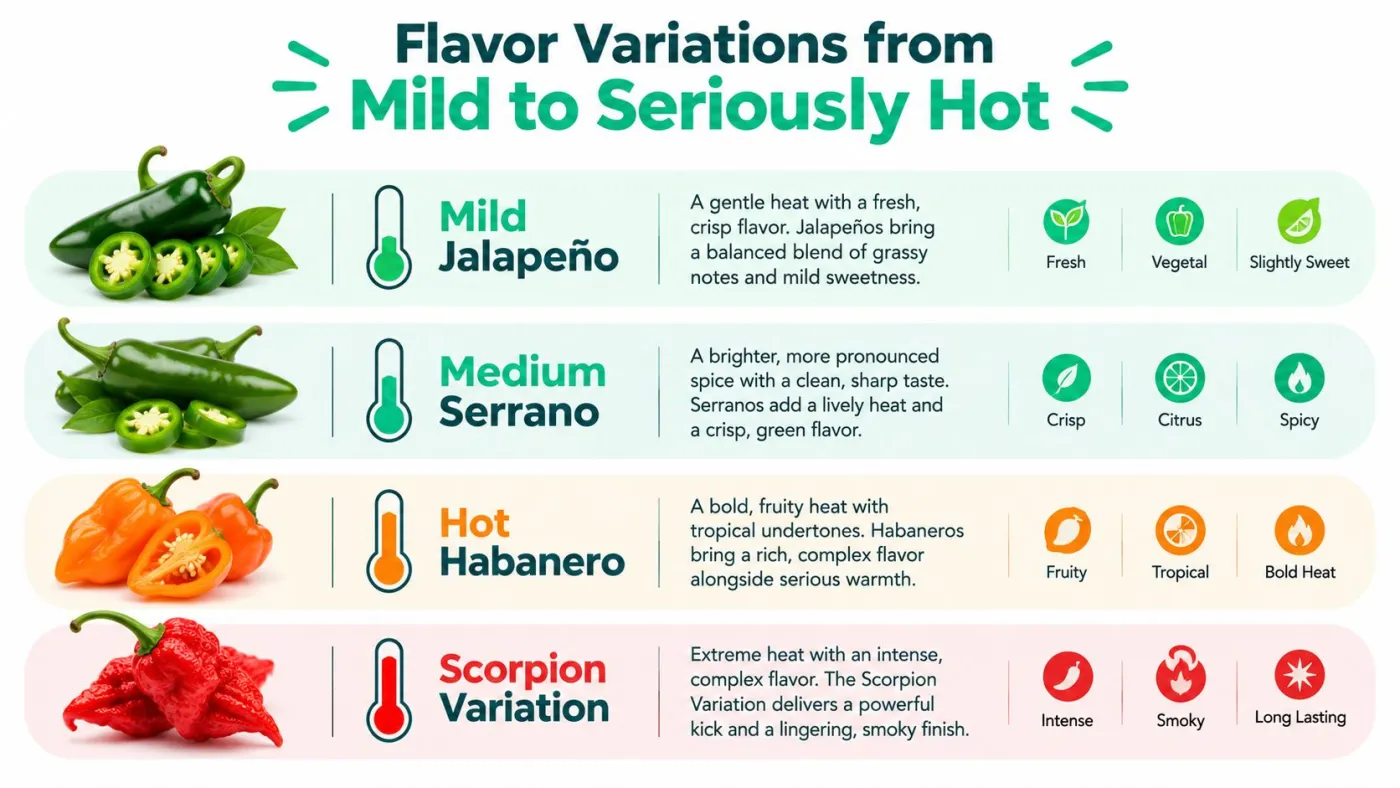
Flavor Variations from Mild to Seriously Hot
The same onion and brine can move from family-friendly to fiery with a change of pepper. I prefer starting mild because you can add heat to a serving bowl, but you can't pull habanero back out of the jar once it has spread.
Gentle and bright
Sliced jalapeño gives a friendly green heat that works especially well with tacos and eggs. A little honey or agave can soften the vinegar, while coriander seed adds citrusy warmth. Use black pepper when you want the jar to taste more savory without making it hotter.
For a fruitier medium batch, use serrano. Serrano brings a sharper, brighter spice, so I like it with rice vinegar or a small amount of sugar. Cumin seed can make this version feel warmer and earthier, but use it sparingly or it will dominate the onion.
Smoky and fruity
Chipotle or ancho brings depth rather than a clean, piercing heat. The smoky profile suits burgers, beans, and roasted vegetables. Brown sugar can support that rounded flavor, while mustard seed adds a gentle savory pop.
Habanero changes the conversation. It contributes fruity aroma as well as serious heat, so pair it with a modest amount of honey or agave rather than piling in more spices. Keep the slices thin and use a small amount for the first jar.
For experienced heat seekers
Scorpion or ghost-pepper variations are for people who already know they enjoy extreme heat. Start with a very small amount, wear gloves while handling the pepper, and avoid breathing directly over the warm brine. A fiery onion should still taste like onion, vinegar, and spice, not just pain.
Flavor balance beats maximum heat. A milder jar gets used more often because it can sit comfortably beside breakfast, lunch, and dinner.
Storage, Texture, and Serving Suggestions
Storage changes the eating experience. Quick-pickled onions are usually best while they still have a little snap, especially on fish tacos, grilled proteins, or crisp salads. Fermented onions keep developing after refrigeration, so their flavor and texture become more pronounced as they rest.
Use a nonreactive glass jar with a tight-fitting lid. Keep the onions covered by brine and use clean utensils each time. A jar that looks attractive on the counter still belongs in the refrigerator once the quick-pickle has cooled, and fermented onions should also be chilled when they've reached the flavor you want.
Match the texture to the meal
Fresh, bright slices work well where you want contrast. Put them on tacos, tostadas, eggs, or a sandwich that already has a rich sauce. Their acidity cuts through fatty ingredients without asking you to rebuild the whole meal.
Deeper-tasting onions suit grain bowls, beans, roasted vegetables, and meal-kit leftovers. Add a spoonful of brine to a dressing if it tastes too heavy, but go slowly. The liquid carries salt, vinegar, sugar, and chili, so a little can change the whole bowl.
Fully fermented onions make a more complex sandwich topping, especially when the bread and filling need an acidic lift. They can also turn a plain rice-and-beans lunch into something you'll look forward to eating.
My Thermomix® shortcut is about consistency, not culinary magic. The slicing disc can help produce uniform onion pieces, while the built-in scale makes a fermentation salt calculation easier. The heating function can warm a quick brine without dirtying another pan, and the machine takes up less counter space than a full collection of separate appliances.
For more visual kitchen guidance, explore these cooking videos and demonstrations.
A realistic refrigerator rhythm
Make a small jar when you know you'll eat tacos, bowls, sandwiches, or eggs during the week. Label it with the date started, keep the onions submerged, and trust your senses. If the contents develop an unpleasant odor, unexpected mold, or an appearance that makes you hesitate, discard the batch.
Final Thoughts and a Few Honest Kitchen Reminders
A dependable spicy pickled onion recipe earns its place because it solves a real problem. It makes leftovers taste fresher, gives takeout-style food more contrast, and lets a cook with limited time add something homemade without committing to an ambitious project.
My honest preference is to keep both methods available. The quick pickle is the one I make when I want tacos tonight. The slow lacto-ferment is for when I'm curious, organized, and willing to pay attention to the jar as the flavor develops. Neither path needs to win.
A few reminders keep the process straightforward:
Label the jar: Write the date started so you know which batch you're reaching for.
Use the baseline: A 1:1 vinegar-to-water brine is a dependable starting point for quick pickles.
Keep it cold: Refrigerate the cooled quick pickle, and refrigerate fermented onions once they reach the taste and texture you want.
Cover the onions: Full brine contact helps prevent floating pieces from staying harsh or unevenly flavored.
The Thermomix can make the quick-pickle route almost hands-off with its scale, heating function, and slicing disc. A cutting board, sharp knife, saucepan, and glass jar work just as well. Convenience matters, but it shouldn't become an excuse to wait for perfect equipment.
Start with a small jar this week. Try it on tacos or a grain bowl, notice whether the onion is too sharp, too sweet, or not hot enough, and adjust the next batch. That's how spicy pickled onions become part of your kitchen instead of another recipe you meant to try.
I offer free in-person demonstrations in Las Vegas and live video demonstrations for families across the USA, with practical Thermomix guidance and real-time questions about everyday cooking. If you want to see how the machine can slice onions uniformly, warm brine, and support fast meal prep, visit IT'S A CHEF! and book a free demo at https://itsachef.com/book.html.
Made with the Outrank app