Healthy Eating & Diets · October 11, 2026 · 11 min read
Black Sesame Soy Milk Recipe for the TM7
You're standing in the plant milk aisle, holding a specialty carton that costs more than you expected and wondering whether the ingredient list needs to be that long. I know the feeling. Black sesame soy milk sounds wonderfully simple, yet the difference between a smooth, nutty drink and a thin beverage with raw-bean flavor comes down to a few technical steps.
On this page
You're standing in the plant milk aisle, holding a specialty carton that costs more than you expected and wondering whether the ingredient list needs to be that long. I know the feeling. Black sesame soy milk sounds wonderfully simple, yet the difference between a smooth, nutty drink and a thin beverage with raw-bean flavor comes down to a few technical steps.
I'm Prinal Glassman, an Independent Thermomix® Consultant in Las Vegas, helping families across the USA. My motto is, “Thermomix? It's a chef… I'm not!” I don't run cooking classes, and I'm not pretending to be a chef. I'm a practical home cook who likes using the TM7 to make everyday food less fussy, including soy milk that tastes fresh instead of flat.
Why Make Black Sesame Soy Milk at Home
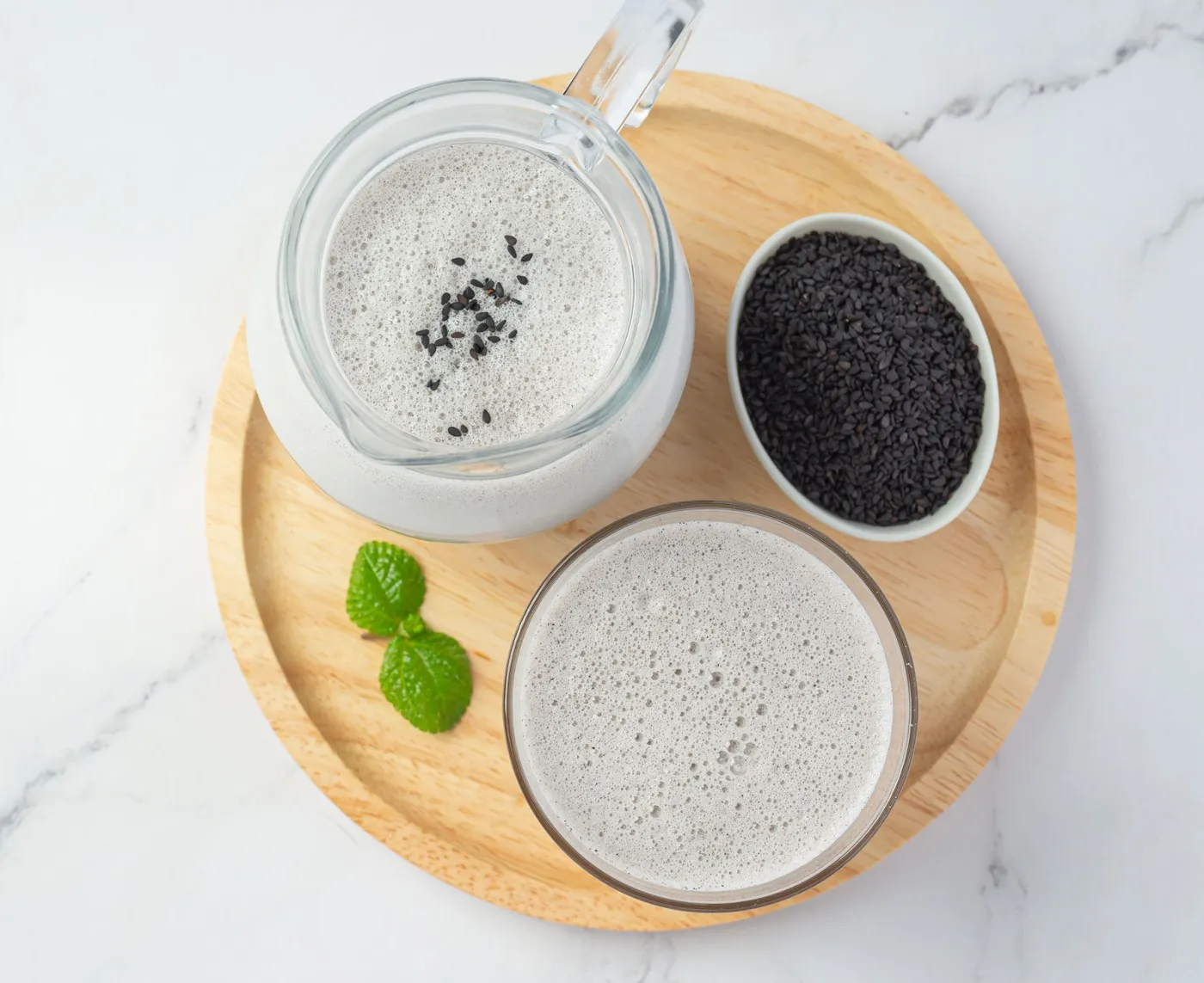
Specialty plant milks can be convenient, but convenience doesn't always give you the flavor, sweetness, or nutrition you want. Making black sesame soy milk at home lets you choose the beans, control the sweetener, and decide whether you want a silky strained drink or something with more suspended solids.
Soy milk has documented roots in China, with historical evidence of soybean processing during the Han period, approximately 206 BCE to 220 CE. Later, soy-based beverages became part of Chinese food traditions, and commercial production had expanded by 1929, when Shanghai factories reportedly sold more than 1,000 bottles per day. Soy milk later traveled through Hong Kong, Singapore, and Japan during the 1950s before becoming more familiar in Europe and North America during the second half of the 20th century. You can read more about that background in this history of soy milk and its global spread.
Black sesame doesn't represent a separate ancient beverage category. It's a culturally familiar flavor variation that gives soy milk a darker color and a toasted, nutty character. That combination makes sense to me because it connects a traditional soybean drink with a modern taste many people now recognize from Asian desserts and bakery products.
What the TM7 changes
The tedious part of soy milk used to be moving between soaking, grinding, cooking, and straining. The TM7 keeps the main blending and cooking work in one appliance, so I can focus on the texture and timing rather than babysitting several pieces of equipment.
I also like the control homemade milk gives families with different preferences. One person can enjoy it unsweetened, another can add a little date or maple flavor, and everyone can adjust the strength of the sesame.
For more ideas that fit this kind of home cooking, browse the Thermomix recipes collection. The important point is that homemade doesn't automatically mean nutritionally complete. A commercial fortified soy beverage can contain added calcium, vitamin A, and vitamin D, while homemade black sesame soy milk may not provide those nutrients at comparable levels. The FDA's guidance on plant-based milk alternatives explains why fortified soy beverages have a distinct place in the federal Dietary Guidelines for Americans.
The Secret to Perfect Soybean Hydration
Soaking isn't a decorative step. It softens the soybean cotyledons, prepares them for thorough milling, and affects what moves into the finished beverage.
Research on soybean soaking found that fat extraction reached 80.93% when beans were soaked at 39.2°F (4°C) for 18 hours. At 77°F (25°C), the highest reported extraction was 79.02% after 12 hours, while soaking at 122°F (50°C) reached 73.81% after 3 hours. Those results come from a controlled study of soaking conditions, not a guarantee for every home batch, but they show why temperature and time shouldn't be treated as interchangeable. The full study of soybean soaking temperature and extraction gives the useful context.
My preparation routine
Use:
Soybeans: 3½ ounces (100 g) dry whole soybeans
Water for soaking: Enough to keep the beans fully covered
Cold storage: Refrigerate the soaking beans during the long soak
I soak the beans separately, drain them thoroughly, and rinse them before blending. A cold soak planned the night before is more reliable than trying to force the process with warm water. The beans should feel swollen and softened, with the hard center noticeably reduced when you split one.
The research doesn't establish one universal home soaking schedule, so I wouldn't promise that every kitchen needs the exact same timing. What matters is giving the beans enough hydration for the TM7 to mill them thoroughly before cooking. For additional practical kitchen guidance, see these Thermomix tips and how-to resources.
Cooking Soy Milk Safely in the Thermomix
A smooth slurry still needs real cooking. With soy milk, the step that removes the raw-bean taste is the same step that makes the drink safer to serve.
Published reviews describe several effective heat treatments for soy beverages, including boiling at 212°F (100°C) for 9 minutes, cooking for 7 to 30 minutes, and autoclaving at 250°F (121°C) for 15 minutes. The same review also outlines pasteurization targets for microbial reduction and explains why UHT processing needs specialized equipment that a home kitchen does not have. That's the context I use for TM7 soy milk at home, and it comes from this review of plant-based beverage safety and processing.
On my Thermomix TM7, I load the soaked, drained beans with 4¼ cups (1,020 g) water, mill them fully, then give the slurry a defined boil and hold instead of relying on heat buildup from blending alone. The TM7's guided screen makes that sequence easy to repeat, which matters more here than gadget talk.
I use this program:
Blend: 3 min / 140°F / speed 10
Cook: 20 min / 212°F / speed 2
Hold: 9 min / 212°F / speed 1
That order works well for home soy milk because it handles two problems at once. Fine milling improves extraction, and the sustained boiling stage addresses the beany flavor that shows up when soy is undercooked. If you want a broader look at tasks beyond soy milk, these Thermomix functions and capabilities give a useful overview.
Practical rule: Warm soy slurry is not finished soy milk. It needs the full high-heat cook and hold.
After cooking, I move quickly. Strain while the mixture is still warm, transfer it into a clean container, and chill it down promptly before refrigerating. Good heating does not fix sloppy handling after the fact, so the clean side of the process matters just as much as the programmed cook.
Adding Black Sesame and Sweetening Options
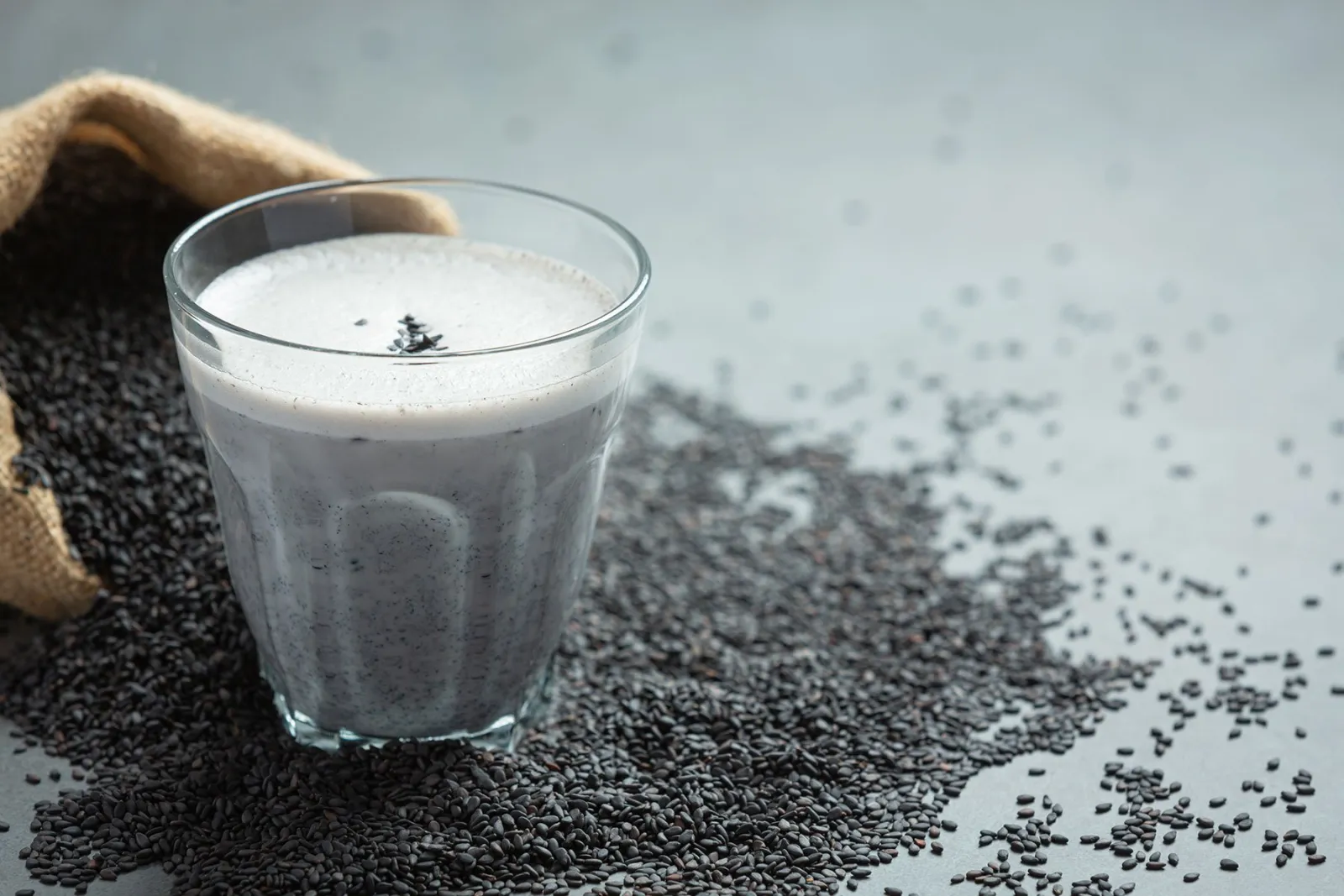
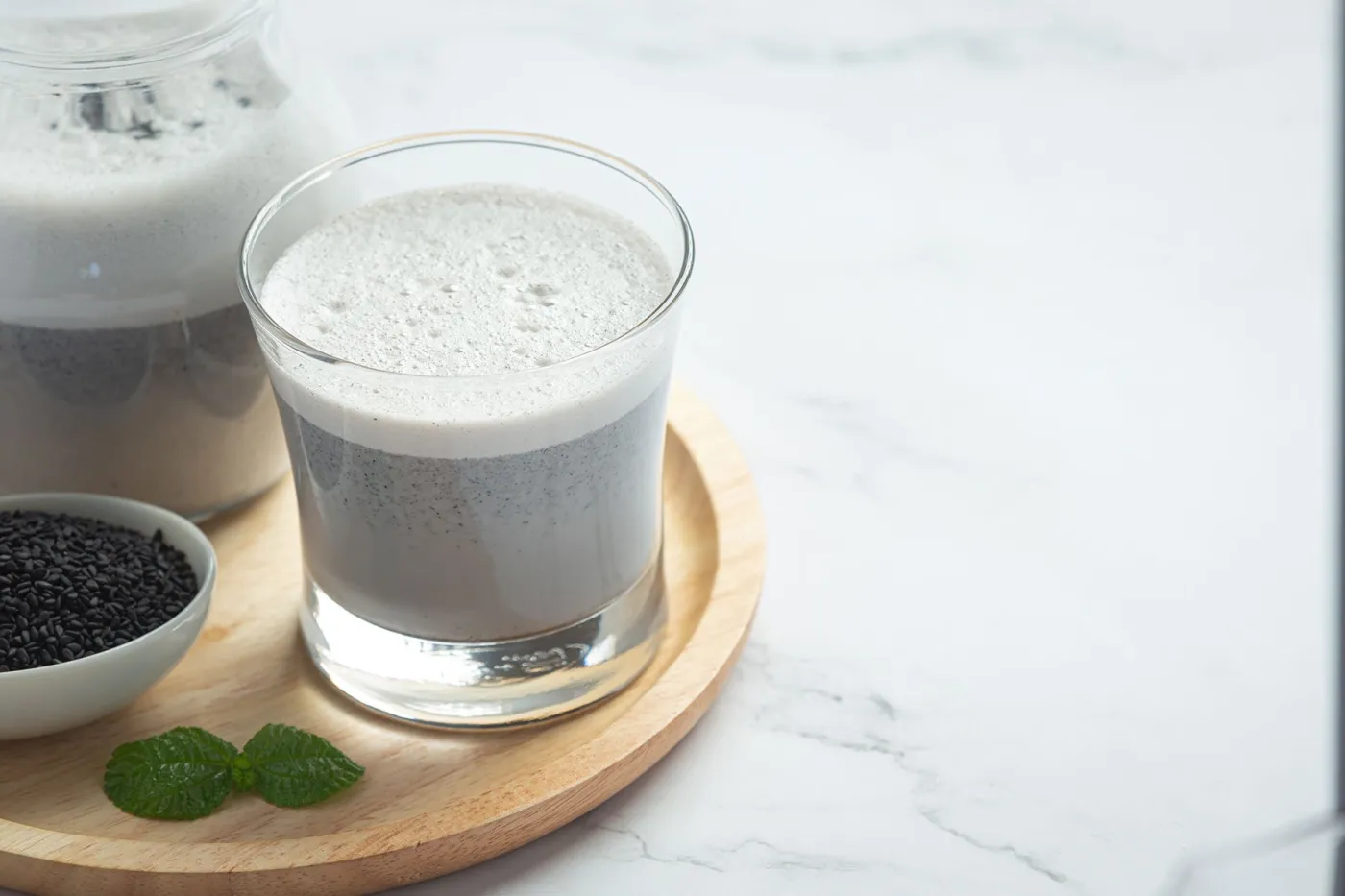
Black sesame changes the drink fast. The color goes deep gray, sometimes close to charcoal, and the flavor shifts from plain soy into something toastier and rounder. It also adds oil and solids, which is exactly why I treat it as a finishing ingredient in the TM7 instead of cooking it through with the raw beans. The USDA FoodData Central sesame entry is helpful for understanding what whole dried sesame contains, but it does not describe a strained glass of black sesame soy milk.
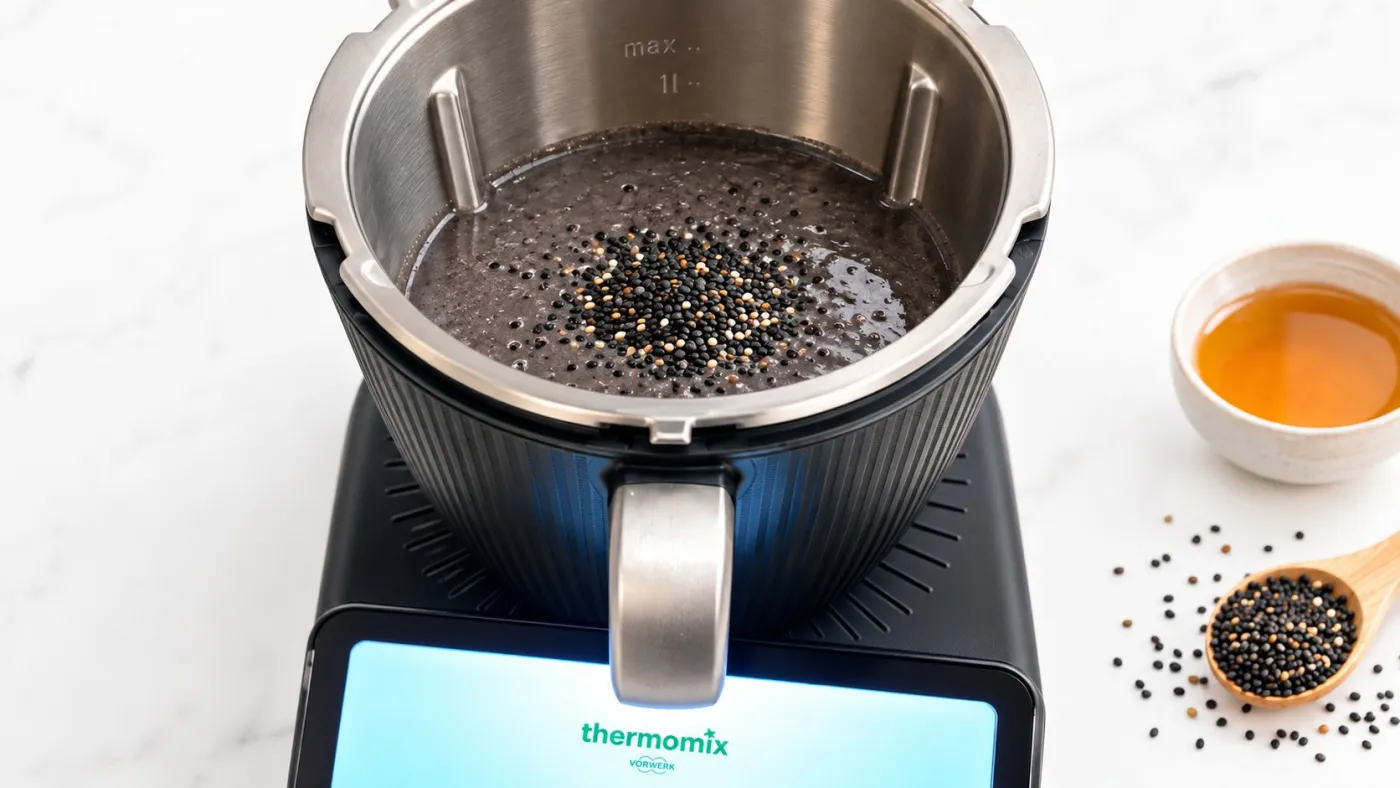
I get the best results when the sesame is roasted separately first and cooled before it goes anywhere near the bowl. For this batch, use ½ to ¾ ounce (10 to 20 g) roasted black sesame. Then work from the finished soy base you already cooked safely.
That order matters. If black sesame sits in the slurry during the long cook, the flavor can get heavier and the drink usually throws more sediment later. Adding it after the soy milk is fully cooked gives me better control over texture, and the sesame oil blends more evenly into a smooth base.
On the TM7, I add the roasted sesame to the cooked soy milk and blend:
2 min / 140°F / speed 8
That short blend is usually enough to pull in the sesame without pushing the drink too far into paste-like territory. If your sesame was roasted very dark or the seeds are older, expect a slightly grittier finish and a more assertive flavor.
Sweetening is the part to handle by taste, not by habit. I usually pour a spoonful into a cup first and decide from there.
Unsweetened keeps the roasted sesame and soy up front. It works well with breakfast or if you want a drink that does not read like dessert.
Dates add sweetness, but they also add body. The texture gets fuller, which some people like and some do not.
Maple syrup dissolves easily and gives a clear sweet note. I like it more in a cold serving than in a hot mug.
Sugar sweetens with the least extra flavor, so the sesame stays in the lead.
Start lighter than you think. You can always blend in more sweetener, but once the drink tips too sweet, the roasted sesame loses some of its edge. In my kitchen, the nicest batches are often the simplest ones. Freshly roasted sesame and a properly cooked soy base already do most of the work.
Straining and Serving Your Creation
The final texture is set in the straining, not in the sweetener. On the TM7, I usually let the soy milk sit for a minute after blending so the foam settles a bit, then I pour while it is still hot enough to flow easily. That small pause makes the transfer cleaner and helps me see how much sediment I am dealing with.
For a lighter, smoother drink, pour the mixture through a fine mesh strainer or a nut milk bag into a sanitized container. Let gravity do the first part of the work. Then press gently. If you squeeze hard right away, more fine pulp slips through and the drink can end up chalkier than you wanted. If you like a fuller cup, stop early and accept a little more body. That trade-off is personal, and there is no single right finish.
I save the okara when I have a plan for it. It works well in baking because it adds moisture and fiber, but it should be drained well first. Some solids will stay behind in the pulp, so the strained drink will not hold every part of the beans and sesame.
How you serve it changes the flavor more than people expect. Cold black sesame soy milk tastes cleaner and a little sharper to me, especially over ice. Warm servings feel rounder and more comforting, but I reheat gently in the TM7 instead of boiling again. A hard reboil can dull the sesame and push the texture in a thicker direction.
At home, the easiest uses are the ones that do not fight the drink. Pour it beside toast and fruit, over cereal, or use it as a smoothie base when you want sesame flavor without adding another paste or butter. It also sits nicely next to a lightly sweet baked snack.
Storage matters. Transfer the finished milk to a sanitized, sealed container, refrigerate it, and label the time you made it. Homemade soy milk does not have the same preservation system as a packaged carton, so I treat it as a fresh food and use it promptly. Natural separation can happen, and a good shake often brings it back together. Sourness, gas, swelling, or an off smell mean it should be discarded.
One more practical point. Homemade black sesame soy milk can be nourishing, but it is not automatically nutritionally equivalent to fortified soy beverages sold in cartons. The FDA places fortified soy beverages in the dairy group because of their nutrient profile, including added calcium, vitamin A, and vitamin D.
Frequently Asked Questions
Can I use white sesame instead
Yes. White sesame will give you a lighter color and a milder visual impact, while black sesame creates the deeper shade and more pronounced toasted character many people expect from this drink. The substitution changes the flavor and appearance, not the basic soy milk workflow.
How long will it last
I keep homemade soy milk refrigerated in a sealed, sanitized container and use it promptly rather than treating it like a shelf-stable product. The drink can separate naturally, so shake it before serving. If it develops sourness, gas, swelling, or an unexpected odor, discard it.
Can I make it sweeter
Absolutely. Taste after the black sesame has been blended into the cooked base, then add more sweetener in small additions. Dates give the drink more body, maple syrup adds a recognizable flavor, and plain sugar keeps the sesame profile clearer.
Is the leftover pulp waste
No. The okara pulp can go into baked goods for moisture and additional fiber. Drain it well first, and remember that it will change the texture of whatever you add it to. I prefer treating it as an ingredient rather than pretending it has disappeared.
Why does my drink taste like raw beans
Usually, one of three things happened: the beans weren't hydrated thoroughly, the slurry wasn't milled enough, or the cooked mixture didn't receive a proper high-temperature hold. This is one recipe where rushing doesn't save time. A short soak and a quick warm blend can leave you with the exact flavor you're trying to avoid.
Do I need to fortify it
Not at home unless you have a tested, food-safe formulation for the ingredients you're adding. Instead, decide what role you want the drink to play. If you're choosing it as a flavorful homemade beverage, enjoy it for that. If you rely on soy beverages for milk-like calcium or vitamin D, compare your homemade version with a fortified product label rather than assuming the black sesame makes up the difference.
New soy milk makers usually gain confidence after the first batch because the process becomes visible. You can see how hydration affects blending, how cooking changes the aroma, and how adding sesame after the soy base improves control. If the first batch is thicker or thinner than you prefer, adjust the water or straining pressure next time, not every variable at once.
I'm happy to help families work through those first TM7 recipes without chef theater or complicated kitchen language. My motto still applies, “Thermomix? It's a chef… I'm not!” That's exactly why I like practical recipes that let the machine handle the repetitive work while you make the decisions that matter.
IT'S A CHEF! offers Thermomix demonstrations in Las Vegas, video calls anywhere in the United States, purchase guidance, and ongoing help after delivery. If you'd like support setting up your TM7 and making recipes such as black sesame soy milk, visit IT'S A CHEF! to learn about the available resources and consultant support.