Healthy Eating & Diets · October 7, 2026 · 9 min read
Juicing Kiwi Recipe: Easy Thermomix TM7 Steps
It's that moment when the afternoon feels too warm, everyone wants something refreshing, and nobody wants a kitchen project with a sink full of dishes afterward. That's where my juicing kiwi recipe earns its place.
On this page
It's that moment when the afternoon feels too warm, everyone wants something refreshing, and nobody wants a kitchen project with a sink full of dishes afterward. That's where my juicing kiwi recipe earns its place. The Thermomix® TM7™ handles the chopping and blending, while you decide whether the finished drink should be thick and pulpy or smooth and easy to sip.
I'm Prinal Glassman, an Independent Thermomix® Consultant in Las Vegas, helping families across the USA. My motto is, “Thermomix? It's a chef… I'm not!” This recipe fits that perfectly. You don't need chef skills, complicated equipment, or a long prep session. You need ripe kiwi, cold water, and a few minutes.
Why the Thermomix TM7 Makes Fresh Kiwi Juice Easy
A hot afternoon, ripe kiwi on the counter, and only a few minutes before everyone asks for a drink. The TM7 keeps that moment simple. It breaks down the fruit quickly, mixes in cold water, and leaves you with one bowl to rinse instead of a full juicing setup.
Kiwi brings enough character to carry the drink on its own. Its flavor is juicy, sweet-tart, and aromatic, while apple, pear, cucumber, or citrus can soften or brighten the result. That makes this juicing kiwi recipe useful for a family refreshment, especially in Las Vegas, where a cold glass can feel like a small daily win.
Raw green kiwifruit is approximately 83% water, so the fruit already contributes plenty of liquid. A 100-gram portion contains about 61 calories and provides approximately 103% of the Daily Value for vitamin C, along with vitamin K, vitamin E, copper, and potassium, according to the kiwifruit nutrition reference. Those figures apply to whole fruit. Straining changes the finished drink because some pulp and dietary fiber remain in the sieve.
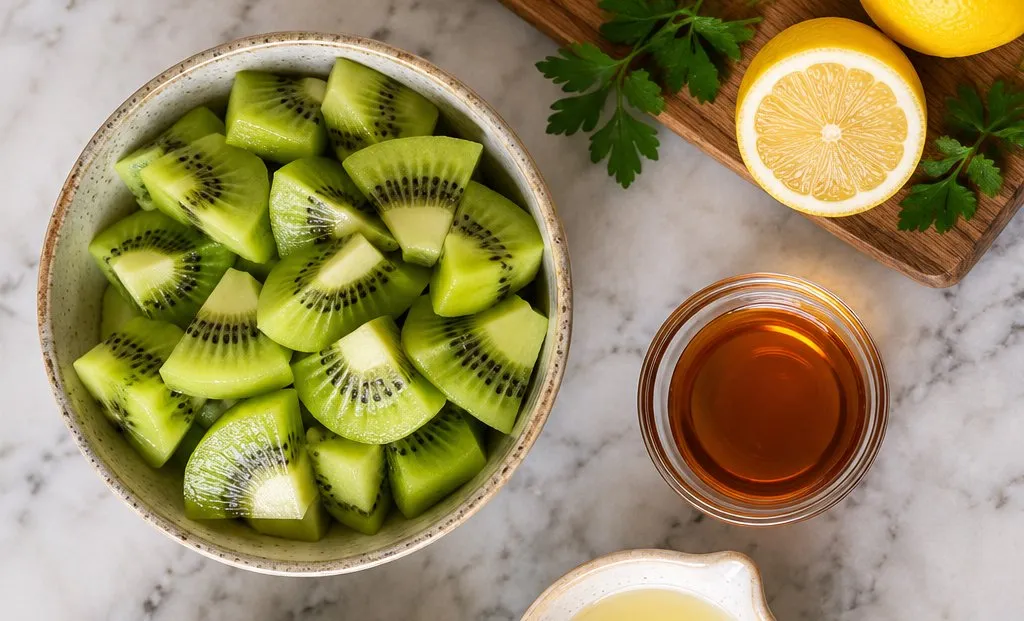
Less fuss, more fresh flavor
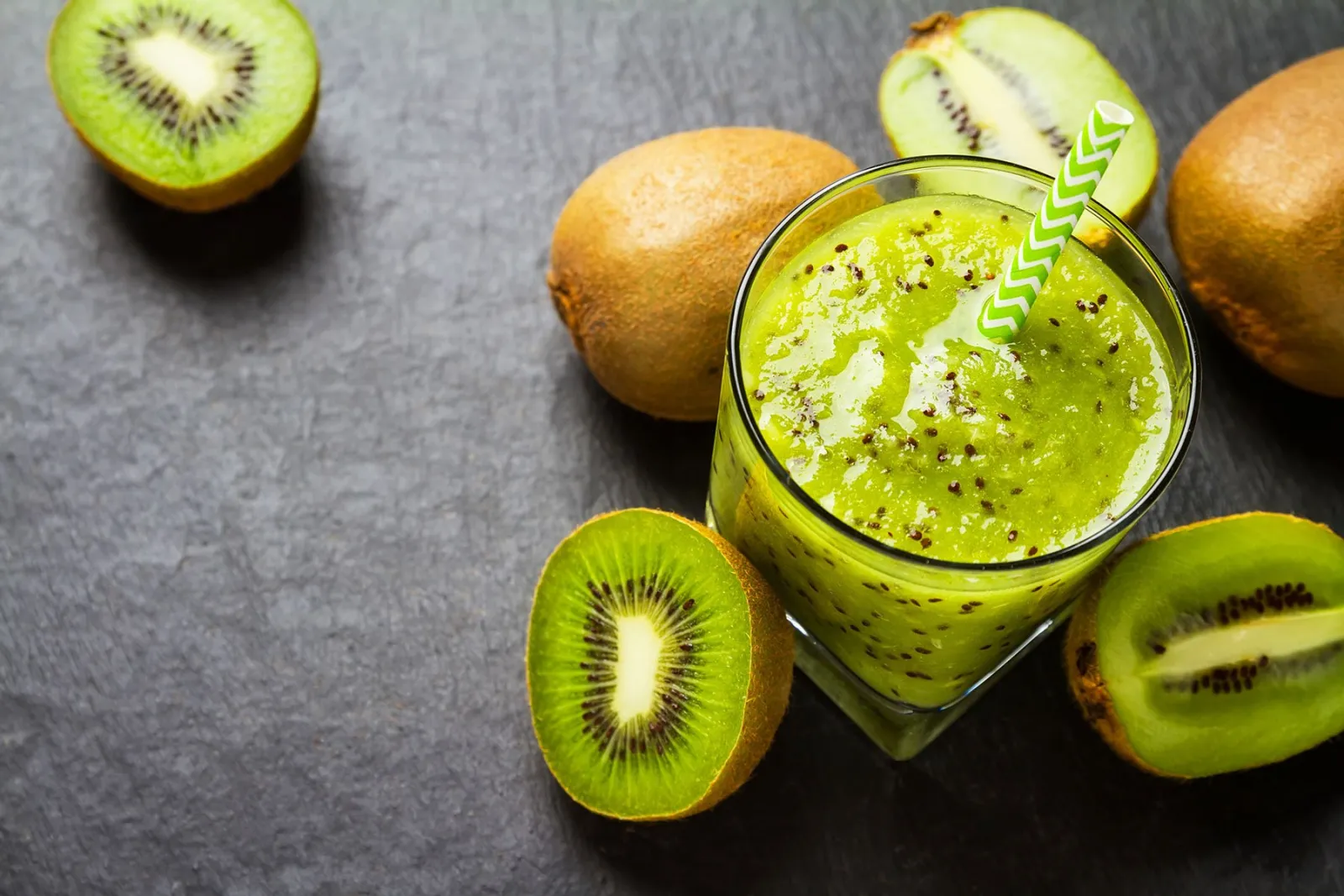
The practical advantage is control. Wash and peel the kiwi, add it to the mixing bowl, blend with cold water, then choose the texture after the fruit has broken down. Keep the pulp for a thicker, smoothie-style drink, or strain it for a lighter glass with a silkier finish.
That choice matters at home. One person may enjoy the tiny black seeds and generous pulp, while another may prefer a drink that slips easily through a straw. Make one batch, then strain only the servings that need a smoother texture.
Practical rule: Start with ripe but firm kiwi. Hard fruit can taste sharp, while overripe fruit may contribute a fermented flavor and less stable texture.
Industrial juice production often separates, processes, and packages fruit through several stages. At home, the TM7 gives you a shorter route from fresh kiwi to cold drink, with the texture decided at the bowl rather than by a factory process. The ingredients stay cold, the method stays manageable, and the kitchen work stays pleasantly brief.
Step-by-Step Kiwi Juice Recipe Using Thermomix TM7
This recipe starts with the simplest useful combination, kiwi and cold water. The amount of water controls the texture, so you can make a spoonable smoothie-style drink or a more pourable juice without changing the basic method.
Ingredients
Ripe but firm kiwifruit: 4 medium kiwi, about 1 pound (454 g)
Cold water: 1 cup (240 g)
Optional sweetener: 1 tablespoon (21 g) honey or 1 tablespoon (20 g) maple syrup, added only if needed
Wash the kiwi under running water before peeling. Washing the exterior matters even when you plan to remove the skin, because the knife can transfer material from the outside to the flesh. Peel the fruit for a smoother result, or leave a well-washed portion of skin on if you prefer a more rustic blend and your recipe instructions allow for it.
TM7 method
Prepare the fruit. Cut away the ends and quarter the peeled kiwi. Place the pieces in the TM7 mixing bowl.
Break it down gently. Set the TM7 to 10 sec / speed 5. This starts the liquefying process without needlessly whipping a lot of air into the drink.
Add the water. Pour in 1 cup (240 g) cold water. For a thicker drink, begin with less water and add more after blending. For a lighter juice, use the full amount from the start.
Blend until smooth. Set the TM7 to 30 sec / speed 5, then check the consistency. If the fruit still looks chunky, continue with 30 sec / speed 7. You want a fluid blend, not a foamy green science experiment.
Taste and adjust. If the kiwi is especially tart, add the honey or maple syrup. Mix using 10 sec / speed 3. If the flavor is already balanced, skip the sweetener.
Chill without cooking. For a colder drink, add a little more chilled water and mix using 20 sec / speed 3. Keep the ingredients cold rather than applying heat.
Choose the finish. Serve immediately as a blended kiwi drink, or pour it through a fine sieve into a clean container for a smoother juice. Press the pulp gently instead of forcing it aggressively.
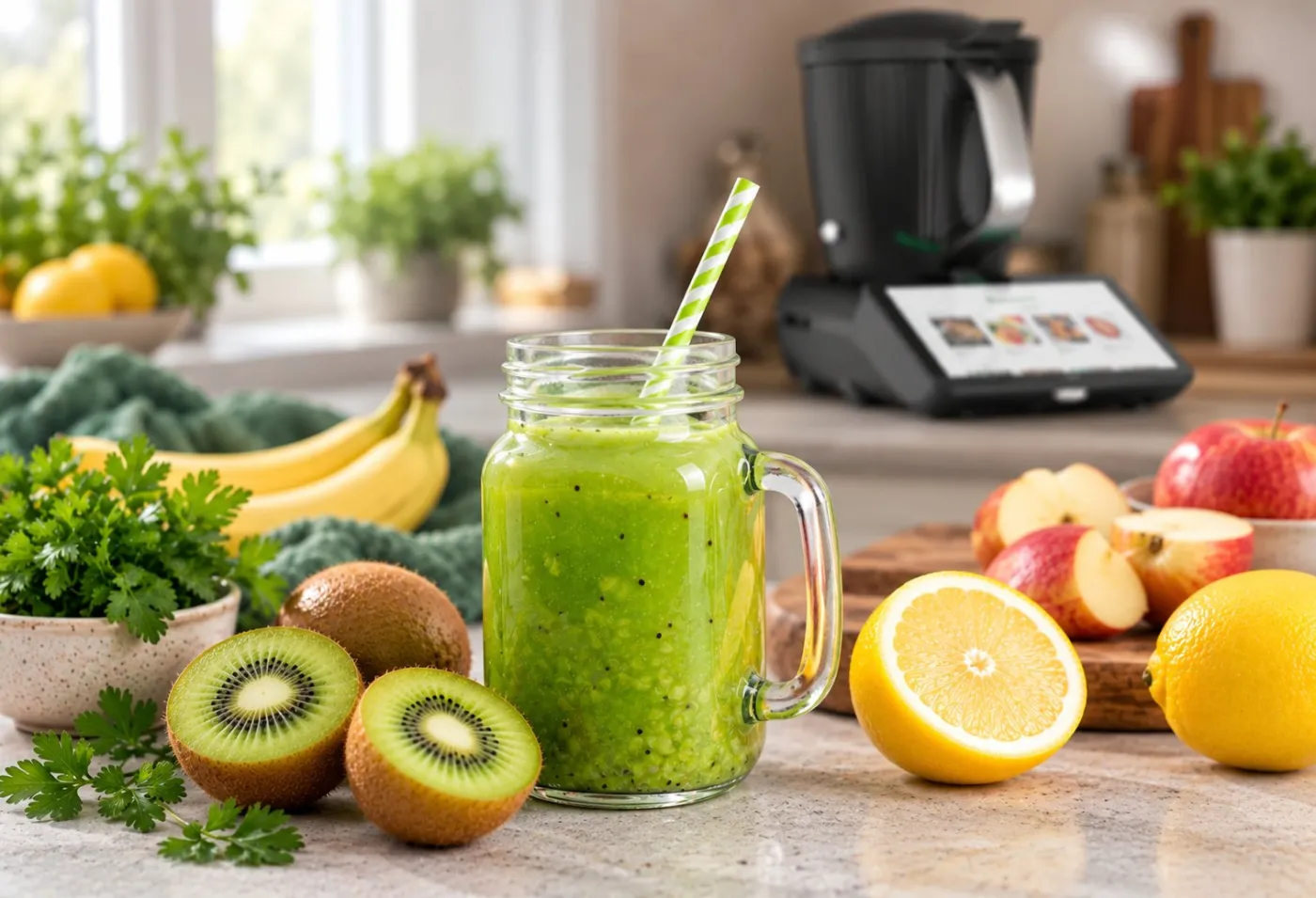
Industrial clarification research reports a juice yield of approximately 75-80% by weight, meaning 1 kilogram of prepared fruit may produce roughly 750-800 grams of strained juice, although household results vary with ripeness, cultivar, pulp retention, and equipment, as described in this kiwifruit juice processing research. Treat that as a processing benchmark, not a promise for every TM7 batch.
Blended vs Strained Kiwi Juice, Which Should You Choose?
The best texture depends on what you want from the drink. A blended kiwi juice keeps more of the fruit's original pulp, so it feels thicker and more substantial. A strained version removes much of that suspended material and gives you a cleaner, smoother sip.
The TM7 handles both approaches, but the results serve different moments:
Choose blended | Choose strained |
|---|---|
You want more pulp and a thicker texture | You prefer a smooth, lighter drink |
You're serving it as a smoothie-style snack | You're pouring it for guests |
You want to retain more of the fruit's fiber | You want fewer seeds and less texture |
You don't mind a rustic appearance | You want a clear, easy-to-sip finish |
Blending generally preserves more dietary fiber because the pulp remains in the glass. Straining can make the drink more comfortable for people who dislike texture, and research discussed in this kiwi juice composition review notes that some insoluble oxalate remains in the pomace during extraction. That creates a genuine trade-off rather than a universal winner.
Make the decision by purpose
For a family breakfast, I'd usually keep the pulp. The drink feels fuller, and there's less waste to manage. For a smoother refreshment, strain it once through a fine sieve and stop there. Repeated straining can make the process fussier without necessarily making the drink more enjoyable.
If digestion is your main concern, texture may matter as much as nutrition. Some people prefer the body of a blended drink, while others find a smoother juice easier to drink. Start with the blended version, pour a glass, and strain the remainder if needed. That small choice lets one batch satisfy different preferences.
The leftover pulp doesn't need to go straight into the trash. Stir a little into another smoothie-style drink, fold it into yogurt, or use it as a flavorful fruit component in another recipe. Kiwi pulp is not a kitchen failure. It's just the part of the fruit that didn't make it into the polished glass.
Nutritional Highlights of Fresh Kiwi Juice
A quick kiwi drink can contribute useful nutrients, especially when the TM7 leaves the pulp in the glass. California Department of Education data lists ½ cup of kiwifruit as providing about 55 calories, 83.4 milligrams of vitamin C, and 2.7 grams of dietary fiber, as shown in its kiwifruit nutrition information.
Use those figures as a guide, not a promise for every serving. Fruit size, variety, ripeness, added water, and straining all affect the finished drink. Blending keeps more of the fruit's fiber, while filtering removes much of the pulp and produces a lighter texture.
Water changes the nutrition per glass too. A small splash loosens the mixture while keeping the kiwi flavor concentrated. A larger amount creates a thinner drink, so the nutrients from the fruit are spread across more liquid. Straining also removes some solids, which can reduce the fiber you receive in each serving. If you want the fruit to do more of the work, start with less water and adjust after blending.
Kiwi's vitamin C remains a useful reason to include it in a fresh drink, but juice is still food, not a cure-all. Keeping the preparation simple makes that benefit easy to enjoy without turning breakfast into a laboratory project.
What the TM7 contributes
The TM7 handles the practical work by chopping and blending raw kiwi without a cooking step. Minimal heat helps preserve the fresh taste and bright aroma, while you decide how much pulp stays in the drink.
For a fuller fruit character, add only enough water to reach a pourable texture. For a gentler flavor, add it gradually and taste between additions. The best nutritional choice is also the practical one: a drink your household will finish.
Tips for Sweetening, Preserving, and Serving Kiwi Juice
Kiwi's natural flavor should lead the drink. Ripe fruit may be sweet enough on its own, while firmer or more acidic kiwi may benefit from a small amount of honey or maple syrup. Add the sweetener after blending, mix briefly, and taste before adding more.
Keep the flavor fresh
Serve the juice immediately whenever possible. Freshly blended kiwi has its brightest aroma right after preparation, and the texture can change as the pulp settles. If the drink separates, stir it gently before serving rather than blending it again and creating extra foam.
You can also soften the tartness with another fruit. Apple, pear, cucumber, or citrus can work well with kiwi, but add them gradually so the distinctive kiwi flavor doesn't disappear. For a family with mixed preferences, keep one portion pulpy and strain another instead of trying to force everyone to agree on one texture.
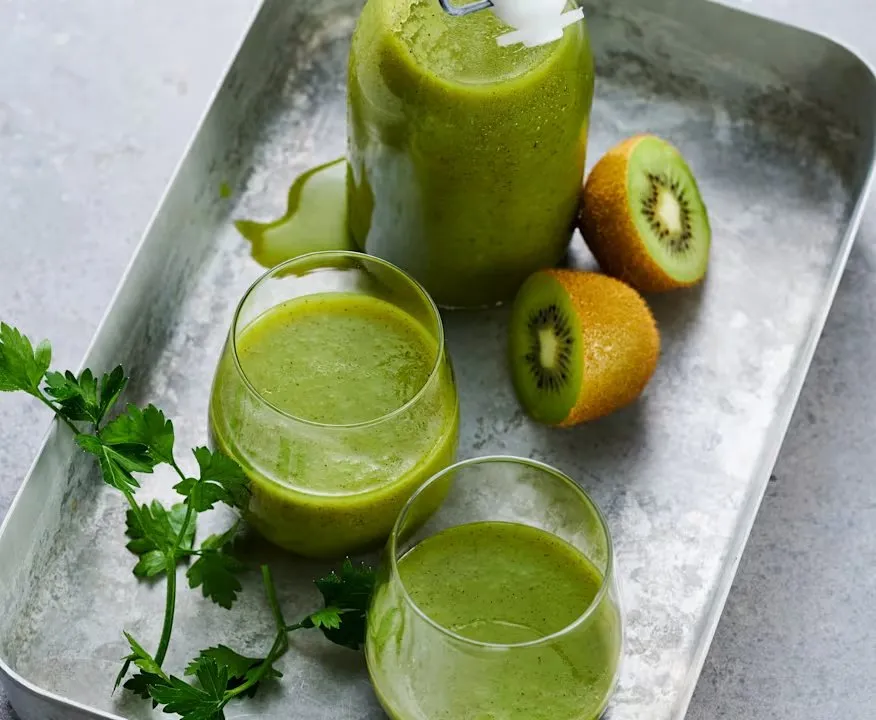
Store it carefully
Fresh homemade kiwi juice is untreated juice. Wash the fruit under running water, use clean equipment, and refrigerate the finished drink promptly in a clean, covered container with minimal headspace. FDA guidance says perishable produce and fresh-squeezed juices should be kept at 40°F or below, as explained in this FDA raw produce safety guidance.
Make only the amount you expect to use soon, and keep leftovers continuously refrigerated. The available guidance doesn't establish one universal safe storage duration for every homemade juice, so don't treat a recipe as a shelf-life validation. Discard the drink if it develops an unusual odor, gas, mold, fermented flavor, or an appearance that makes you hesitate.
Untreated juice may pose a serious illness risk for young children, older adults, and people with weakened immune systems. Commercial processing can use validated controls, but a home recipe shouldn't pretend to provide the same protection. If someone in your household falls into a higher-risk group, serve freshly prepared juice with appropriate caution and follow professional food-safety advice.
Enjoy Your Homemade Kiwi Juice with Confidence
A good kiwi juice recipe doesn't need a complicated ingredient list. Wash and prepare ripe kiwi, blend it with cold water in the TM7, taste for balance, then choose the texture your household prefers. Keep the pulp for a thicker drink, or strain gently for a smoother finish.
The nutrition stays refreshingly straightforward. Kiwi contributes vitamin C, and keeping the pulp helps retain more of the fruit's fiber. You can also adjust the flavor with a little honey, maple syrup, apple, pear, cucumber, or citrus without turning the recipe into a project.
I'm not a chef, and I don't run cooking classes. I'm an Independent Thermomix® Consultant who believes everyday cooking should feel less intimidating and more doable. With the TM7 doing the chopping and blending, even a rushed afternoon can end with something cold, bright, and homemade.
If you're curious about making fresh drinks and simple family recipes with Thermomix®, IT'S A CHEF! offers demonstrations, purchase guidance, and one-to-one support for home cooks across the USA. Visit the site to explore Las Vegas demonstrations or ask for a video call and get help deciding whether the TM7 fits your kitchen.