Thermomix Recipes · October 4, 2026 · 12 min read
Butter Chicken with Rice Made Easy in the Thermomix TM7
You're standing in the kitchen with hungry people in the living room, a delivery app open on your phone, and absolutely no desire to babysit three different pans. I know that moment because I've watched it happen during friends-night demos in Las Vegas.
On this page
You're standing in the kitchen with hungry people in the living room, a delivery app open on your phone, and absolutely no desire to babysit three different pans. I know that moment because I've watched it happen during friends-night demos in Las Vegas. Someone asks whether the rice is cooking separately, someone else checks the sauce, and then everyone looks surprised when I say, “Nope. The TM7 is handling it.”
I'm Prinal Glassman, an Independent Thermomix® Consultant in Las Vegas helping families across the USA. I'm not a chef, and I don't run cooking classes. My motto is simple: “Thermomix? It's a chef... I'm not!” This butter chicken with rice is exactly the kind of meal I love demonstrating because it feels restaurant-worthy without turning your kitchen into a cleanup project.
Why Butter Chicken With Rice Belongs in Your TM7
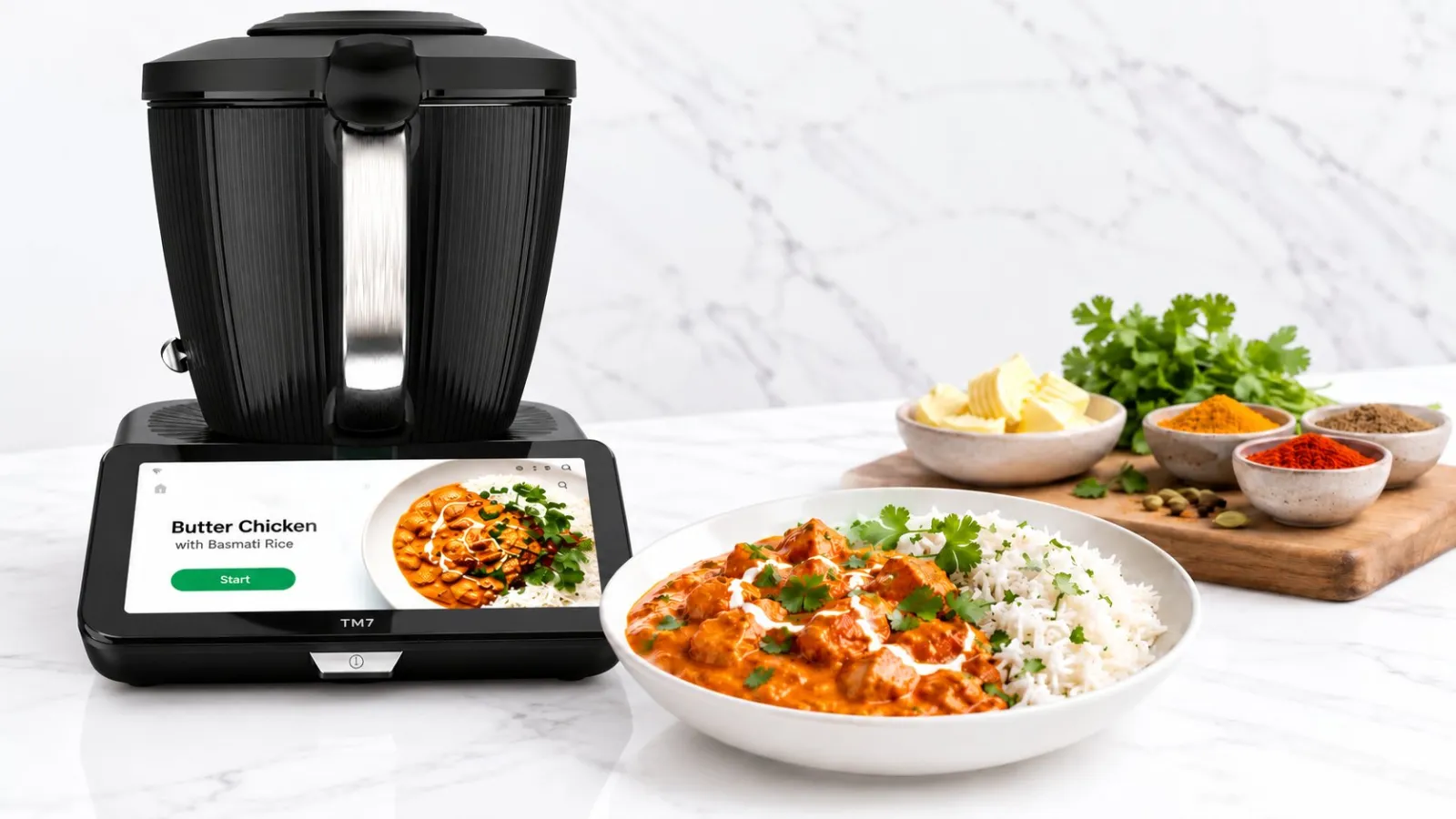
At one of my friends-night demos, the living room was full, the TM7 was humming on the counter, and the final bowls looked like something you'd order from a favorite Indian restaurant. The butter chicken was glossy, the basmati was fluffy, and nobody could believe the meal had come from one appliance without a saucepan, pan, pot, or stovetop involved.
Butter chicken, also called murgh makhani, is commonly connected to Delhi's post-Partition restaurant culture. One widely reported account places its development at Moti Mahal in Old Delhi after 1947, while another connects early experimentation with a 1920 restaurant in Peshawar. The dish grew from a clever restaurant idea, simmering leftover tandoori chicken in tomato gravy with butter and cream so dry meat became rich and tender. National Geographic's history of butter chicken offers useful context for those Delhi roots.
The one-machine rhythm
The TM7 takes care of the jobs that usually make curry feel complicated:
Marinating: Chicken thighs, yogurt, ginger-garlic paste, and spices blend quickly in the mixing bowl.
Sauce building: The onion, spices, tomatoes, cashews, and honey cook into a smooth base.
Rice cooking: Basmati cooks directly in the TM7, with the Varoma helping keep it warm.
Chicken finishing: The marinated chicken cooks gently in the sauce, with cream and butter added at the right stage.
That rhythm matters for new owners. You don't need to stir an onion mixture while checking rice water or wonder whether the chicken is catching on the bottom. You follow the display, listen for the machine, and use the time to pour drinks or greet your guests.
The TM7 factsheet lists temperature control up to 320°F, along with defined speed settings and cooking modes that support precise recipes like this one. The official TM7 factsheet is worth bookmarking if you like knowing exactly what your machine can do.
My honest take: Butter chicken with rice is one of the best first “big dinner” recipes for a TM7 owner because the flavor feels ambitious while the workflow stays calm.
What You Need Before You Start
Stage everything before switching on the machine. I'm a consultant, not a chef, but I've demoed this dish enough times to know that searching for kasuri methi with a mixing bowl already running is how people start muttering at their appliances.
You'll use boneless chicken thighs, not chicken breast. Thighs stay more forgiving during the final cook and suit the creamy sauce. For the rice, choose aged basmati if you can find it at a South Asian grocery. It gives you a better chance of separate, fragrant grains.
Marinade | Sauce | Rice |
|---|---|---|
Boneless chicken thighs, 1.5 lb, 680 g, cut into cubes | Ghee or unsalted butter, 2 tbsp, 30 g | Aged basmati rice, 1 2/3 cups, 300 g |
Greek yogurt, 1/2 cup, 120 g | Onion, 1 medium, 150 g, quartered | Water, 1 7/8 cups, 450 g |
Ginger-garlic paste, 2 tbsp, 30 g | Salt, 1/2 tsp, 3 g | Salt, 1 tsp, 6 g |
Garam masala, 2 tsp, 6 g | Garlic, 1 tbsp, 15 g | Ghee, 1 tbsp, 15 g |
Kashmiri chili, 2 tsp, 5 g | Ginger, 1 tbsp, 15 g | |
Turmeric, 1 tsp, 3 g | Garam masala, 1 tsp, 3 g | |
Salt, 1 tsp, 6 g | Kashmiri chili, 1 tsp, 2.5 g | |
Lemon juice, 1 tbsp, 15 g | Turmeric, 1/2 tsp, 1.5 g | |
Tomato passata or canned tomatoes, 1 2/3 cups, 400 g | ||
Raw cashews, 1/4 cup, 60 g | ||
Honey, 1 tbsp, 20 g | ||
Tomato paste, 2 tbsp, 30 g | ||
Heavy cream, 1/3 cup, 80 g | ||
Cold butter, 4 tbsp, 60 g, cubed | ||
Kasuri methi, 1 tsp, 2 g |
Set out the accessories
You'll need the TM7 mixing bowl, simmering basket, Varoma, Varoma tray, measuring cup, spatula, and a Varoma-safe bowl for the rice if your preferred workflow calls for one. Keep shallow containers available for any leftovers, especially the rice.
Buy Kashmiri chili, not generic chili powder, when possible. Kashmiri chili gives the sauce its beautiful red color with a gentler heat. Generic chili powder can be much hotter and can shift the balance of the finished curry.
Building the Sauce and Marinating the Chicken
Start with the chicken in the TM7 bowl. Add 1½ lb (680 g) boneless chicken thigh cubes, ½ cup (120 g) Greek yogurt, 2 tbsp (30 g) ginger-garlic paste, 2 tsp (6 g) garam masala, 2 tsp (5 g) Kashmiri chili, 1 tsp (3 g) turmeric, 1 tsp (6 g) salt, and 1 tbsp (15 g) lemon juice.
Set the TM7 to 10 seconds / speed 4 / no heat. The goal is an even coating, not minced chicken. Transfer the mixture to a covered container and refrigerate for 30 minutes. That short marinade gives the yogurt and spices time to cling to the chicken while you build the sauce.
Wipe out the bowl, but don't obsess over washing every trace of marinade. A little seasoned residue is fine. Add 2 tbsp (30 g) ghee, 1 medium onion (150 g), quartered, and ½ tsp (3 g) salt.
Set the TM7 to 5 seconds / speed 5 / no heat to chop. Scrape down the sides, then cook for 6 minutes / 120°F / reverse speed 1. The onion should soften without taking on a dark color.
Toast the spices gently
Add 1 tbsp (15 g) garlic, 1 tbsp (15 g) ginger, 1 tsp (3 g) garam masala, 1 tsp (2.5 g) Kashmiri chili, and ½ tsp (1.5 g) turmeric. Set the TM7 to 2 minutes / Varoma temperature / reverse speed 1.
The kitchen starts smelling like you've been cooking all afternoon. You haven't. That's the point.
Add 1⅔ cups (400 g) tomato passata or canned tomatoes, ¼ cup (60 g) cashews, 1 tbsp (20 g) honey, and 2 tbsp (30 g) tomato paste. Set the TM7 to 8 minutes / 212°F / reverse speed 1. The tomatoes provide moisture, the cashews add body, and the honey rounds out the acidity without making the sauce taste sweet.
Blend until silky
Blend the cooked sauce at 20 seconds / speed 6 / no heat. Scrape down the bowl if needed, then blend again briefly if you want an especially smooth finish.
Add ⅓ cup (80 g) heavy cream and 4 tbsp (60 g) butter. Set the TM7 to 5 seconds / speed 2 / no heat. Hold the sauce warm while you prepare the rice.
Don't add the chicken yet. Keeping the sauce separate gives you control over the rice timing and lets you finish both components at their best. That separation is one of my favorite parts of this workflow. The TM7 does the work, but you still get to make smart decisions.
Cooking the Basmati Right in the TM7
Rice is the part people underestimate. They focus on the creamy curry, then leave cooked rice sitting around while everyone talks. Cooked rice can support Bacillus cereus growth if it stays in the danger zone too long, so food-safety guidance recommends cooling it quickly, ideally within 1 hour, using shallow portions and refrigeration for use within about 24 hours. The UK Food Standards Agency rice guidance explains why rice deserves its own attention.
For this meal, we're serving the rice hot, not storing it, but the same discipline helps. Rinse 1⅔ cups (300 g) aged basmati rice under cold water until the water runs clear. Don't skip this. Rinsing removes excess surface starch and helps the grains stay distinct.
Wipe the TM7 bowl clean, then add the rinsed rice, 1⅞ cups (450 g) water, 1 tsp salt, and 1 tbsp ghee. Fit the simmering basket on top as directed for your TM7 cooking setup so excess steam can escape while the rice cooks.
Set the machine to:
14 minutes / 212°F / reverse stir, speed 1
The rice should cook gently without aggressive movement. The reverse setting helps protect the grains, while the ghee gives them a light, savory finish.
Let the grains finish
When the timer ends, leave the rice covered for 5 minutes. This resting time lets the grains finish absorbing steam instead of going straight from cooking to plating while they're still unevenly hydrated.
Once rested, fluff the rice gently with the TM7 spatula. Place the Varoma tray over the bowl to help keep the rice warm while the chicken finishes in the sauce.
The texture you're after is fluffy, separate, and lightly aromatic. There's no sticky bottom to scrape and no second burner to monitor. I've made enough rice during demos to know that this small change, putting the starch inside the main workflow, makes people much more likely to repeat the dish.
Finishing the Chicken and Plating Over Rice
Your sauce is smooth, warm, and ready. Add the marinated chicken to the TM7 bowl, using the spatula to move every last bit of yogurt and spice mixture in. Set the machine to 10 minutes / 212°F / reverse stir, speed 1 so the chicken cooks gently and stays coated in sauce.
Check that the thickest chicken pieces are cooked through before serving. Most TM7 sauce recipes cook at 212°F, which is plenty for a delicate sauce and tender chicken. Keep the movement low. This is not the moment for enthusiastic stirring.
During the final 2 minutes, add 4 tbsp (60 g) cold butter, cubed and ⅓ cup (80 g) heavy cream. Set the TM7 to 2 minutes / 212°F / reverse stir, speed 1. The low speed keeps the chicken intact, and the gentle movement helps the butter and cream disappear into the tomato base without turning the sauce rough.
Finish with fragrance
Taste the sauce and adjust the salt if needed. Crush 1 tsp kasuri methi between your palms before adding it. That quick crush releases its aroma and gives the curry a more rounded restaurant-style finish.
Spoon the rested basmati into shallow bowls. Ladle the butter chicken alongside the rice rather than burying it completely. You want each serving to show the contrast between the pale, separate grains and the glossy orange-red sauce.
Finish with a small swirl of cream, a curl of butter, and chopped cilantro if you have it.
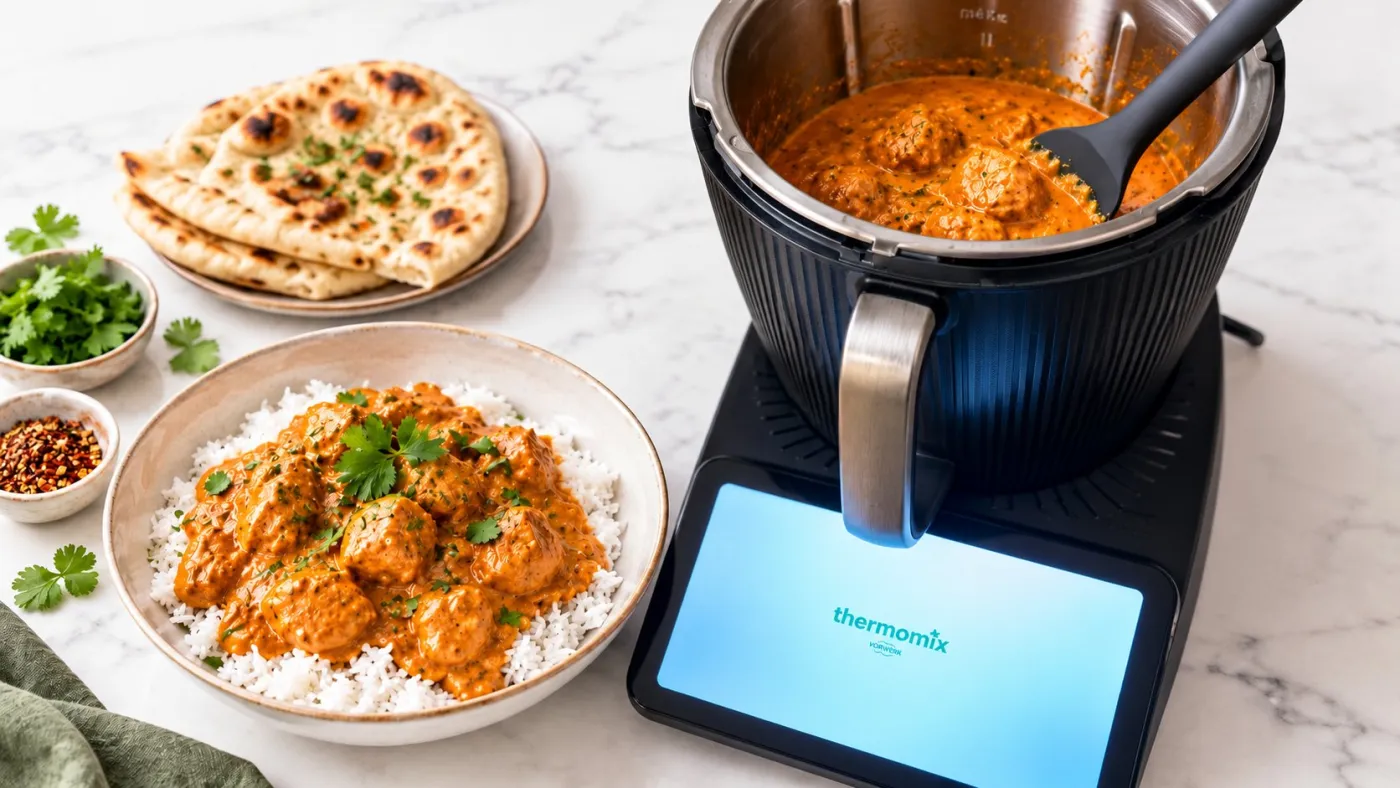
Serve immediately while the sauce is silken. If you're saving leftovers, portion the rice and curry into shallow containers quickly, refrigerate them promptly, and reheat until steaming hot throughout. Rice and thick sauce can warm unevenly, so stir frequently and check the center rather than trusting steam on the surface. Torbay Council's rice safety guidance gives practical guidance on reheating and refrigerated storage.
Demo Day Tips From a Real TM7 Consultant
A new TM7 owner can make this dish feel much easier by choosing the right rice first. I buy aged basmati from a South Asian grocery instead of reaching for the first generic bag on the shelf. The grains stay separate, giving the rich sauce a better base and making the finished bowl look more deliberate.
Set up the machine so the rice and chicken follow one connected workflow. Start the rice 14 minutes before the chicken finishes. Let the Varoma hold the rice while the curry completes, keeping both parts warm without dirtying another cooking vessel.
Small timing decisions matter
For a stronger spice aroma, toast the garam masala in the empty TM7 bowl for 2 minutes / Varoma temperature / reverse speed 1. I use this setting during demos because the fragrance reaches the room quickly. Guests notice it, and the step shows how much the machine can handle while you prepare the next ingredient.
Once cream enters the bowl, keep the sauce below 212°F. Choose a gentle setting rather than a boil. Add butter in cold cubes, then let the TM7 fold it through slowly. I'm a consultant, not a chef, and this is the kind of control I want on a busy friends-night table. The machine does the hard work, but the sequence still matters.
Consultant's rule: The best TM7 recipe is the one you'll make again on a tired Tuesday. Make the workflow easy enough that you don't need to feel heroic.
Portioning changes the nutrition more than a simple healthy-or-unhealthy label suggests. Rice, cream, butter, and serving size can shift the bowl from lighter to much richer. This butter chicken with basmati rice nutrition reference illustrates why the same dish can produce different estimates. My recommendation is clear: use a measured rice portion and a generous serving of chicken when you want the meal to feel protein-focused. Serve a richer bowl when comfort food is the point.
Taste before plating, especially after the butter and cream have been folded in. Check salt, confirm the chicken is tender, and keep the basmati resting until the curry is ready. That final pause prevents rushed bowls and lets the TM7 workflow finish cleanly.
Your First Butter Chicken Night and What Comes Next
A brand-new TM7 owner doesn't need to treat butter chicken with rice like a weekend project. The curry and basmati follow one machine workflow, and a beginner can move from unboxing to plated bowls in roughly 45 minutes when the ingredients are ready.
That's the common assumption I like to challenge. People think Indian curry requires constant stirring, multiple vessels, and a mysterious level of cooking confidence. This version asks you to measure, press settings, respect the sequence, and taste at the end. Those are manageable jobs.
Run it once before changing it
Make the recipe exactly as written the first time. Don't swap proteins, double the rice, or turn up the chili before you've seen how the TM7 handles the sauce and water ratio.
After that first run, make it yours:
Paneer night: Replace the chicken with paneer and use a gentle finishing cycle so the cubes stay intact.
Coconut version: Use full-fat coconut milk instead of dairy cream for a different richness.
Next-day wrap: Spoon leftover curry into a wrap with fresh greens and herbs.
Remember the rice safety piece when you have leftovers. Rice-based foods shouldn't cool slowly in the mixing bowl or sit out while the evening stretches on. The USDA Agricultural Research Service identifies extended cooling of 15 hours or more as a public-health concern for rice-containing foods, including rice and chicken combinations. The USDA rice-cooling publication is a useful reminder that a beautiful meal still needs sensible handling.
You now have a repeatable dish that can run almost on autopilot. I'm not a chef, and I won't pretend the TM7 removes every decision, but it does remove the frantic juggling that makes curry intimidating.
If you're in Las Vegas, book a live demo with me and I'll run the full butter chicken with rice workflow in real time. Families across the USA can join a free video walkthrough, ask questions while the TM7 cooks, and see whether this is the kind of meal they'll make at home.
IT'S A CHEF! offers in-person friends-night demonstrations in Las Vegas, nationwide live video consultations, purchase guidance, and first-meal setup support for new Thermomix owners. Visit IT'S A CHEF! to book a walkthrough and see this butter chicken with rice workflow from ingredients to finished bowl.