Thermomix Recipes · October 12, 2026 · 9 min read
Zuppa Di Pesci Made Easy with Thermomix
The first time a seafood soup goes sideways at home, it usually happens fast. The broth looks promising, the kitchen smells expensive, and then the fish turns dry while the shellfish keep pretending they need more time.
On this page
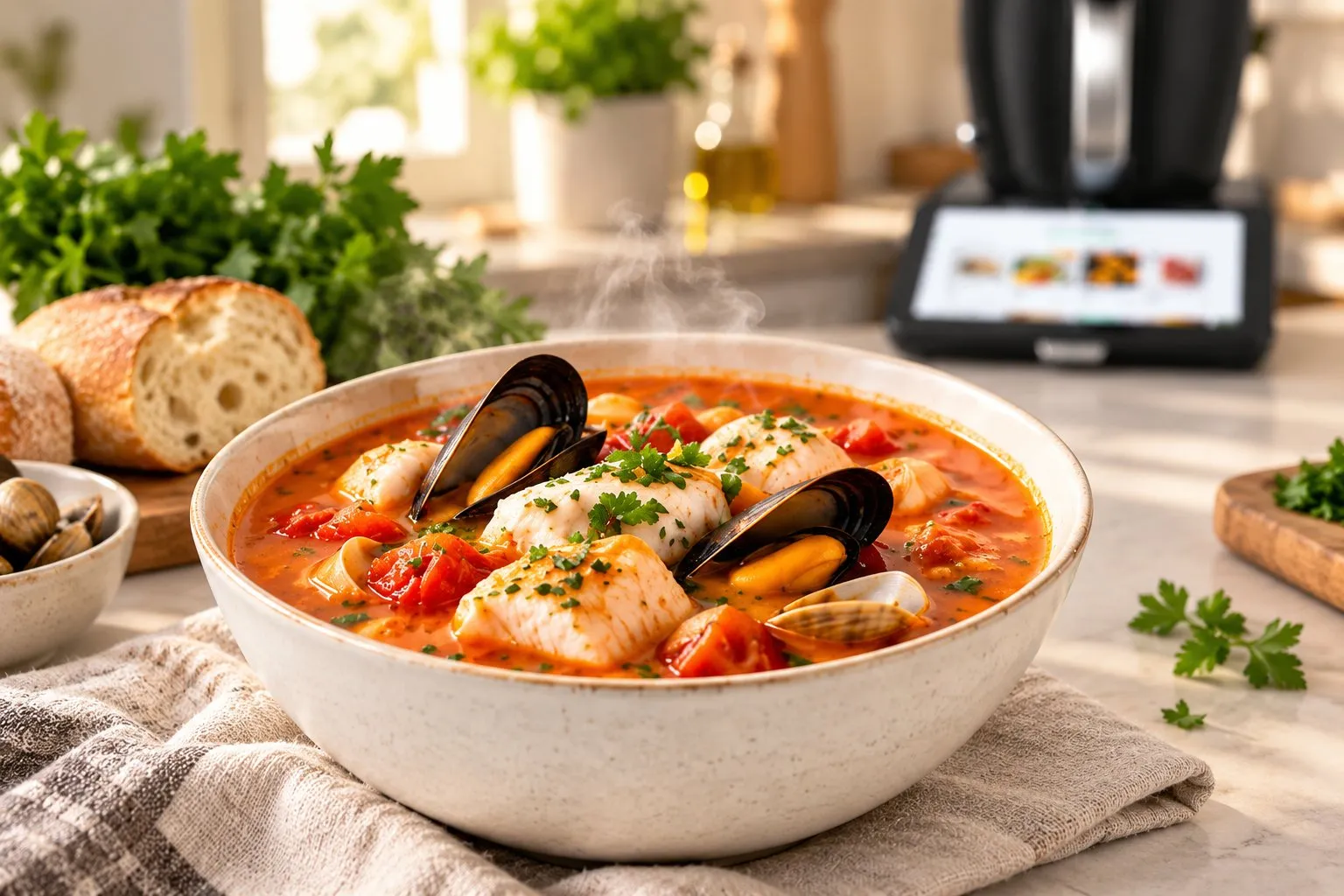
The first time a seafood soup goes sideways at home, it usually happens fast. The broth looks promising, the kitchen smells expensive, and then the fish turns dry while the shellfish keep pretending they need more time. That's where zuppa di pesci earns its place in a weeknight rotation, because it's less a rigid recipe than a coastal cooking mindset built around whatever the day brought in.
Why Zuppa di Pesci Is Your New Favorite Weeknight Dinner
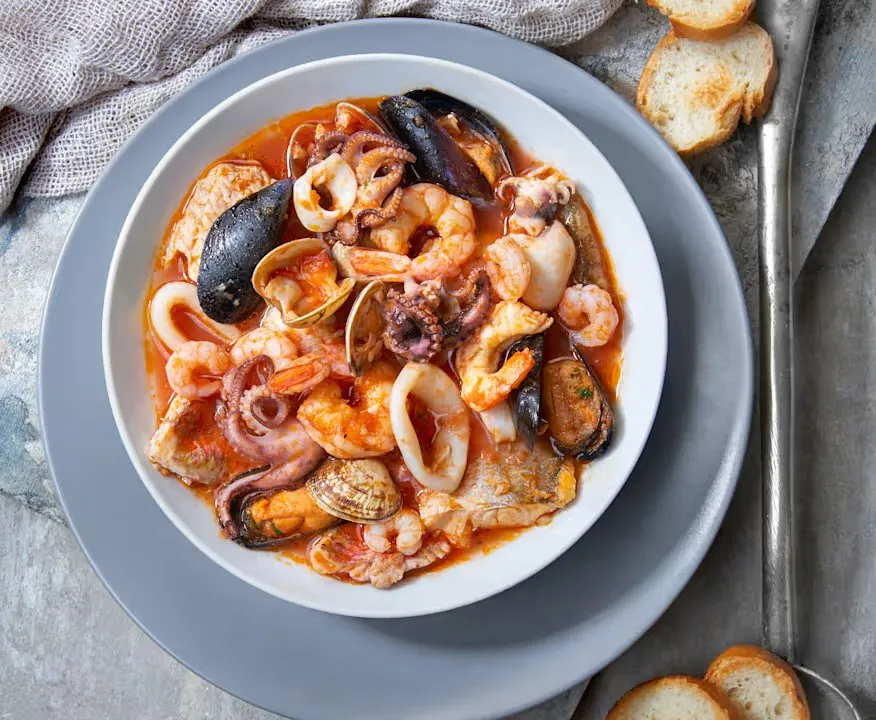
A dish that came from practical kitchens, not restaurant theater
Zuppa di pesci is best understood as a family of Italian fish soups, not one fixed national recipe. Its roots sit with coastal fishing communities that cooked with inexpensive or unsold fish, the kind that had little value at market but plenty of flavor in a pot. That makes the dish feel modern in the best way, because it rewards common sense, not culinary drama. The historical background of Italian fish soups
Why the flexibility matters at home
That same flexibility is what makes the dish useful in an American kitchen. You don't need one sacred species list, you need a framework that respects what's available, what's fresh, and what fits your budget. Some regional Italian versions lean toward brodetto, cacciucco, buridda, or other local names, but the bigger lesson is the same. Fish soup was never about pretending the catch was luxurious, it was about turning mixed seafood into something comforting and thoroughly edible.
Practical rule: if the seafood mix looks a little random, you're probably closer to the spirit of the dish than if you've forced it into a tidy, overly fancy lineup.
That's why this soup belongs in a Thermomix routine. The TM7 can chop the aromatics, build the base, and keep the cooking controlled, which matters when seafood goes from perfect to overdone in a heartbeat. The result is a dish that feels old-world and practical at the same time, which is the best kind of dinner.
Building Your Broth Base in the Thermomix TM7
Start with flavor, not seafood
A good fish soup starts with the base, not the fillets. For the Thermomix TM7, use the bowl to sweat onion, celery, and carrot without browning them, then add fish trimmings, tomato, white wine, and enough water or stock to build body. A reliable method is to simmer the covered broth for approximately 30 minutes before straining it or passing it through a vegetable masher. Method for building a zuppa di pesci broth
The point is to extract flavor before delicate seafood enters the bowl. Browning the vegetables too hard can push the broth toward bitterness, while a gentle sweat keeps the base sweet and clean. If the liquid looks a little pale at first, that's fine. Seafood broth often tastes more restrained than a meat stock, then opens up once the right ingredients meet it.
TM7 settings that keep the base controlled
For a practical Thermomix workflow, use short chopping bursts for the vegetables, then cook them gently so they soften rather than color. After that, add the trimmings and tomato, then let the liquid do the work. The TM7's precision matters here because the broth should feel calm, not aggressive.
This overview of TM7 capabilities fits that idea well, especially if you're still learning how to use the machine for layered dishes. The bowl does the chopping, mixing, and cooking, so you can stay focused on the order of ingredients instead of babysitting a flame.
Keep the base savory, not salty. Fish and shellfish bring their own salinity, and the broth can turn harsh if you season like it's a tomato soup.
A clean broth should taste like the sea after a good day, not like a salt shaker got nervous. Once it's strained and ready, you've got the foundation for the part that makes or breaks the dish, the seafood sequence.
The Critical Seafood Addition Sequence
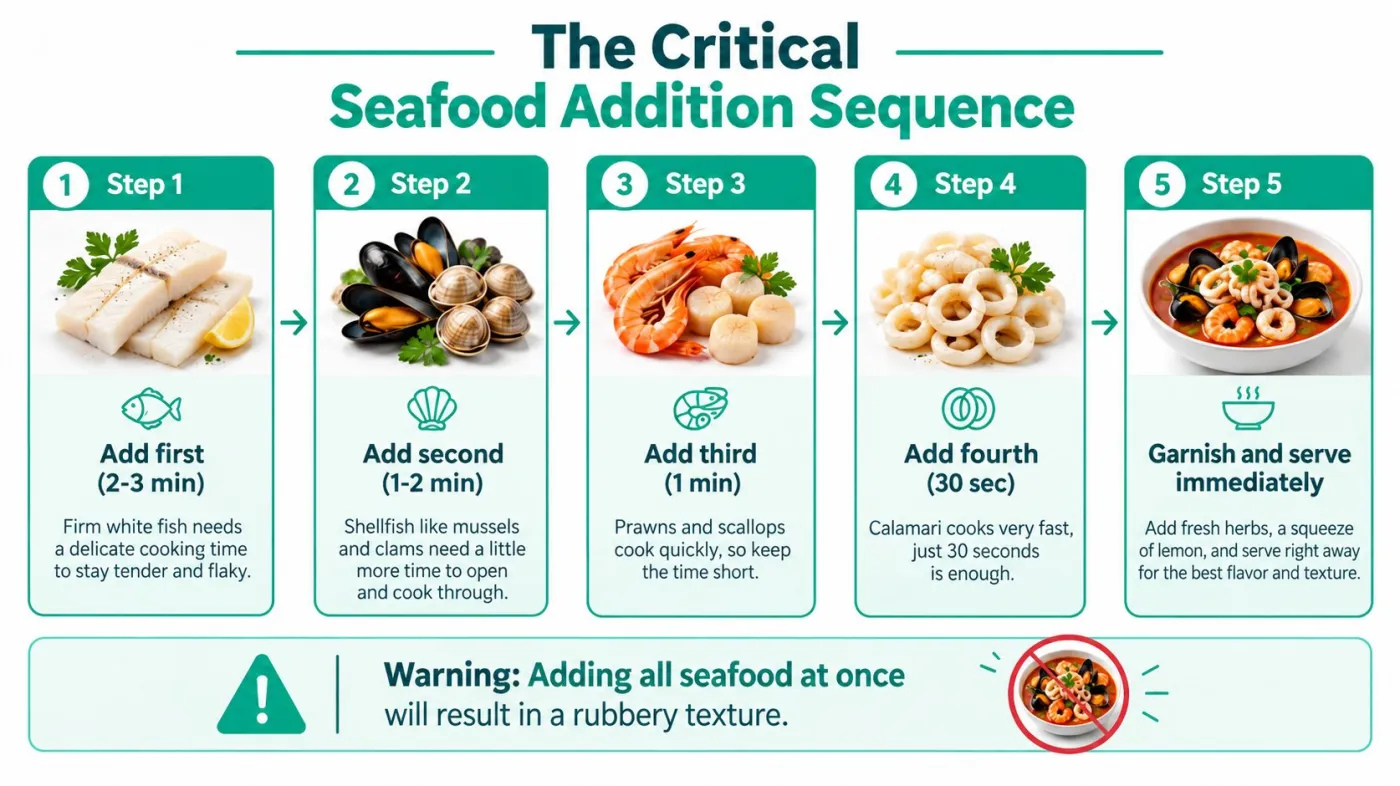
Why timing matters more than bravado
The fastest way to wreck zuppa di pesci is to dump every seafood into the pot at once and hope for the best. Different types finish at different speeds, and the bowl rewards patience more than enthusiasm. Live clams benefit from a purge in seawater-strength brine for about one hour, then a thorough rinse before cooking. Shellfish handling and cooking guidance is clear on the basics, clams should cook until the shells open fully, and anything that stays shut gets left out. Shellfish handling and cooking guidance
The order that protects texture
Start with the ingredients that need the most time. If cuttlefish or octopus are in the pot, they go in first. Firmer fish follows, then more delicate fillets, and shellfish and crustaceans come near the end. That order keeps cephalopods from turning chewy and stops tender fish from collapsing into threads.
Don't stir like you're beating eggs. A gentle shake of the bowl, or very light movement, keeps fillets intact and helps the shellfish stay in place.
A Thermomix TM7 makes that sequence easier to control because the bowl handles the heat while you focus on the timing. Keep the additions staged, especially when the pot holds more than one seafood family. A clean sequence is how you protect texture without turning the cook into a juggling act.
A simple rule for mixed seafood
Sequence gets you texture. Verification gets you safety. The next section covers how to confirm the bowl is done.
Food Safety Guidelines for Mixed Seafood
Temperature beats guesswork
Mixed seafood asks for a little discipline. Texture is one issue, safety is another, and the bowl does not care which one you worry about first. For home cooks, the clearest finish line is the FDA's 145°F (63°C) recommendation, which is more reliable than guessing from color or aroma alone. FDA guidance for safe seafood handling
A Thermomix TM7 helps because it gives you steady heat, but steady heat is not the same as confirmed doneness. A thick piece of fish and a thin one will not finish the same way, and shellfish can look ready before the center of the pot has caught up. Use the thermometer in the thickest part of the bowl, then give the rest of the seafood a quick check for doneness.
Leftovers, thawing, and who should be careful
Leftovers need the same attention you gave the pot. Cool them promptly, keep them cold, and reheat only what you plan to eat. Reheating should bring the soup back to a hot serving temperature, not just take the chill off. Seafood sitting around in the danger zone is a bad habit, and bad habits are how good soup gets awkward.
If the recipe uses frozen seafood, thaw it in the refrigerator or under cold running water, not on the counter. That keeps the outer layer from warming while the center stays frozen, which is exactly the kind of mismatch you do not want in mixed seafood. Pat the seafood dry before it goes into the bowl so the broth stays clean and the timing stays predictable.
Some diners need a stricter approach. Pregnant people and others with a higher food-safety risk should avoid raw or undercooked seafood and stick with fully cooked portions. In a mixed bowl, that means verifying the finish carefully and serving only seafood that has reached the safe target.
Good seafood soup should taste generous, not risky. When you handle storage, thawing, and serving with the same care you give the broth, the final bowl stays calm, flavorful, and far less likely to create drama at the table.
Complete Thermomix Zuppa di Pesci Recipe
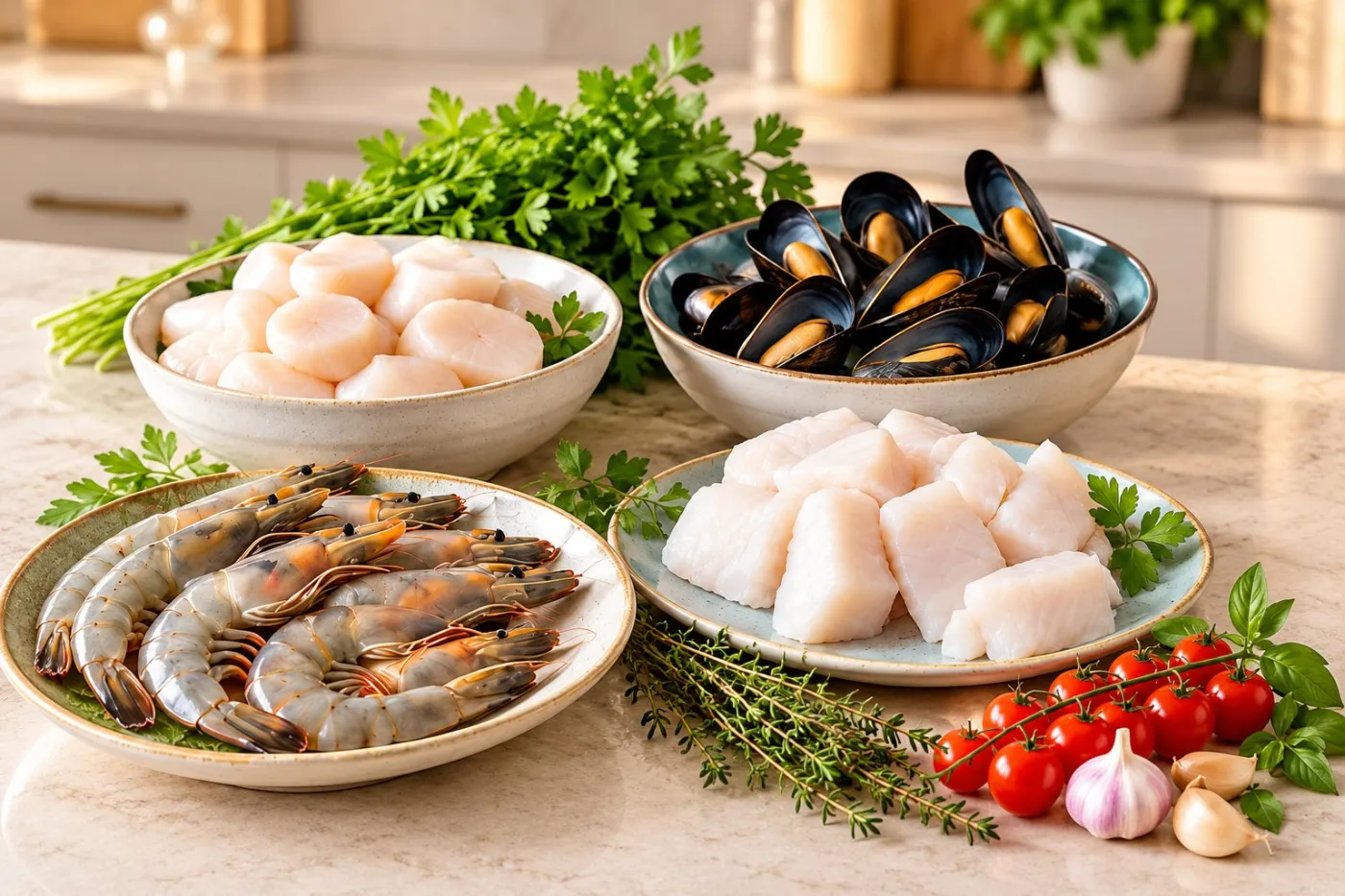
Ingredients
1 medium onion (about 6 oz / 170 g), quartered
2 celery stalks (about 3 oz / 85 g), cut into chunks
1 carrot (about 3 oz / 85 g), cut into chunks
2 garlic cloves
2 tbsp olive oil (about 30 g)
1 tbsp tomato paste (about 16 g)
1 cup dry white wine (240 ml)
3 cups fish stock or water (720 ml)
1 lb mixed seafood (about 454 g), chosen from firm white fish, cuttlefish, octopus, clams, mussels, shrimp, or scallops
1 tomato, chopped
Salt and black pepper, to taste
Chopped parsley, for finishing
Lemon wedges, for serving
Thermomix TM7 method
Chop the aromatics: Add onion, celery, carrot, and garlic to the TM7 bowl. Chop 5 sec / speed 5.
Soften the base: Add olive oil. Cook 6 min / 250°F / speed 1.
Build the broth: Add tomato paste, white wine, stock or water, and chopped tomato. Cook 30 min / 212°F / speed 1 with the lid cap removed.
Strain or smooth the broth: If you want a finer texture, strain the liquid and return it to the bowl. If you want a rustic soup, blend briefly 5 sec / speed 4.
Add the seafood in stages: Add the longest-cooking seafood first, then the firmer fish, then the quickest-cooking shellfish. Cook 4 min / 212°F / reverse / speed 1, then check doneness.
Finish gently: Continue in short bursts, 1 to 3 min / 212°F / reverse / speed 1, until the seafood reaches 145°F (63°C) at the thickest piece and the shellfish are opened.
Serve right away: Season with salt and black pepper, sprinkle with parsley, and serve with lemon wedges.
A few practical notes
Use frozen seafood only if it's thawed safely first and patted dry so it doesn't water down the broth. If some shells stay closed after cooking, discard them. If a fish piece flakes too quickly, you've probably let it go a little too far, but even then, a good broth can carry the bowl. For another Thermomix recipe collection that leans into this kind of practical cooking, see these Thermomix recipe ideas.
Tips for Success and Common Mistakes to Avoid
Small choices make a big difference
The best zuppa di pesci is usually the one that gets out of its own way. Keep the broth balanced, add seafood by cooking time, and don't bully the bowl with a hard boil. That last part matters more than people think, because rough heat turns delicate fish into something that tastes tired before dinner even starts.
A few habits save the dish every time:
Season late, not early: Shellfish and reduced broth can make the final bowl saltier than expected.
Shake, don't stir hard: You want movement, not seafood confetti.
Choose substitutions by texture first: Firm fish holds structure, while fragile fillets need shorter exposure.
Respect the shells: Closed shellfish after cooking don't get a second chance in the soup.
Keep the seasoning honest
If the broth tastes flat, check the seafood, not just the salt. Sometimes the answer is a squeeze of lemon or a little chopped parsley, not a heavier hand with seasoning. That's one reason seafood soup can be so satisfying, the flavor reads clean, but it still feels generous.
For broader Thermomix help and everyday cooking ideas, this tips and how-to collection is useful when you want the machine to do the boring parts without making dinner feel like homework.
True confidence is the win here. Once you learn the sequence, zuppa di pesci stops being a stressful “hope this works” dish and becomes a reliable, flexible soup you can easily pull off on a Wednesday.
If you want more practical Thermomix guidance like this, IT'S A CHEF! offers hands-on support for people who want to cook better without making life complicated. Visit IT'S A CHEF! to explore more recipes, find helpful Thermomix guidance, and get the kind of support that makes seafood night feel a lot less scary.