Thermomix Recipes · October 21, 2026 · 9 min read
Pozole De Pollo Verde Recipe for Your Thermomix
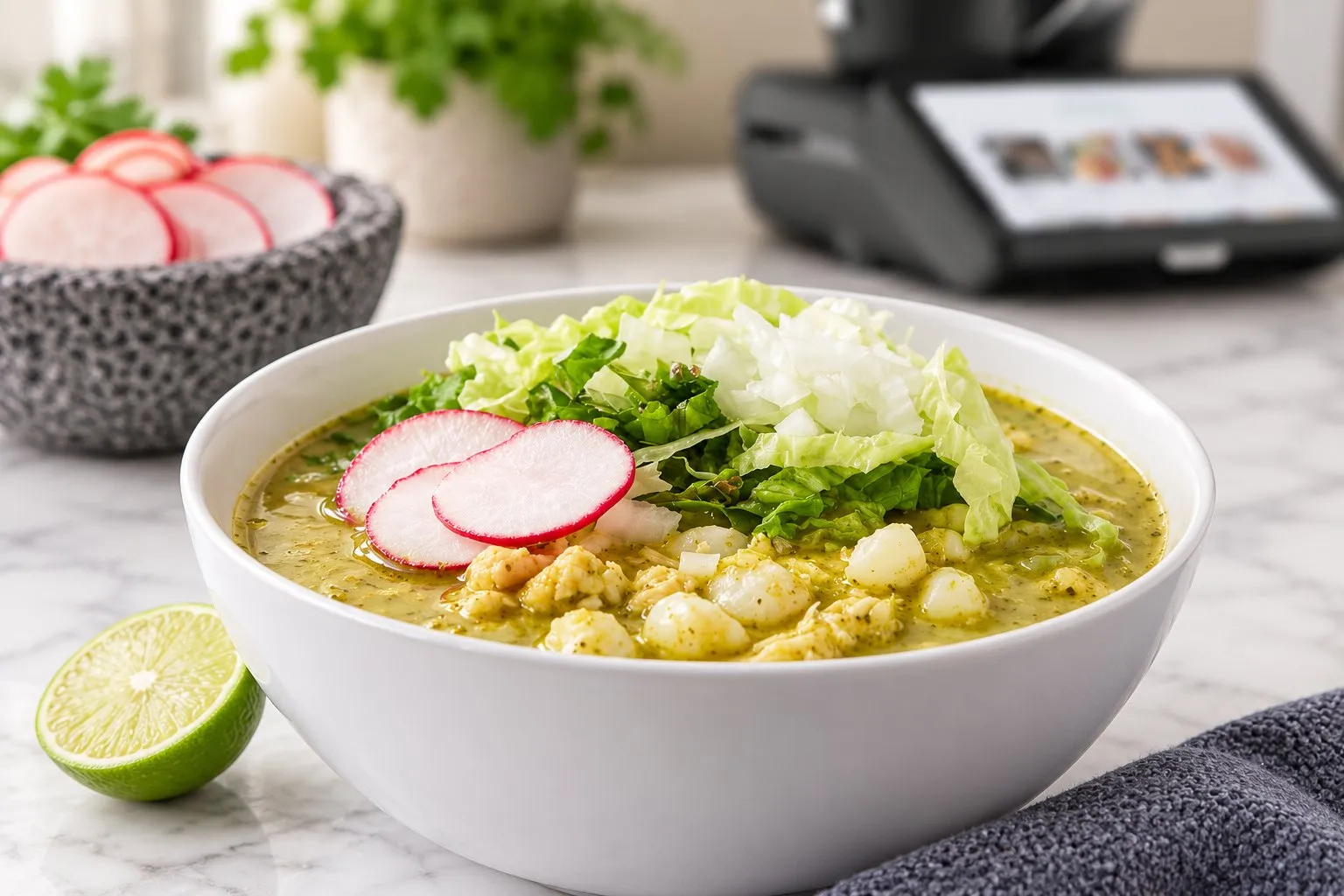
It's a chilly evening, everyone's hungry, and you want something more satisfying than another round of takeout. Pozole de pollo verde answers that craving with tender chicken, chewy hominy, bright green salsa, and the kind of toppings that let everyone make dinner their own.
On this page
It's a chilly evening, everyone's hungry, and you want something more satisfying than another round of takeout. Pozole de pollo verde answers that craving with tender chicken, chewy hominy, bright green salsa, and the kind of toppings that let everyone make dinner their own.
I'm Prinal Glassman, an Independent Thermomix® Consultant in Las Vegas, helping families across the USA. I'm not a chef, and I don't run cooking classes. My motto is “Thermomix? It's a chef… I'm not!” My approach is practical: understand the ingredients, respect the safety checkpoints, and don't turn dinner into a competitive sport.
Why Pozole de Pollo Verde Belongs in Your Kitchen
A bowl of chicken soup can be comforting. Pozole brings something more specific: substantial maize kernels, a seasoned broth, and enough contrast between the soup and its fresh garnishes to keep every spoonful interesting.
Its foundation is older than the modern chicken version. Historical accounts of pre-Hispanic pozole describe maize preparations with different proteins, including an early Nahua preparation called tlacatlaolli, meaning “maize of man.” Other documented maize stews used turkey or beans. Chicken pozole belongs to that broader maize-centered tradition rather than standing apart as an unrelated soup.
The maize matters most
Nixtamalized maize is the defining ingredient. Large pozole kernels, often cacahuazintle or related varieties, open and “flower” during cooking, creating their characteristic appearance and soft, chewy texture.
That's why substituting ordinary sweet corn changes more than the shopping list. My recommendation is to keep the hominy and adjust the garnishes or chile level instead. You'll preserve the ingredient that makes the bowl recognizable.
Practical rule: Build pozole around the maize, then choose the chicken, green seasonings, and finishing touches to suit your household.
Green pozole gets its character from a genuine green salsa base, not from adding green vegetables to broth. Tomatillos, fresh herbs, and green chiles give this version its direction.
For a manageable appliance workflow, I favor a modest batch with separate salsa and chicken stages. You'll temporarily reserve ingredients in bowls, but the chopping, blending, and cooking stay in the machine. That's a little more deliberate than adding everything together, and it gives you better control over the chicken's texture.
Ingredients You Will Need for Green Pozole
Buy the hominy first. It's the ingredient most likely to require a closer look at the label, and canned hominy keeps this version practical without adding a separate maize-cooking project.
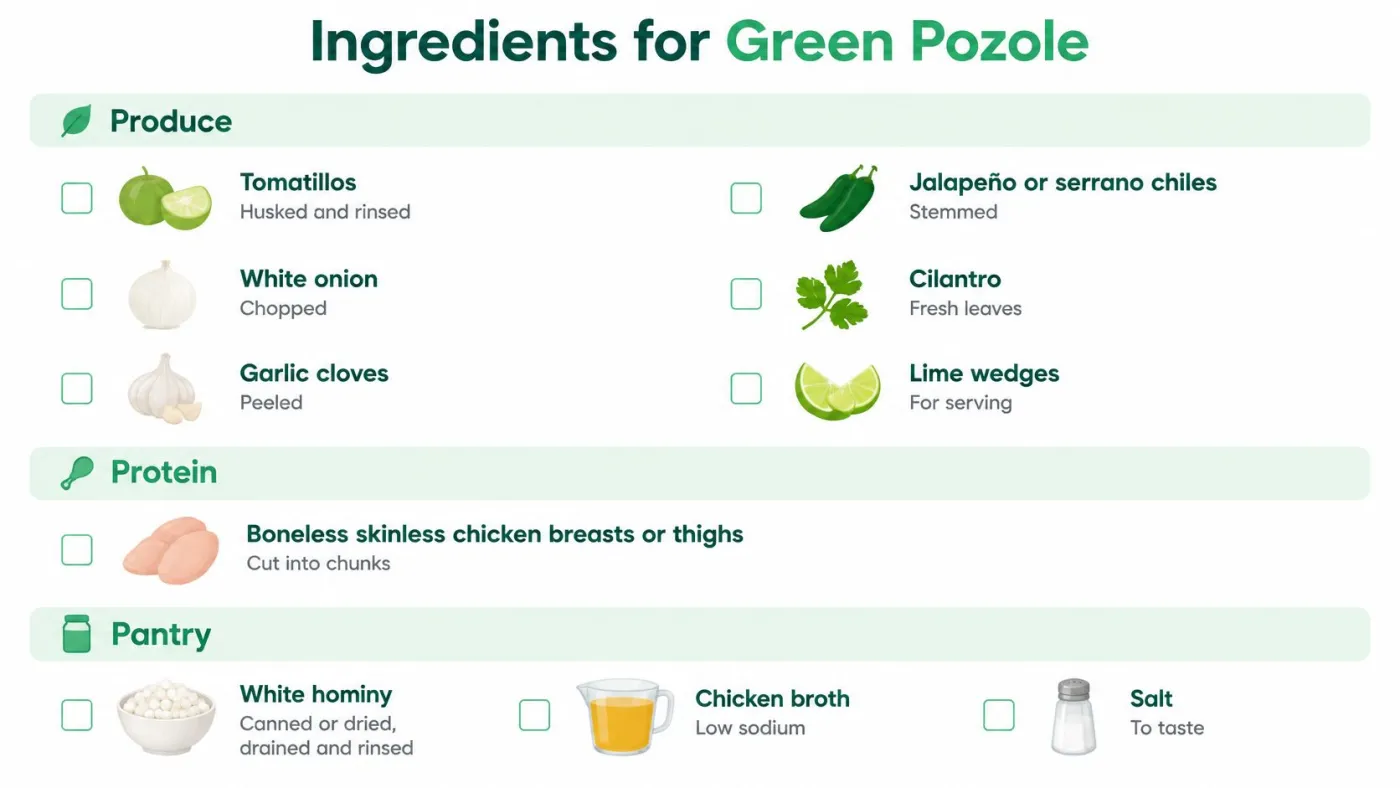
A small-batch shopping list
The quantities below are my proposed small-batch adaptation, not a manufacturer-tested guided recipe. Weights refer to prepared ingredients, and the gram amounts appear in brackets.
| Ingredient | Amount | Preparation |
|---|---|---|
| Boneless, skinless chicken breasts or thighs | 8 ounces [225 g] | Cut into substantial, similar-size pieces |
| Canned white hominy | 8 ounces [225 g] | Weigh after draining and rinsing |
| Tomatillos | 8 ounces [225 g] | Husk, rinse, and quarter |
| White onion | ½ cup [75 g] | Roughly chopped, divided equally |
| Garlic | 0.2 ounce [6 g] | Peeled, divided equally |
| Jalapeño | 0.5 ounce [15 g] | Stemmed, seeds removed if preferred |
| Cilantro | ¼ cup [10 g] | Washed leaves and tender stems |
| Unsalted chicken broth | 2 cups [480 g] | Divided between salsa and chicken |
| Salt | To taste | Add only after tasting the finished soup |
For serving, choose from shredded lettuce or cabbage, radishes, avocado, lime wedges, additional cilantro, and chopped onion. Keep garnishes separate so each person can choose their own combination.
Choosing the maize and greens
- Canned hominy: Use this for the cooking sequence below. It's already processed and can enter the finishing stage after draining and rinsing.
- Dried hominy: Don't substitute it directly. It needs its own preparation before it can replace the ready-to-use kernels.
- Frozen hominy: Check the package directions rather than assuming it's ready to eat or needs the same treatment as canned.
- Fresh cilantro: Reserve a little for serving if you especially enjoy its uncooked aroma.
The recipe uses jalapeño for a straightforward shopping list. A different green chile changes the flavor and heat, so treat substitutions as a seasoning decision rather than an automatic equivalent.
Making the Green Salsa Base in the TM7
The Thermomix® TM7™ weighs, chops, blends, and cooks in the same bowl. For this recipe, the useful part is that you can soften the salsa ingredients, blend them, and cook the sauce without moving between appliances.
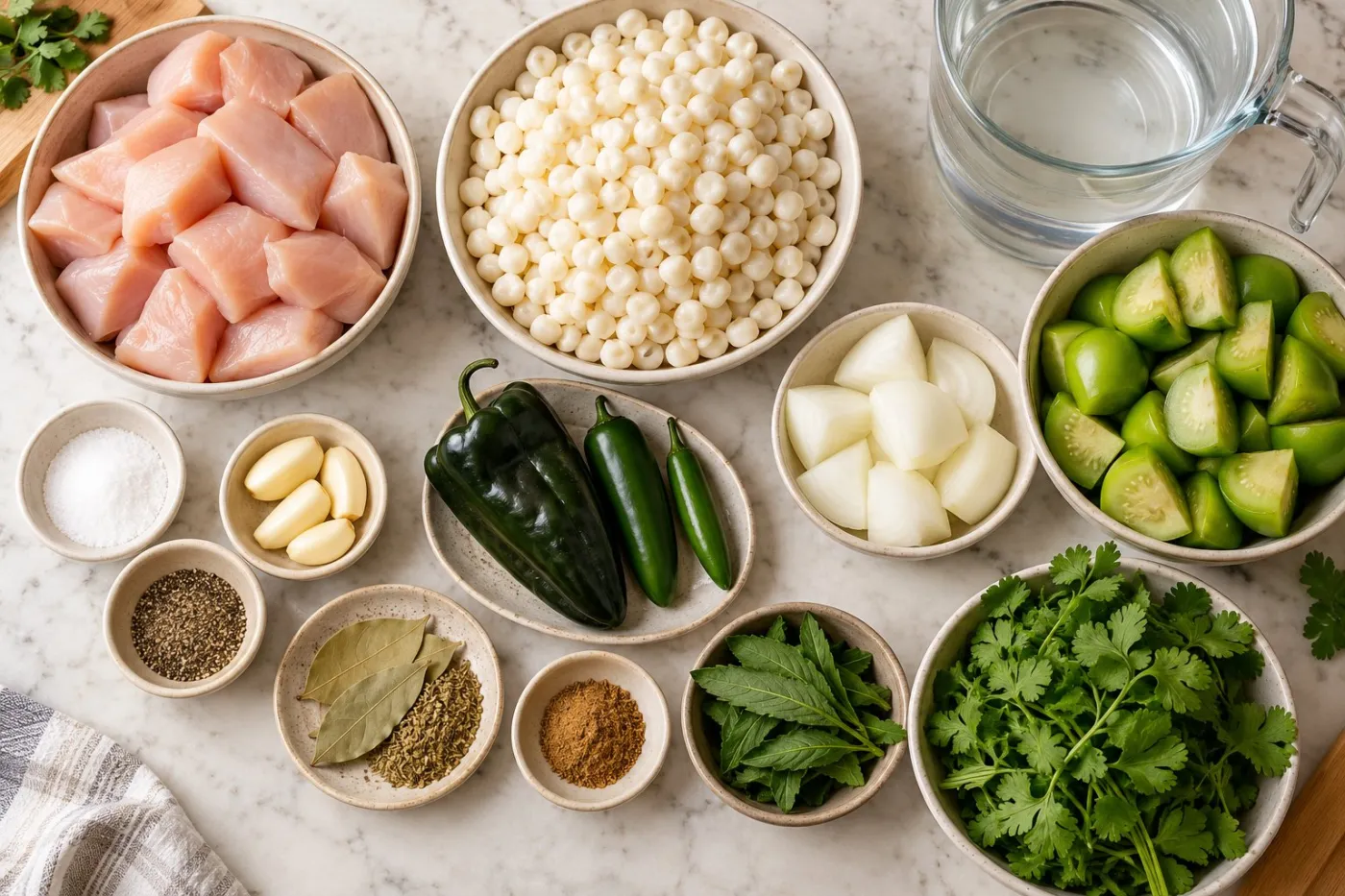
These manual settings are a proposed adaptation, not a tested guided recipe. Follow your appliance manual for loading, maximum fill, lid use, and hot-food blending. Don't override a restriction or warning to match a setting written below.
Soften, blend, then cook
- Chop the aromatics. Put half the onion and half the garlic in the bowl. Process 5 sec / no heat / speed 5, then scrape down with the appliance stopped.
- Soften the green ingredients. Add the tomatillos, jalapeño, and ½ cup [120 g] of the measured broth. Cook 10 min / 212°F / speed 1. Check that the tomatillos have softened before proceeding.
- Blend the base. Add the cilantro. Following the manual's hot-food blending instructions, blend 30 sec / no additional heat / speed 5, increasing speed gradually as permitted. Inspect the texture and repeat only if necessary and safe.
- Cook the salsa. Cook 15 min / 212°F / speed 1. Transfer the sauce to a heat-safe bowl and reserve it.
The published green chicken pozole method supports softening tomatillos for about 10 minutes and cooking the blended salsa for about 15 minutes. It doesn't validate these appliance-specific speeds, which is why I distinguish the adaptation from the underlying method.
Softening first helps avoid a sharply raw base and uneven blending. Adding cilantro after that initial softening stage also avoids subjecting it to the entire cooking process.
Aim for a smooth sauce before adding hominy. Once the kernels are in, blending is no longer the fix.
For other dishes that use staged preparation, browse the Thermomix recipe collection. The transferable habit is simple: finish each texture before adding ingredients you want to keep intact.
Cooking the Chicken and Building the Broth
Good chicken pozole needs chicken that's cooked safely without being worked into tiny fibers. Keep the pieces reasonably uniform, and resist the temptation to shred them before the broth stage is finished.
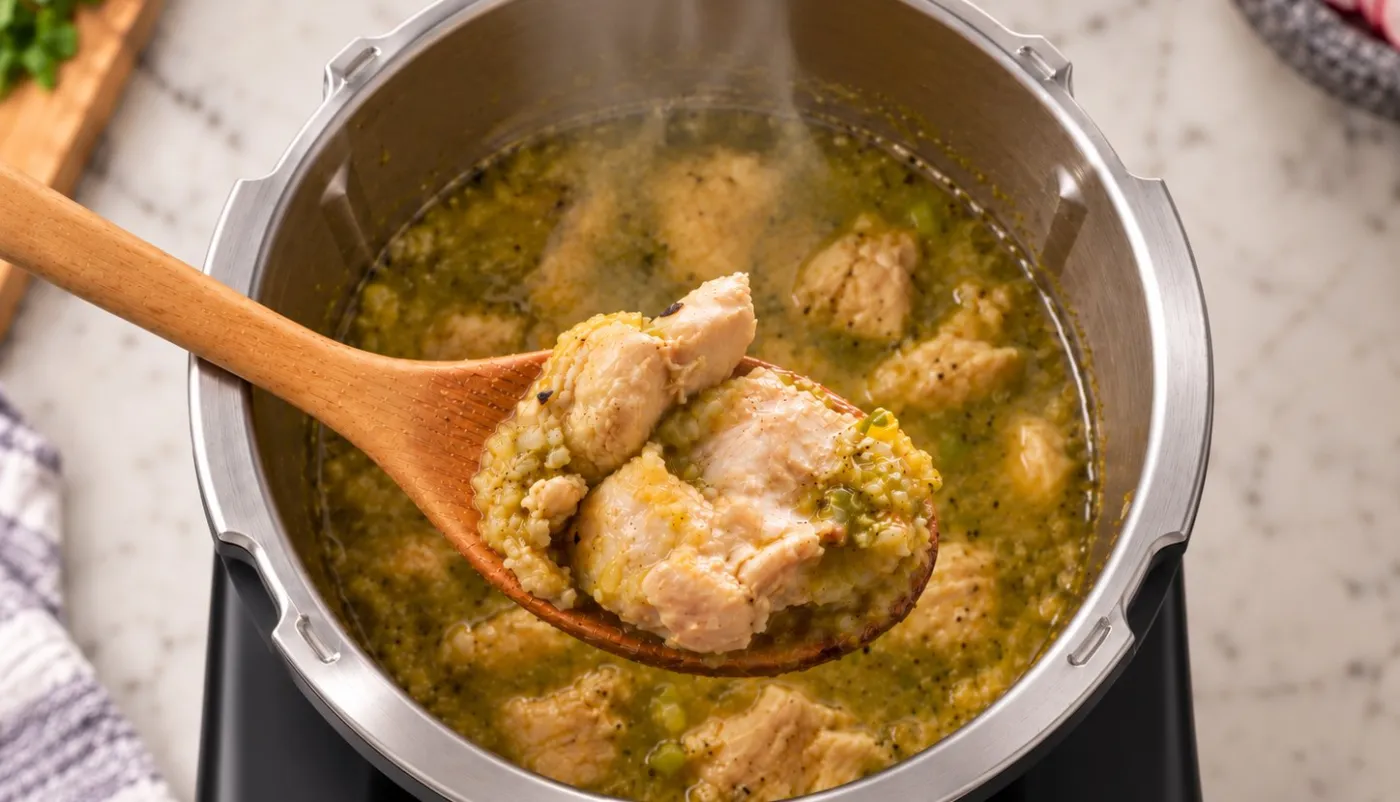
The broth here starts with unsalted chicken broth rather than water alone. Onion, garlic, and the chicken cook together, giving you a seasoned liquid to combine with the reserved salsa.
The chicken cooking sequence
With the salsa reserved, use the emptied bowl for the chicken stage. There's no need to chase away every trace of green sauce.
| Action | Proposed manual setting | What to check |
|---|---|---|
| Chop the remaining onion and garlic | 5 sec / no heat / speed 5 | Scrape down after stopping |
| Add chicken and remaining 1½ cups [360 g] broth | 35 min / 212°F / reverse / speed spoon | Confirm the loading follows the manual |
| Continue cooking if the thermometer check fails | 5 min / 212°F / reverse / speed spoon, then recheck | Temperature, not the timer, determines readiness |
The initial cooking window is a starting point, not a promise. Piece size, the chicken's starting temperature, and the amount of liquid can change how quickly the center cooks.
Every thick chicken piece must reach 165°F, measured with a food thermometer, under the USDA safe minimum temperature guidance for poultry. Check the thickest part rather than judging by the broth's temperature or the appearance of the meat.
Keep the chicken intact until finishing
Once the chicken passes the temperature check, transfer it to a clean bowl and reserve the broth separately. Keep both covered while you prepare the final soup stage, and proceed promptly.
I wouldn't mechanically shred the chicken early in this workflow. Holding it in larger pieces until the soup is nearly finished gives you more control over the final texture, without inventing a shredding setting that hasn't been tested for this batch.
Safety checkpoint: A programmed cooking time tells you when to check the chicken. It doesn't replace checking it.
For a different chicken dinner, the butter chicken with rice recipe offers another meal-planning option. Here, keep your attention on the broth and temperature check before moving on.
Combining Hominy and Finishing the Soup
The separate preparations become pozole de pollo verde. You've already established the salsa's texture and checked the chicken, so the remaining job is gentle cooking rather than more chopping or blending.
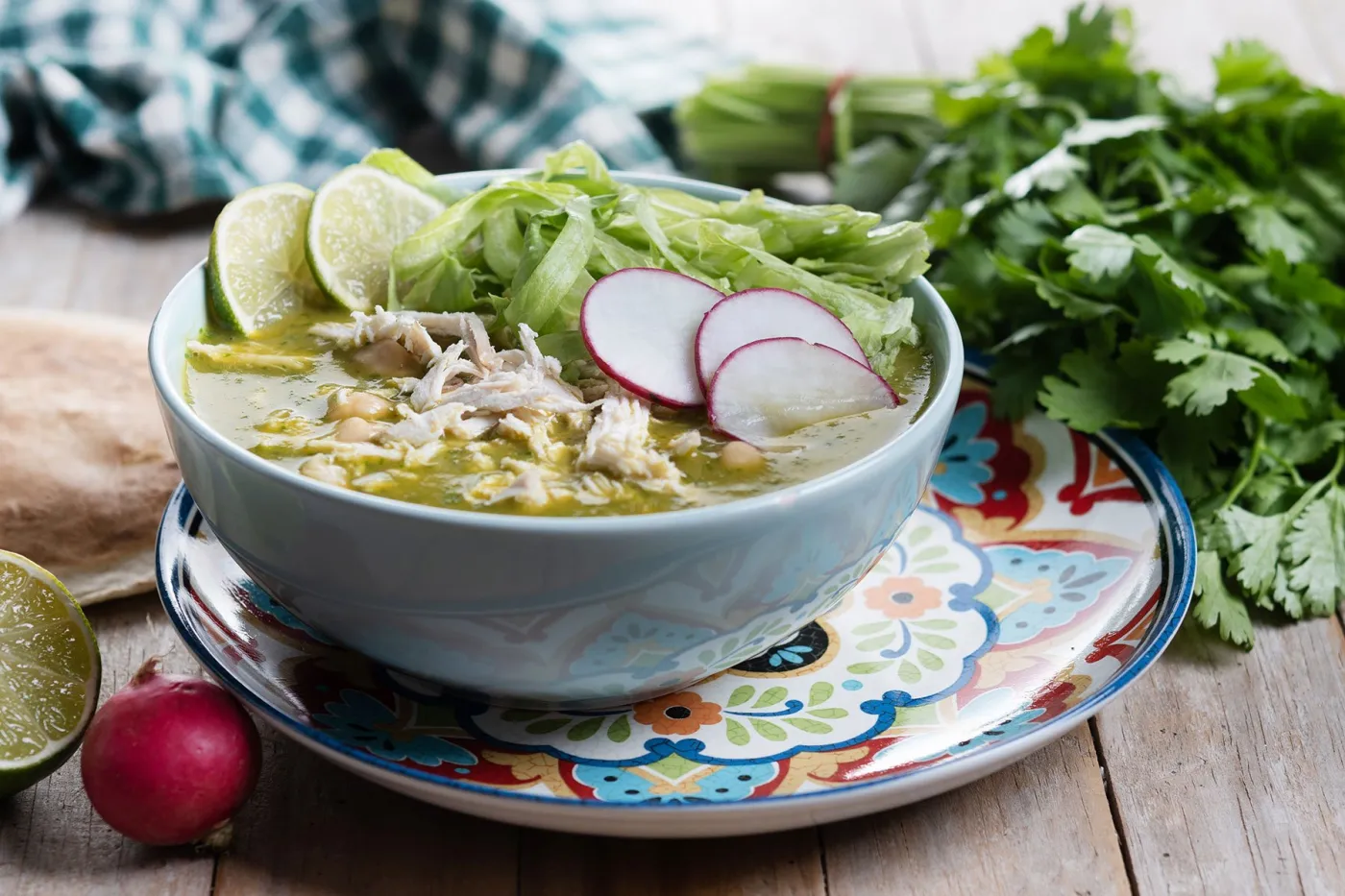
Bring the components together gently
- Load the soup base. Return the reserved salsa and chicken broth to the bowl, then add the drained, rinsed hominy. Check the maximum-fill marking before cooking. Don't add extra liquid just because you prefer a soupier bowl.
- Simmer the base. Cook 12 min / 212°F / reverse / speed spoon. The aim is to heat the hominy through while keeping the kernels intact.
- Finish with chicken. Shortly before the simmer finishes, pull the cooked chicken into substantial shreds using clean utensils. Add it and cook 3 min / 212°F / reverse / speed spoon.
- Taste with the machine stopped. Check the soup's seasoning and temperature before serving. If you add salt, incorporate it gently with 10 sec / no heat / reverse / speed spoon.
Those finishing settings are part of the same proposed manual adaptation. If your appliance instructions require a different loading or operating procedure, follow them rather than forcing this sequence.
What hominy contributes
Hominy supplies the soup's starchy, chewy foundation. It isn't the main protein ingredient, so don't read its presence as a substitute for the chicken when thinking about the meal's composition.
For context, a roughly 3½-ounce [100 g] portion of canned white hominy contains about 72 calories, 14.3 grams of carbohydrate, 2.5 grams of fiber, and 1.48 grams of protein, according to the canned hominy nutrition reference. Those figures describe the hominy alone, not this finished soup.
If the consistency seems thicker than you prefer, assess the available bowl space before making any adjustment. You can also serve a slightly more substantial bowl rather than trying to turn every batch into a very brothy soup.
The zuppa di pesci recipe is another option for readers who enjoy broth-based meals. For this pozole, the finishing priority is preserving the contrast between tender chicken and whole kernels.
Garnishes, Regional Twists, and My Best Tips
Set out the garnishes instead of stirring them all into the soup. Lettuce, onion, radish, chile, avocado, oregano, lime, tostadas, and cream are among the recognized pozole accompaniments described by Mexico's Agriculture Ministry.
Guerrero is widely associated with green pozole, but I wouldn't claim a provable earliest origin or call this adaptation the only authentic version. Households vary their proteins and seasonings, and this chicken version is one expression of that tradition.
Make sodium a deliberate choice
A published chicken pozole verde recipe lists approximately 409 calories, 39 grams of protein, and 7 grams of fiber per serving. Those values belong to that recipe, not this adaptation, and they aren't a reason to ignore broth labels or salty toppings.
| Decision | Practical lower-sodium approach |
|---|---|
| Broth | Choose unsalted broth and check the label |
| Hominy | Drain and rinse canned kernels |
| Broth intensity | Replace some broth with water if appropriate, without exceeding the fill limit |
| Seasoning | Taste after cooking, when the final concentration is clear |
| Toppings | Favor avocado, cabbage, radish, lime, and cilantro; offer salty extras separately |
| Serving size | Account for how much soup you actually serve, not just the label's stated portion |
Rinsing isn't a guarantee of a particular sodium reduction. For a medically prescribed sodium limit, use the actual ingredient labels and portion sizes rather than a generic nutrition estimate.
My final advice is to protect the textures you've worked for: don't blend after adding hominy, don't overwork the chicken, and save some fresh garnish for the table. Dinner should taste lively, not require a rescue mission.
At IT'S A CHEF!, I offer Las Vegas demonstrations, video calls anywhere in the USA, purchase guidance, and ongoing help for Thermomix owners. Visit to arrange a demonstration and talk through practical workflows like this pozole, including staged cooking, first-meal setup, and adapting ingredients to your household.