Thermomix Recipes · October 20, 2026 · 7 min read
Yu Shiang Pork Recipe for Your Thermomix
Why do so many people order Yu Xiang Pork expecting seafood, then wonder where the fish went? I'm Prinal Glassman, an Independent Thermomix® Consultant in Las Vegas helping families across the USA, and my motto says it all, "Thermomix?
On this page
Why do so many people order Yu Xiang Pork expecting seafood, then wonder where the fish went? I'm Prinal Glassman, an Independent Thermomix® Consultant in Las Vegas helping families across the USA, and my motto says it all, "Thermomix? It's a chef… I'm not!" This Sichuan favorite is a perfect example of a dish that sounds complicated, tastes restaurant level, and becomes very doable once you understand the name, the sauce, and the timing in your TM7.
What Yu Xiang Pork Really Is
Let's clear up the fish mystery first, because it stops a lot of home cooks before they even start. Yu Xiang Pork, more commonly romanized as yuxiang rousi, is a Sichuan dish whose name is potentially misleading because the classic preparation contains no fish at all. As the overview of yuxiang rousi and its fish fragrant name explains, yuxiang describes a seasoning profile historically associated with fish cookery, not a seafood ingredient in the bowl.
My honest shortcut for remembering it: if you can name the five flavors, hot, sweet, sour, salty, and aromatic, you already understand yu xiang better than someone calling it garlic sauce.
That distinction matters for real families, especially if seafood allergies are a concern at your table. The homemade version here isn't automatically a seafood dish because the name says fish fragrant. Still, you should read every condiment label you use, because bottled sauces vary, and restaurant versions can vary too. When you make it at home, you control the ingredients, which is exactly why I love teaching this one. You get the big Sichuan flavor, you skip the confusion, and your TM7 handles the chopping, mixing, and cooking that makes weeknight cooks sigh before they begin.
The Sauce That Makes the Dish
If the pork is the lead singer, the sauce is the whole band. A standard formula balances measured flavor components instead of relying on chili alone, and one documented version for this balanced yu xiang pork sauce formula uses ¾ to 1 pound (340 to 450 g) of lean pork with 3 tablespoons (45 g) vinegar, 2 tablespoons (25 g) sugar, 1 tablespoon (15 g) light soy sauce, 1 tablespoon (15 g) Shaoxing wine, 3 tablespoons (45 g) stock or water, and 1 tablespoon (8 g) cornstarch mixed with an equal amount of water.
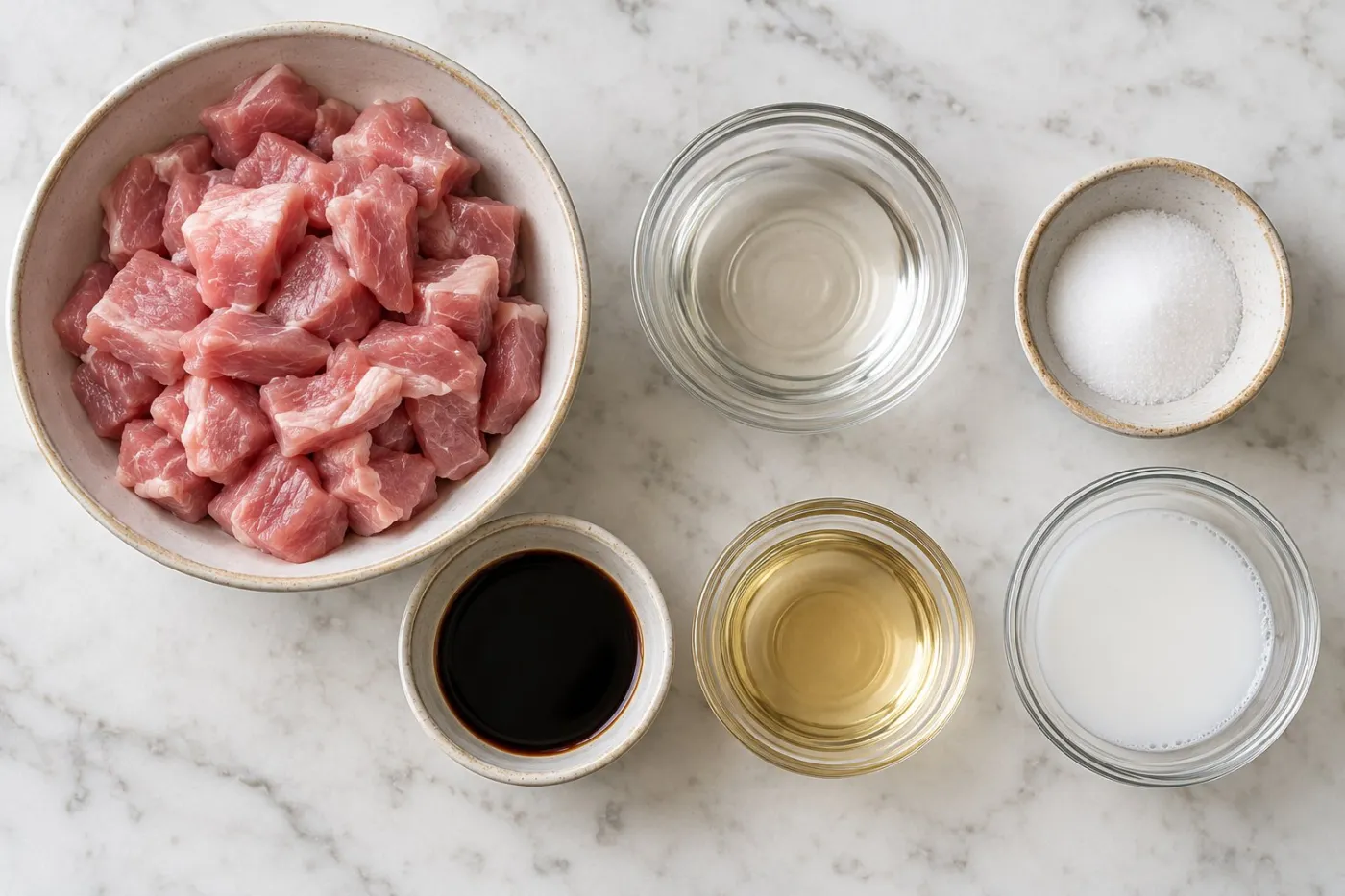
Those proportions aren't random, and that's the part many quick recipes skip. Vinegar brings the sour lift, sugar rounds the edges so the sour doesn't shout, and soy sauce adds salt and depth. Shaoxing wine and stock give the sauce body and a savory background, while cornstarch turns a thin liquid into a glossy coating that clings to pork and vegetables instead of pooling under your rice.
The Aromatics Do the Heavy Lifting
The same documented version specifies 1 tablespoon (6 g) minced ginger, 2 tablespoons (17 g) minced garlic, and 3 tablespoons (18 g) minced scallion, plus 1 tablespoon (15 g) Pixian chili bean paste, with minced pickled chilies offered as an alternative. Read that list closely and you'll see why calling yu xiang a garlic sauce sells it short. Garlic matters, yes, but ginger adds warmth, scallion adds freshness, and the fermented chili component adds salty, funky depth that plain chili flakes can't copy.
Vinegar: Don't reduce it first if the sauce tastes sharp. Check the sugar balance, because sweet and sour correct each other.
Sugar: It isn't there to make dessert pork. It keeps the vinegar and fermented paste from tasting harsh.
Cornstarch slurry: Mix it completely before cooking starts. Once the TM7 is hot, you won't have a calm minute to fix lumps.
Chili bean paste: This is seasoning, not just heat. Measure it, because a heaped spoon changes salt as well as spice.
Mix the sauce before you cook anything. Adding vinegar, sugar, and soy one at a time during cooking makes the balance a moving target.
Taste the mixed sauce before it meets the pork. It should taste a little bold on its own, because rice, pork, and vegetables will soften it at serving. If one flavor hides, adjust by tiny spoonfuls now, not after the pork is cooked.
Making Yu Xiang Pork in the TM7
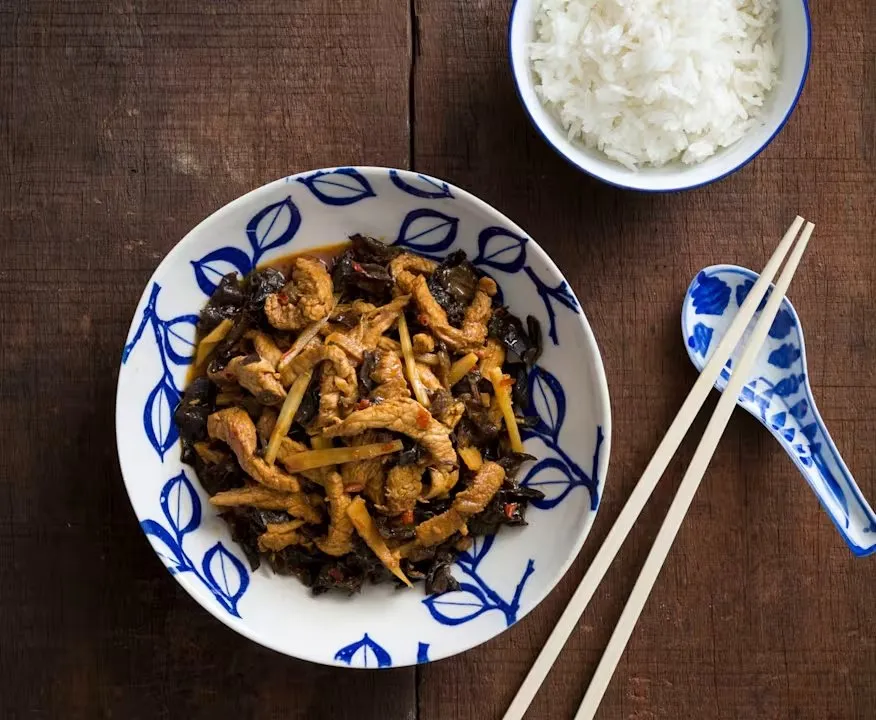
Your Thermomix® TM7™ weighs, chops, cooks and stirs in one bowl, so this whole dinner comes together with very little washing up. For more dinners built the same way, browse my Thermomix recipe collection for family meals after you've made this once.
Check a representative thick piece with a thermometer rather than guessing from color. Serve right away over steamed rice made in the TM7, while the sauce still shines and the scallion greens taste fresh.
Smart Substitutions for Every Kitchen
Substitutions work when you protect the flavor structure. Swap the vegetables freely, adjust the protein carefully, and treat the sauce balance like the non negotiable center. Carrots and bell peppers can stand in when bamboo shoots or wood ear mushrooms aren't in your store, and they'll bring sweetness and crunch. Celery keeps things fresher and lighter. What matters is comparable size and dry vegetables, so everything finishes together and the sauce stays glossy.
Protein swaps change more than taste. Ground pork is convenient and family friendly, but it doesn't cook like sliced loin or tenderloin, and its safe temperature is different, which I'll cover in the mistakes section. Chicken strips keep the meal familiar for picky eaters, though the result tastes less rich. Firm tofu can carry the sauce beautifully if you press it well and add it gently at the end, because the sauce, not the protein, defines yu xiang.
Lower Sodium Without Losing the Point
Published sodium estimates show why you shouldn't trust a single number on a recipe card. One estimate listed in this nutrition estimate for fish fragrant pork is approximately 598 mg sodium per serving, while another gives roughly 950 to 1,200 mg, demonstrating that soy sauce, fermented bean paste, portion size, and serving assumptions can substantially change the result.
Swap | What changes | What stays |
|---|---|---|
Unsalted stock | Less background salt | Savory body |
Measured soy sauce | Fewer salty surprises | Color and depth |
Extra vegetables | Bigger portions, lighter plate | Sauce in every bite |
Less chili bean paste | Lower salt and heat | Needs pickled chili for aroma |
Don't remove all seasoning and hope vinegar saves dinner. Measure the salty condiments, use unsalted stock, increase vegetables, and preserve the sweet, sour, and aromatic structure. You'll taste balance instead of absence. If you reduce soy sauce, taste before adding more sugar, because low salt can make sourness seem louder than it really is. Small adjustments, tasted in order, beat a big rescue operation at the table.
Common Mistakes and How to Fix Them
Most Yu Shiang Pork problems come from two things, sauce imbalance and moisture. If your sauce tastes flat, sharp, or oddly sweet, the likely cause is adding ingredients one by one during cooking instead of mixing the sauce completely first. Once pork and vegetables release liquid, you're chasing a moving flavor while the cornstarch is already thickening. Mix first, taste first, then cook with confidence.
Watery sauce usually starts before cooking, with wet vegetables, uneven cuts, or too much food in the bowl at once. Dry your vegetables after washing, cut them to comparable sizes, and cook in batches if your load looks crowded. I keep more fixes like these in my kitchen tips and how to guides, because small technique changes save more dinners than new ingredients do.
Doneness Is a Temperature, Not a Color
Pork color can mislead you, especially in a dark, glossy sauce. For whole pork cuts, USDA guidance in the USDA safe temperature chart for pork specifies 145°F, followed by at least a 3 minute rest, measured in the thickest portion away from bone, fat, or gristle.
That number changes if you swap in ground pork. If using ground pork rather than sliced loin or tenderloin, the safety target changes to 160°F, not 145°F, as noted in USDA guidance on ground pork temperature. Mixing those two targets up is a common technical error when adapting the recipe, and it's an easy one to avoid once you know it.
For repeatable results: record pork weight, sauce volume, batch load, and final internal temperature. Next time, adjust cornstarch or liquid for thickness instead of cooking longer and drying the pork.
If the sauce ends too thin, stir in a little extra cornstarch slurry and cook 1 min / 212°F / Reverse speed 1. If it's too thick, add stock a spoonful at a time at the same setting. Fix viscosity, not cooking time, and your pork stays tender.
Your First Yu Xhiang Pork Night
Your First Yu Xhiang Pork Night
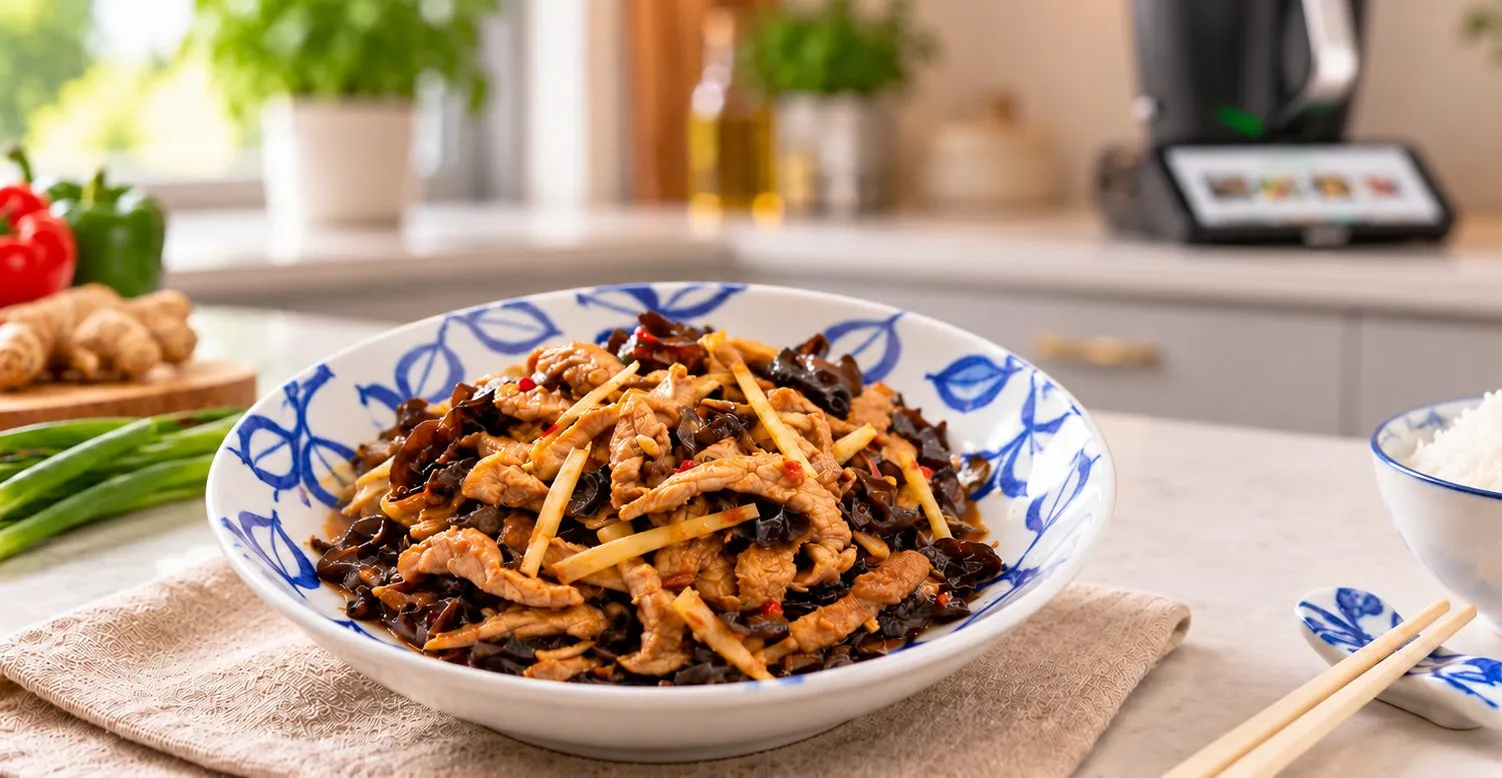
Success looks simple. The pork is tender, the vegetables still have bite, and the sauce is glossy enough to coat a spoon without turning sticky. You should taste heat, sweetness, sourness, salt, and aroma in the same mouthful, with none of them bullying the others. Serve it over TM7 steamed rice with extra scallion greens on top, and put vinegar and chili at the table for the family members who always want a little more.
If this style of saucy, rice friendly dinner works for your household, my butter chicken with rice made for busy nights uses the same prep first rhythm. Make Yu Shiang Pork once exactly as written, note what you'd change, then make it yours. That's how a recipe becomes a family regular.