Tips & How-To · October 18, 2026 · 10 min read
Can You Steam Corn on the Cob? Yes, and Here's the Smart Way
Yes, you can steam corn on the cob, with fresh, shucked ears generally needing 7 to 10 minutes of active steaming and a tenderness check starting at 7 minutes. For a TM7 Varoma method, the important distinction is between time spent heating the water and time the corn spends in steam.
On this page
Yes, you can steam corn on the cob, with fresh, shucked ears generally needing 7 to 10 minutes of active steaming and a tenderness check starting at 7 minutes. For a TM7 Varoma method, the important distinction is between time spent heating the water and time the corn spends in steam.
You've got corn ready for dinner, everyone's hungry, and you'd rather not turn those sweet kernels into something chewy. In a Las Vegas kitchen, that's a perfectly reasonable ambition. I'd build your plan around the corn you have, not the longest timer you can find.
Yes, You Can Steam Corn on the Cob
Yes, corn on the cob can be steamed as a complete cooking method, not just warmed through. University of Wyoming Extension's corn guidance describes steaming shucked ears until the kernels are tender, supporting the practical timing range in the opening.
I'm Prinal Glassman, an Independent Thermomix® Consultant in Las Vegas, helping families across the USA. I'm not a chef, and I don't run cooking classes. My motto is, “Thermomix? It's a chef… I'm not!”
The question “Can you steam corn on the cob?” has a simple answer. Getting the texture you want takes a little more judgment, because a tender, freshly picked ear and a large refrigerated ear don't start in the same condition.
My dinner rule: Use the timer to remind you to check, not to overrule a kernel that's already ready.
Think of the familiar dinner scramble: corn waiting on the counter, toppings ready, and someone asking whether it's done yet. You don't need elaborate seasoning or a complicated technique. You need steam reaching the ears, a sensible checking point, and permission to stop cooking when the corn tastes right.
I prefer teaching that small bit of judgment rather than promising a magic setting. The TM7 can handle the steaming workflow, but you still get the final vote on tenderness. Thankfully, tasting corn is a fairly pleasant responsibility.
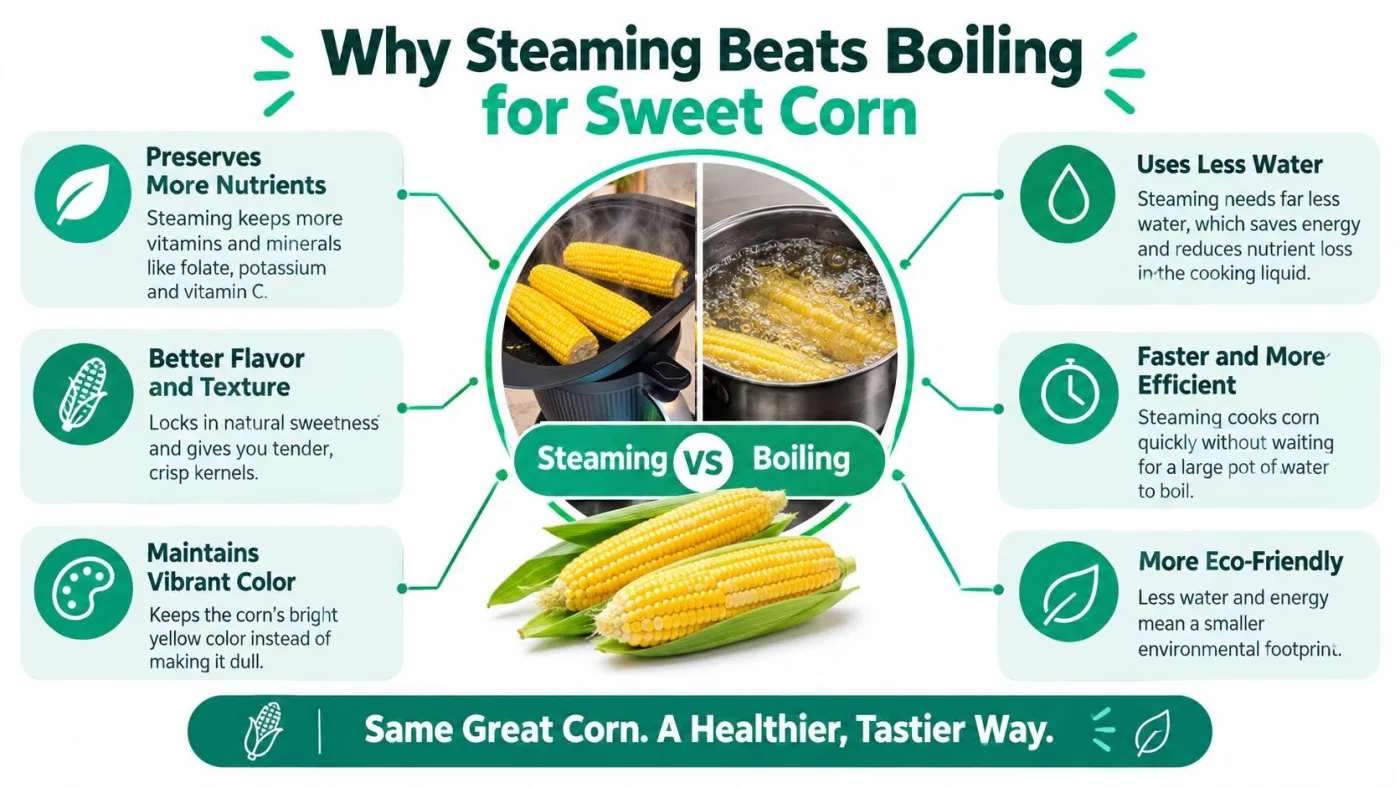
Why Steaming Beats Boiling for Sweet Corn
Steaming heats corn with moist vapor rather than immersion. Think sauna versus bath: the kernels get hot without sitting beneath a large volume of water.
That distinction matters for flavor. The Utah State University Extension corn guide supports steaming as a way to preserve corn's flavor concentration and explains why freshness matters: after picking, corn's sugars progressively convert to starch. Cooking promptly helps you enjoy the sweetness the ear already has.
Let the corn taste like corn
Boiling can cook corn successfully. I prefer steaming when the aim is a clean, sweet flavor without immersion. That doesn't mean every boiled ear becomes waterlogged, or that steaming can rescue corn that has already lost its freshness.
There's also no need to add oil or butter to the steaming water. Save those decisions for the finished ear, where you can taste what you're adding rather than season water that won't be served.
Choose freshness first. Look for fresh-looking husks and silks, keep the corn cool, and cook it promptly.
Keep toppings optional. Plain steamed corn lets each person decide how rich or salty their serving should be.
Avoid nutrition promises. Steaming is useful, but it doesn't turn a butter-covered ear into an entirely different food.
For me, that fits a practical approach to healthy eating at home: start with an ingredient you enjoy, prepare it, and make deliberate finishing choices. Dinner doesn't need a nutritional halo. It needs to taste good and fit your household.
How Long to Steam Corn Based on Freshness and Size
Freshness, diameter, and preparation belong ahead of the timer. The timing discussion in this corn-cooking analysis supports an early check around 4 minutes for especially fresh, tender corn. That's a checking point for suitable ears, not a universal promise.
For ordinary supermarket corn, use the opening's active-steaming range as your starting plan. Husks add a barrier between the steam and kernels, so leave-husk-on corn needs a different approach. The extension guidance cited earlier gives 15 to 20 minutes for in-husk ears, rather than treating them like shucked corn.
Steaming Time at a Glance
The entries below are active-steam checking guides, not complete TM7 program durations. The size-based preservation figures come from University of Missouri Extension's blanching guidance, which defines small ears as less than 1¼ inches in diameter, medium ears as 1¼ to 1½ inches, and large ears as more than 1½ inches.
Prep | Small ear | Medium ear | Large ear |
|---|---|---|---|
Very fresh, shucked | Check early for tenderness | Check early, then judge the kernels | Allow for slower heating |
Typical supermarket, shucked | Use the early end of the dinner range | Check before extending cooking | Expect to need more time |
In the husk | Use the longer husk-on range | Check beneath the husk | Confirm tenderness before serving |
Steam-blanching for preservation, not dinner | 10 minutes | 13 minutes | 16 minutes |
Don't borrow the preservation row as your dinner recipe. Blanching serves a different purpose, including enzyme inactivation before preservation. A longer preservation treatment isn't automatically the nicest eating texture.
Ready corn has bright, plump kernels that yield readily when pierced. The clock can't tell you whether you like the bite.
Refrigerated ears begin colder, and unusually large ears may heat more slowly. A crowded batch also needs more attention, but don't automatically assign it the husk-on range: batch arrangement matters as much as elapsed time.
At higher elevations, treat a published time as a starting point and check the actual food. I wouldn't prescribe a fixed altitude adjustment without appliance-specific guidance.
The TM7 Varoma Method Step by Step
The Thermomix® TM7™ is an all-in-one appliance that weighs, chops, blends, cooks, steams, and kneads, with guided recipes. For corn, the relevant capability is steaming, not an impressive list of other jobs.
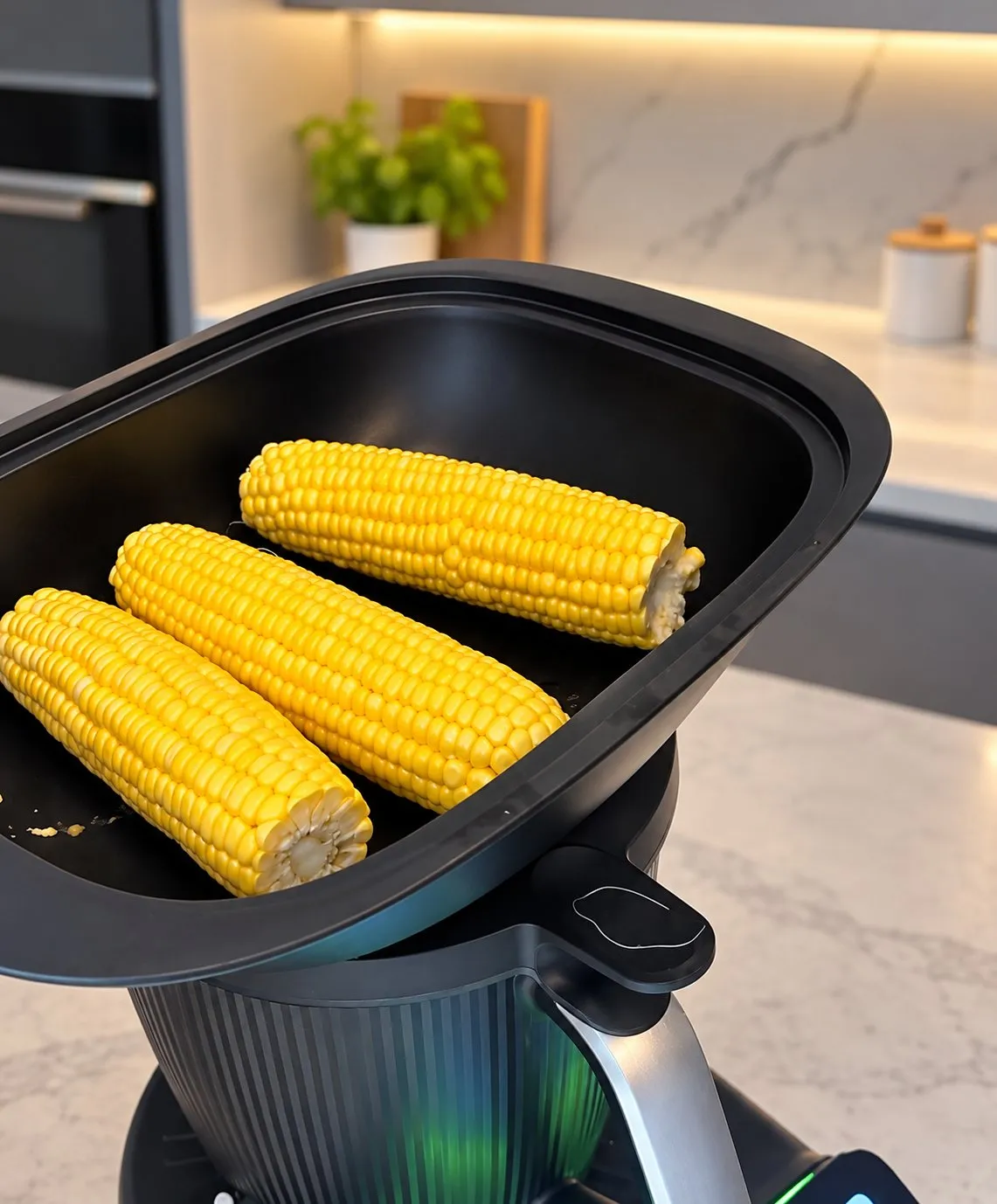
The TM7 steams with its Steaming mode: water heats in the bowl below and the steam rises into the Varoma, so the corn cooks gently and evenly while you get on with something else.
How I steam corn in the TM7
Prepare the corn. Remove the husks and silks. Cut very long ears in half so they lie flat.
Add water to the bowl. Pour in at least 500 g (about 2 cups) of water. That is enough for up to 30 minutes of steaming.
Remove the lid cap and put the mixing bowl lid on without it, so the steam can rise into the Varoma.
Load the Varoma loosely. Lay the ears in a single layer and leave some of the slots clear so the steam can circulate. University of Minnesota Extension also recommends a single layer so steam reaches every surface.
Steam for about 20 minutes using Steaming mode and following the instructions on the screen. Check a kernel at around 15 minutes: small, fresh ears are often ready then, while large ears may need a few minutes more.
Lift the Varoma off carefully. Tilt the Varoma lid away from you as you open it to avoid the steam, then serve straight away.
Judge the corn, not just the clock
Corn is ready when the kernels look bright and plump and a kernel pops easily with a little sweetness. For comparison, the Human Performance Resources by CHAMP steamed-corn recipe steams for 20 to 24 minutes. Fresher, smaller ears need less time, so start checking early rather than overcooking.
Want to see everything else the Varoma can do? Have a look at what the TM7 can do.
Steamer Versus Microwave Versus Grill
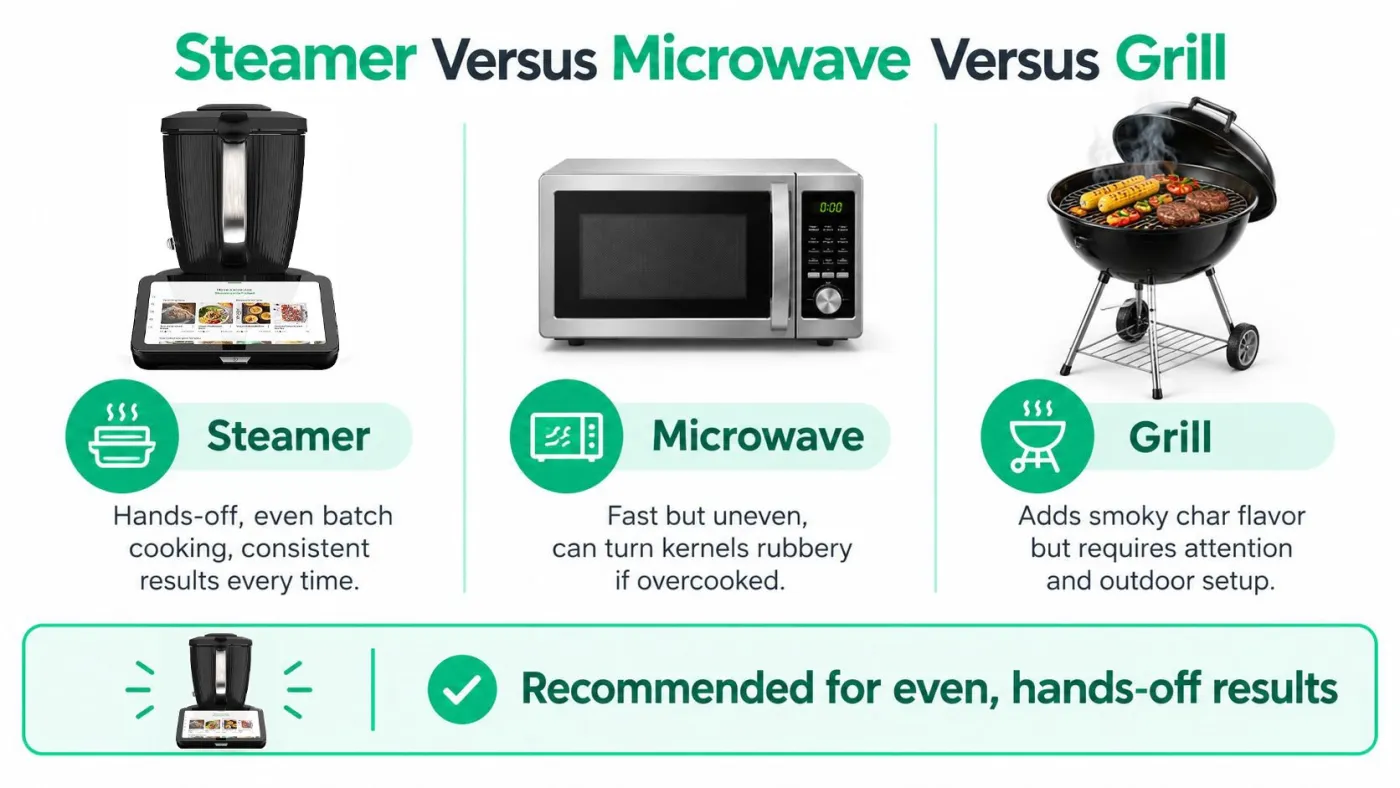
I'd choose between these methods by the texture you want and the attention you can give, rather than declaring that every household must cook corn the same way. The recipe workflow here remains TM7 steaming; the alternatives below are comparisons, not additional cooking instructions.
Choose the result you want
Method | What I'd choose it for | What I'd watch |
|---|---|---|
TM7 Varoma steaming | A moist, simply cooked side with a guided workflow | Steam access, heat-up time, and tenderness |
Microwave cooking | Convenience when preparing a small amount | The actual result rather than an assumed speed advantage |
Grilling | A browned, charred style of corn | Surface cooking and the attention required |
TM7 steaming is my preference when plain sweetness is the goal. Once the guided program is running, you can organize dinner, but hands-off doesn't mean unattended or guaranteed. You still need to check the corn and follow the appliance's operating instructions.
Microwave cooking appeals when convenience matters most. I wouldn't claim it's always fastest, always uneven, or rubbery without a defined method and supporting evidence. Overcooking is something to avoid regardless of the appliance category.
Grilling suits someone who wants char as part of the finished flavor. That's a different target from gently steamed kernels, not necessarily a better or worse version of corn.
My choice would be simple: steam for a moist, sweet side; choose another method only when you want its particular finish.
Keep the comparison honest
The infographic offers a quick visual summary, but “consistent results every time” is stronger than I'd promise. Freshness, ear size, loading, and cooking judgment still matter.
I also wouldn't compare precise cooking speeds without matched recipes and the same starting corn. A method that suits a small serving may feel less convenient for a crowded family meal.
For this dinner, I'd stay with the Varoma plan and let the toppings provide variety. That keeps the cooking decision separate from the flavor decision, which is useful when everyone at the table wants something slightly different.
Flavoring Ideas After the Steam
Season after steaming. The corn guidance cited earlier notes the University of Maine Extension warning that salt in cooking water can make corn firmer. Keep the water plain and season the food you're going to eat.
My finishing menu would be short enough to remember while someone's asking where the napkins are. You don't need to prepare every option, and these are serving ideas rather than separate appliance recipes.
Pick a flavor direction
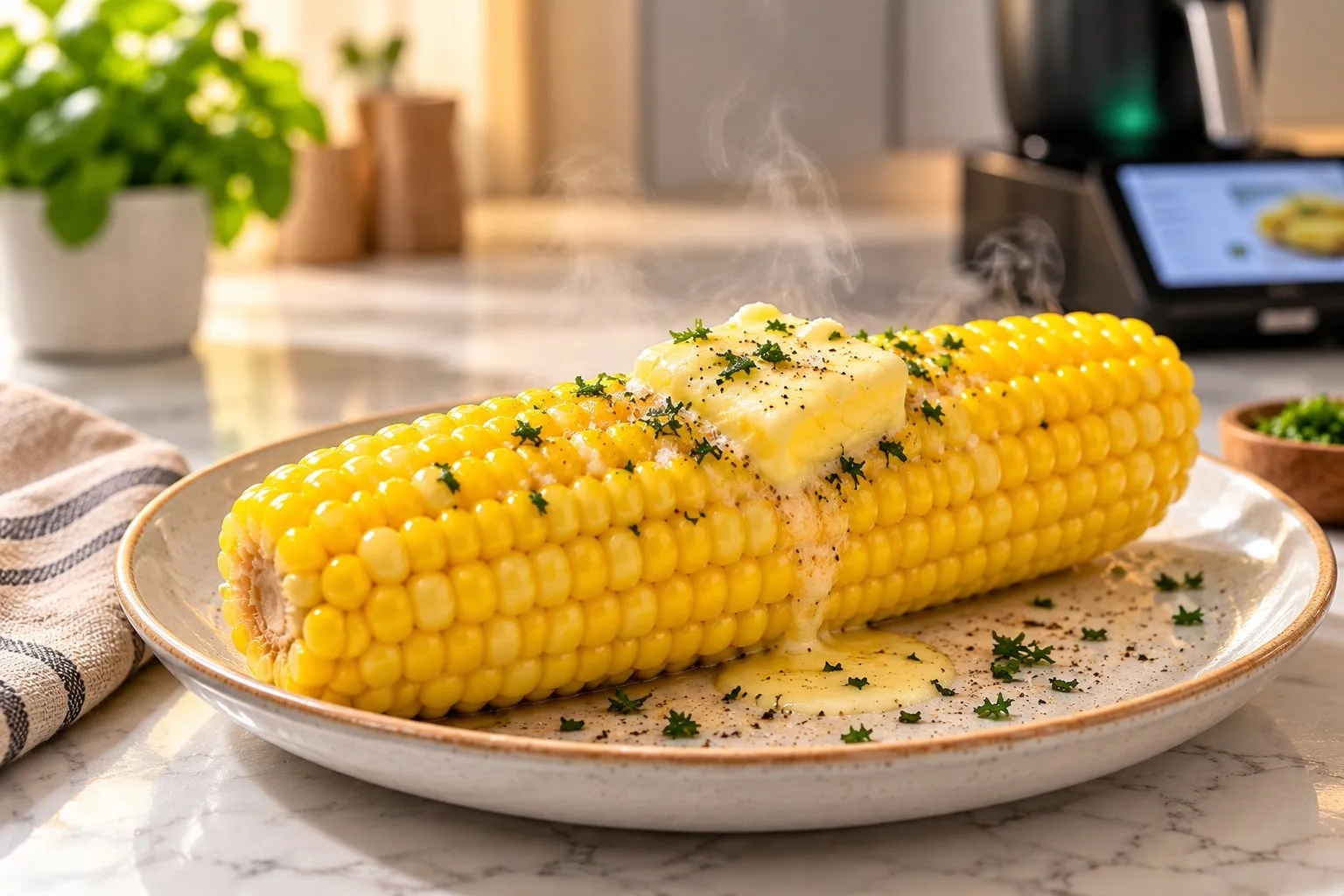
Butter and flaky salt. A classic choice when you want the corn's own sweetness to remain obvious. Start lightly and taste.
Lime and chili. I'd choose this when the rest of dinner is rich and the corn needs a brighter finish.
Herbed compound butter. Use a prepared butter for an herbal variation without changing the steaming method.
Parmesan and black pepper. Let the cheese supply some of the seasoning before deciding whether more salt is needed.
Mayo and cotija. A light coating gives a street-corn-style finish without making the topping the entire dish.
Lemon alone. My simplest suggestion when you want a little brightness rather than richness.
Keep plain corn and toppings separate
For nutritional context, USDA SNAP-Ed's corn listing gives 1 cup (145 g) as 125 calories, with 3 grams of fiber and 5 grams of protein. Those figures describe the listed corn serving, not corn after you've added butter, cheese, or mayonnaise.
Serve toppings separately when household preferences differ. It's an easy way to let someone enjoy plain corn while another person reaches enthusiastically for the cheese.
For another vegetable-side idea, my green bean purée article offers a different direction for meal planning. You don't need every vegetable to arrive wearing the same butter jacket.
Common Steaming Mistakes and Easy Fixes
“Longer is better” is the corn-cooking assumption I'd retire first. More time doesn't automatically mean sweeter, juicier, or more tender corn, and a finished ear doesn't benefit from waiting in continued heat.
It's also important to separate two problems: freshness loss before cooking and overcooking during dinner preparation. Don't blame every disappointing kernel on sugar converting to starch during the steaming cycle. Old corn and excessive heating can disappoint you for different reasons.
Correct the process, not just the timer
Crowding the Varoma. Rearrange the ears so steam has a path through the load. Extending the timer isn't the first fix for uneven exposure.
Holding finished corn in heat. Remove it promptly using the appliance's handling instructions, then serve.
Using normal cooking instead of Steaming mode. Choose Steaming mode so the TM7 produces a steady flow of steam for the Varoma.
Ignoring an early check. If the corn is ready, stop. Dinner doesn't earn extra credit for completing an unnecessarily long program.
The useful correction: Change what caused the problem, rather than adding more minutes to every future batch.
Keep the next attempt simple: a suitable guided program, an uncrowded load, and a real tenderness check. That's a better plan than asking already-tender corn to keep working overtime.
At IT'S A CHEF!, I offer Las Vegas demonstrations, video calls anywhere in the USA, purchase guidance, and ongoing Thermomix support. Visit to arrange a demonstration or ask about getting started with a guided steaming workflow, so you can understand the settings and feel more confident preparing family meals.