Tips & How-To · October 19, 2026 · 9 min read
Mashed Potato in Food Processor: A Smarter Method
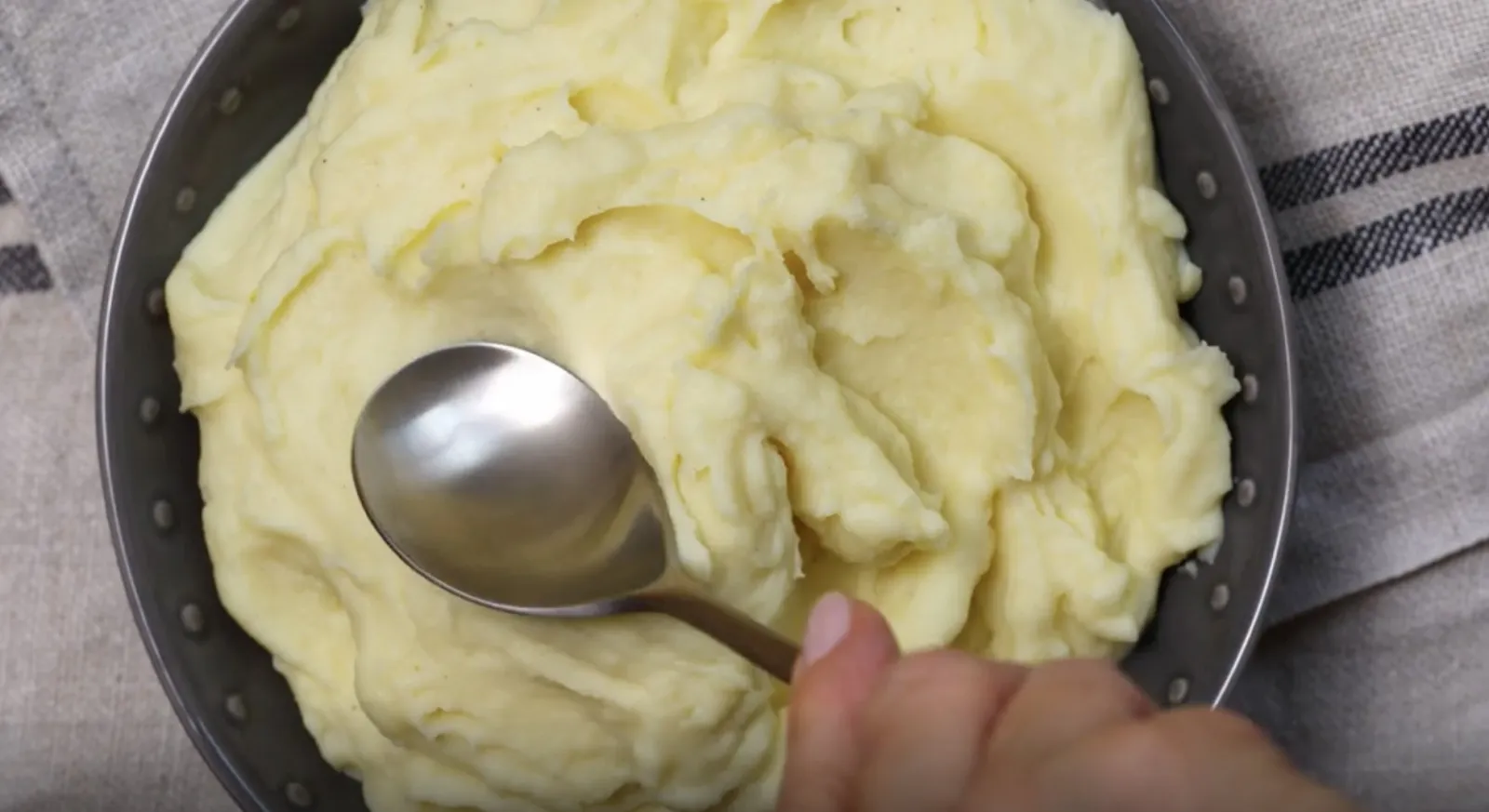
The most popular advice about mashed potato in a food processor is to never do it. I think that's too blunt. A food processor can make a lovely, even mash, but its fast blade can turn tender potatoes gluey if you keep it running after the lumps are gone.
On this page
The most popular advice about mashed potato in a food processor is to never do it. I think that's too blunt. A food processor can make a lovely, even mash, but its fast blade can turn tender potatoes gluey if you keep it running after the lumps are gone.
I'm Prinal Glassman, an Independent Thermomix® Consultant in Las Vegas helping families across the USA. My motto is, “Thermomix? It's a chef… I'm not!” I'm not a chef, and I don't run cooking classes. I do believe good results come from knowing when to stop, especially when potatoes are involved.
Why the Food Processor Gets a Bad Rap
Gluey potatoes aren't a mystery, and they aren't proof that you're bad at cooking. The problem is what a fast blade does to cooked potato cells: it breaks them open and releases starch. That released starch thickens the surrounding moisture into a sticky, paste-like mash. Food52's explanation of mashed-potato texture describes the difference between gently separating cooked cells and beating them apart, and why continuous processor blades can release excess starch.
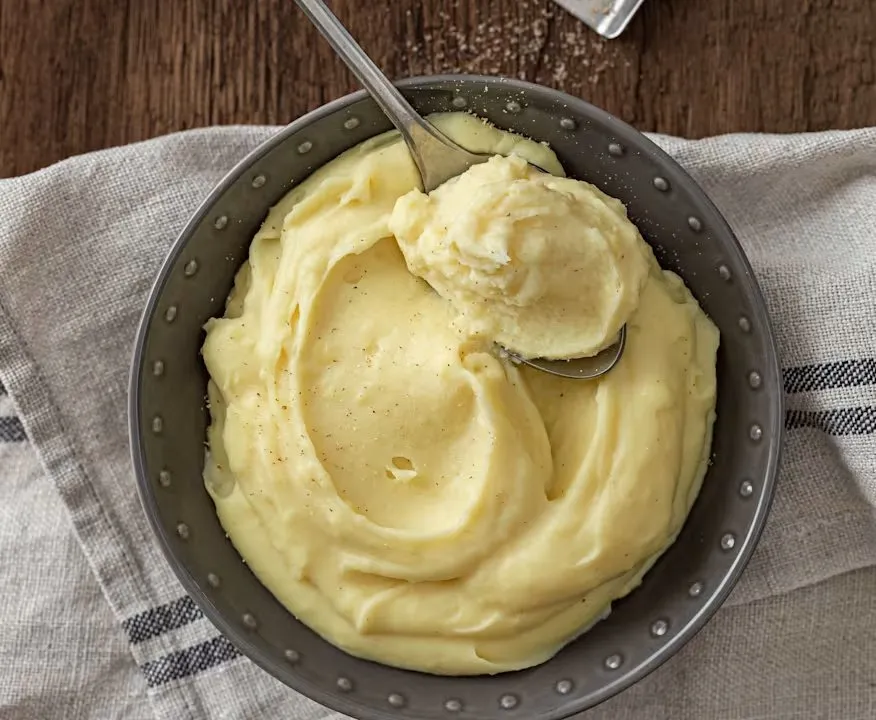
That's why “never use a food processor” misses the useful point. It's not the appliance that causes trouble. It's how long and how hard the blade works the potatoes. A processor can quickly make a smooth, uniform purée, but smoothness isn't the same as fluffy or pleasantly creamy. The blade doesn't know when the last lump has disappeared.
The real job is controlling the blade
Think of the processor as a precision tool, not a button you press and walk away from. Short pulses can break down chunks before the blade has time to keep shredding the cooked structure. Keep your eyes on the potatoes, check between pulses, and stop as soon as the mash looks smooth enough for your table.
The same principle applies across potato types and cooking styles: once the potatoes are tender, less aggressive mixing gives you more control over starch release. If your ideal mash is airy, the processor is a high-risk choice. If you want an even, silky result, you can use it carefully, but you still need a stopping point.
My rule: Stop at “smooth enough,” not “perfectly uniform.” Those last few seconds can make the difference between creamy potatoes and something that clings to the spoon like paste.
The Thermomix TM7 Method Step by Step
I use the Thermomix® TM7™ as an all-in-one kitchen appliance for weighing, chopping, cooking, steaming, and blending. For this method, the main texture decision comes after the potatoes are tender: the blade should work briefly, then stop. Every potato and batch behaves a little differently, so treat the visual and fork tests as your guides rather than expecting a magic setting.
Prepare and cook the potatoes
Weigh and peel. Weigh the potatoes in the mixing bowl, then peel them and cut them into evenly sized chunks. Use the machine's weighing function as part of preparation; no special chopping time, temperature, or speed is needed for peeling. Even pieces help the potatoes cook more consistently, so you're less likely to have a mixture of firm centers and crumbling edges.
Start cold, then steam. Put the potato chunks in the simmering basket and add cold water to the mixing bowl according to the TM7's guided steaming setup. Steam at 212°F, speed 1, until a fork slides through the largest piece without resistance. Check the potatoes as they approach tenderness and extend the cooking time if needed. The exact cooking time depends on chunk size and quantity, so don't force a fixed time where a doneness test is more reliable. The potatoes are ready when they're fully tender, not when the timer looks tidy.
Drain and let steam escape. Remove the basket carefully and drain the potatoes thoroughly. Let surface steam escape briefly before moving on. Excess water can thin the mash, and properly drained potatoes need less stirring to reach a cohesive texture.
Blend only until the lumps disappear
Return the hot potatoes to the mixing bowl. Add butter first, followed by warm dairy a little at a time. Use a low speed with no heat and mash in brief bursts, checking the texture after each one. Don't let a long timed blend run unattended.
Stop as soon as the potatoes look smooth enough. Scrape down the bowl if needed, then fold in any additions by hand. For TM7 recipe ideas and cooking inspiration, browse Thermomix recipes.
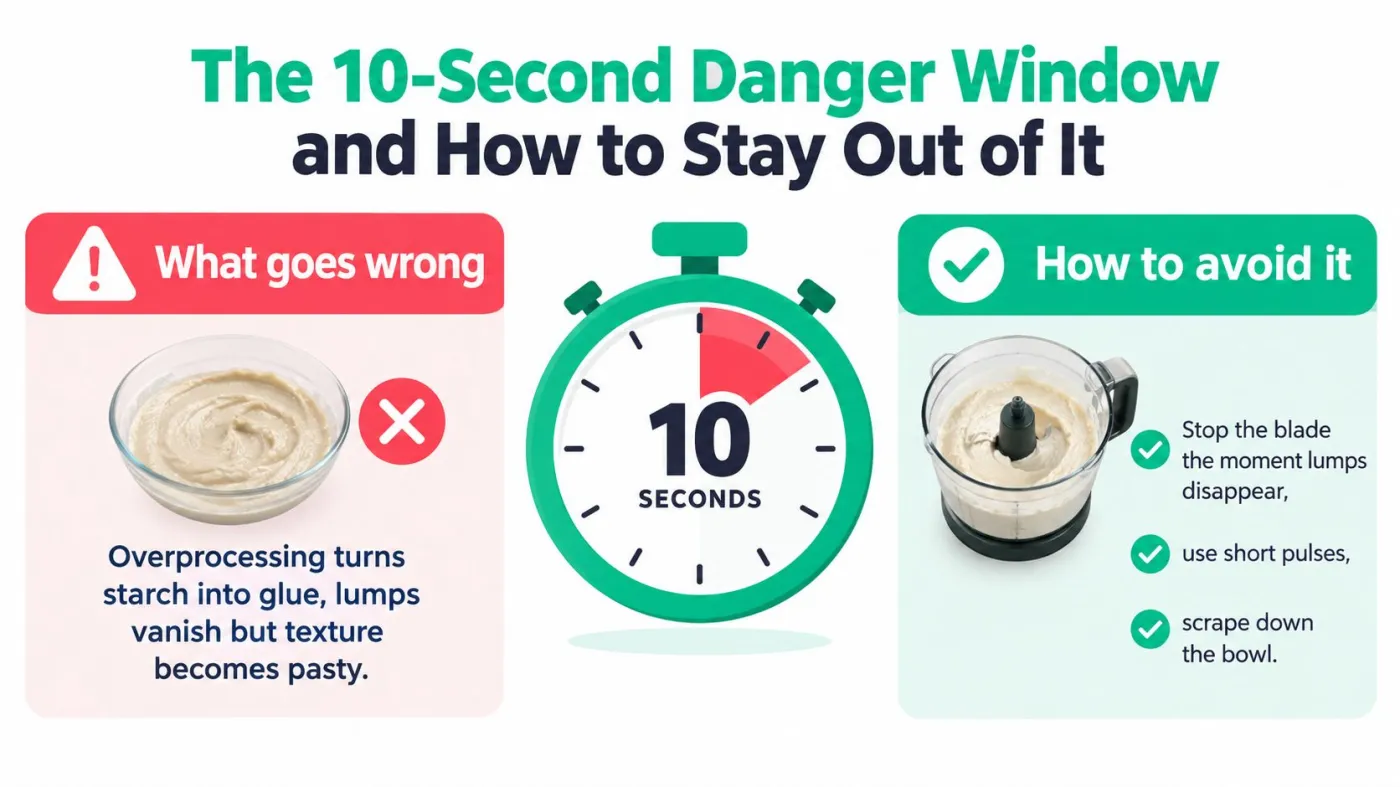
A chef cited in culinary coverage warned that roughly 10 seconds of excess processing can cause a marked texture failure, as summarized in Serious Eats' tool comparison. Treat that as a danger window, not a promised countdown: your potatoes may reach the stopping point sooner. The TM7 handles the chopping, cooking, and steaming here, so you don't need a separate saucepan or stovetop.
Choosing the Right Potato for the Job
Potato choice matters more when you're using a blade that can quickly work the cooked flesh. Russets are my pick for a fluffier mash because their starchy texture suits a lighter result. Yukon Golds lean richer and denser, while red potatoes and other waxy varieties are better when you're deliberately after a smooth, silky mash with more body.
Mixed potatoes can be delicious, but they're less predictable in a processor. Different textures may break down at different rates, which can tempt you to keep blending until the last firm piece disappears. That's exactly when you can overwork the softer potatoes.
Choose by the texture you want
Variety | Starch level | Texture in processor | Best for |
|---|---|---|---|
Russet | High, starchy | Fluffier when handled gently | A lighter mash |
Yukon Gold | All-purpose | Richer and somewhat denser | A buttery, creamy style |
Red potatoes | Waxy, lower starch | Silky and dense, but easy to overwork | A deliberately smooth, substantial mash |
Mixed potatoes | Variable | Less predictable from piece to piece | Using what you have, with close attention to stopping |
These descriptions are practical cooking guidance, not a guarantee that every potato in the bag will behave identically. Variety, size, and how fully the potatoes are cooked all affect how quickly they break down. Whatever you choose, cook until the largest pieces are completely tender and stop processing as soon as the chunks are gone.
A 2025 study found structural differences between mealy and waxy potatoes, including differences in starch particle size and amylopectin characteristics, which helps explain why floury varieties generally suit mashing better (study on potato structure). You don't need to memorize starch chemistry at the grocery store. You just need to match the bag to the texture you want.
Weekly shopping rule: Grab russets when you want fluffy potatoes, and choose Yukon Golds when you want a richer, denser mash.
The 10-Second Danger Window and How to Stay Out of It
Once the big lumps disappear, the potatoes may look nearly done. The blade, however, keeps making contact with the cooked potato cells every time it turns. More cells break open, more starch escapes, and the mixture thickens. That's how an appealing mash can become elastic and pasty while you're chasing a perfectly uniform purée.
Use this stopping protocol instead:
Start with short pulses. Pulse briefly, then stop the machine and inspect the potatoes. Don't use a continuous run to finish the batch.
Stop at the first smooth appearance. If no large chunks remain, leave the small differences in texture alone. They're preferable to an overworked mash.
Keep the blade covered by the potatoes. Avoid running the blade through a thin puddle of liquid at the bottom of the bowl.
Use a small workable batch. A crowded or poorly circulating batch can encourage longer blending. Process only what moves cleanly around the blade.
Add fat before thin liquid. Butter can coat starch granules before milk or cream adds more moisture. Add warm dairy gradually instead of pouring it all in at once.
Finish additions by hand. Scrape the bowl and fold in herbs, cheese, or other extras with a spatula rather than giving everything another long spin.
Important: If the potatoes are already elastic, dense, or paste-like, more butter or milk won't restore the original light structure. Stop processing; don't try to blend your way out of a problem the blade created.
The right pulse rhythm is simple: pulse, inspect, scrape if needed, and stop when the visible lumps are gone. For another smooth vegetable preparation, use the same habit of checking texture rather than blending on autopilot when making green bean purée.
Stick this beside the recipe:
Do: Drain thoroughly and let excess steam escape.
Do: Add butter before warm dairy.
Do: Pulse briefly and check after every burst.
Don't: Blend continuously to chase a perfectly uniform purée.
Don't: Add extra liquid and keep blending if the mash turns gummy.
Making Ahead and Reheating Without the Gummy Re-run
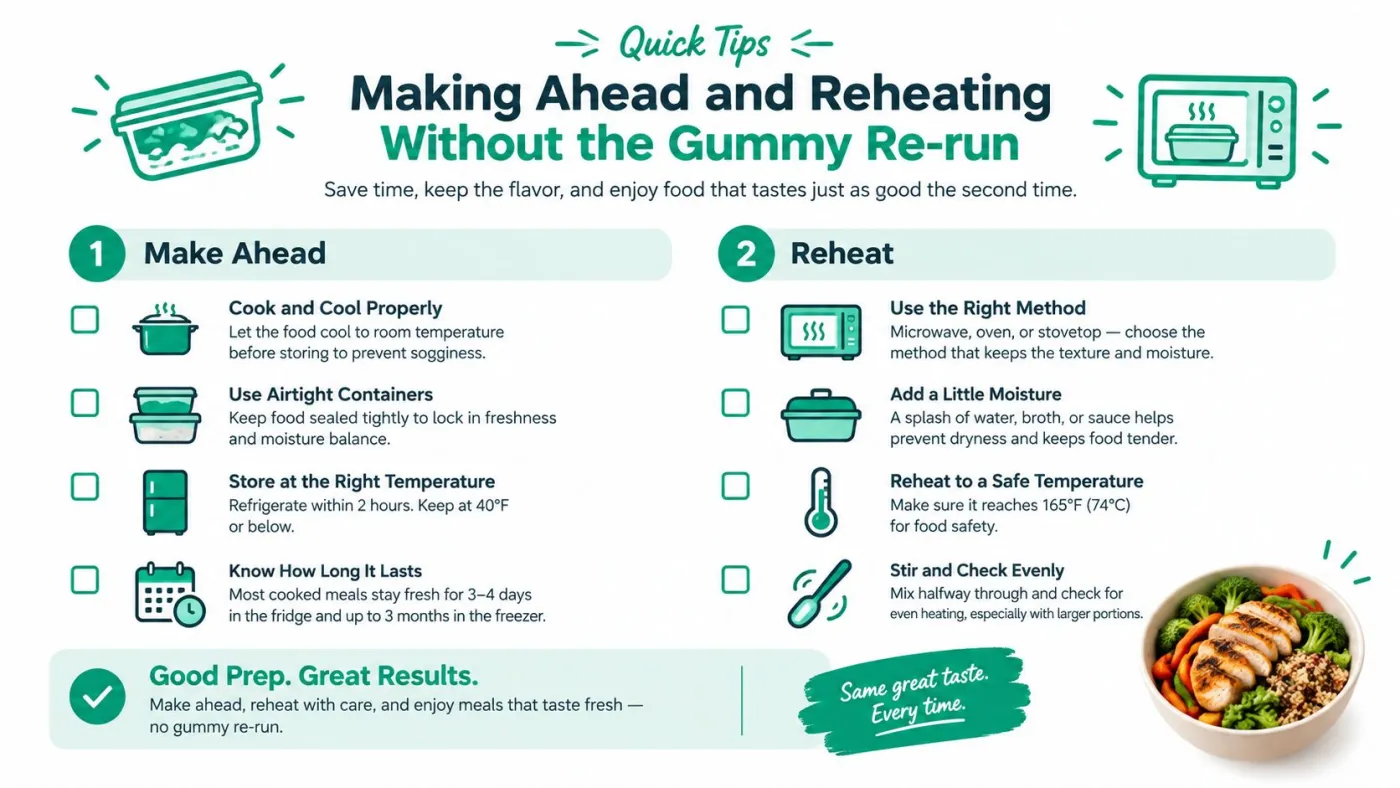
Make-ahead potatoes need two kinds of care: safe storage and gentle reheating. Refrigerate cooked mashed potatoes within two hours, store them in shallow, covered containers so they cool more quickly, and use them within three to four days when properly refrigerated (potato storage guidance). For a large family meal, divide the mash into manageable portions instead of chilling one deep container.
When you're ready to serve, warm only the portion you need. Add a small amount of warm dairy if the potatoes have stiffened, and warm gently in the TM7, stirring or mixing only as needed. Check that the reheated potatoes reach 165°F, following the reheating guidance summarized for leftovers (make-ahead and reheating guidance).
Restore moisture, not the whole recipe
Cold mashed potatoes often feel firmer because the starch continues binding liquid as the mixture chills. Don't send the leftovers back through a long blending cycle. Warm them gradually, loosen them with a little dairy, and use only minimal mixing to bring the texture together. A second spin can undo the careful restraint that kept the first batch light.
If you freeze portions, thaw them in the refrigerator and reheat gently to the same 165°F checkpoint. The final texture can vary, so use gradual warming and minimal processing rather than expecting frozen mash to return to exactly its original consistency.
Quick Wins and Common Mistakes to Avoid
Use this checklist when you're cooking, not after the potatoes have turned stubborn:
Choose with intent: Russets favor a lighter mash; waxy potatoes suit a denser style.
Test the largest piece: A fork should meet no resistance. Firm centers encourage extra processing later.
Drain and vent: Remove excess water and let steam escape briefly to avoid a thin mash.
Add fat first: Butter before thin dairy helps you build texture without flooding the potatoes.
Pulse and inspect: Stop as soon as the large lumps disappear. Don't chase a flawless purée.
Treat the final seconds as risky: Continuous blade time can push the starch toward a sticky texture.
Store promptly: Refrigerate within two hours in shallow, covered containers, then reheat gently. For more practical kitchen guidance, see my Thermomix tips and how-to articles.
I'm Prinal Glassman, an Independent Thermomix® Consultant in Las Vegas, and I'm always happy to help families across the USA get comfortable with the machine. If you'd like to see how it handles mashed potatoes in real time, join me for a Las Vegas friends night, or ask me to show you on a video call. My motto still stands: “Thermomix? It's a chef… I'm not!”
IT'S A CHEF! offers in-person friends-night demonstrations in Las Vegas, video calls anywhere in the USA, and practical support for people exploring Thermomix cooking. If you want to see the TM7 make mashed potatoes while we talk through the stopping points and texture, visit IT'S A CHEF! and arrange a demonstration.