Thermomix Recipes · October 11, 2026 · 9 min read
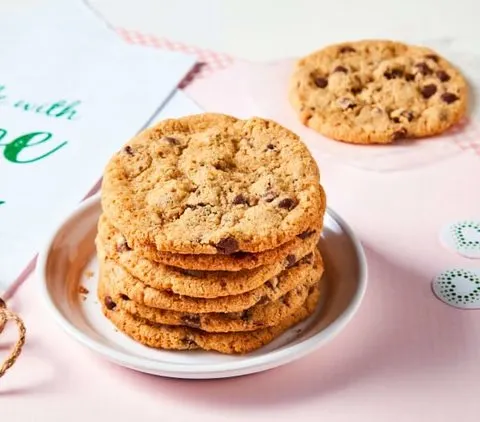
Chocolate Chip Cookie with Frosting
You know that moment when the counter is a little too full, the butter's a little too soft, and you're already wondering if this dessert is worth the cleanup? A chocolate chip cookie with frosting is exactly the kind of treat that tempts you to bail halfway through.
On this page
You know that moment when the counter is a little too full, the butter's a little too soft, and you're already wondering if this dessert is worth the cleanup? A chocolate chip cookie with frosting is exactly the kind of treat that tempts you to bail halfway through. I'm Prinal Glassman, Independent Thermomix® Consultant, and my motto holds up every time, Thermomix? It's a chef… I'm not!
The good news is that a smart machine takes the pressure off. The Thermomix TM7 gives you a controlled, repeatable way to handle the dough, the frosting, and the little texture decisions that make a cookie hold together under a sweet topping. The result is a dessert that looks bakery-fancy without turning your kitchen into a flour blizzard.
Why the Thermomix TM7 Makes Baking Effortless
A frosted cookie is where home bakers usually get ambushed. One bowl gets sticky, another gets overmixed, and suddenly the butter is warmer than you wanted and the cookies spread like they've given up. The TM7 changes that rhythm because it handles weighing, mixing, chopping, kneading, and controlled heating in one bowl, so you spend less time juggling tools and more time watching the dough come together cleanly.
Why the screen matters
The 10-inch multi-touch screen is what makes the TM7 feel calm instead of fussy. You can follow each step without bouncing between a recipe card, a scale, and a mixer. That matters for a chocolate chip cookie with frosting, because the cookie base needs to be sturdy enough for topping, and the frosting needs a smooth finish without turning into a sticky rescue mission.
If you've ever wondered whether a Thermomix is worth it, I've covered that question more fully in this guide. My short answer is simple, the machine does the heavy lifting, and you get to be the lucky person who claims the credit.
A better kitchen rhythm
The old method usually means dirty bowls, guesswork, and a lot of side-eye at the butter. The TM7 keeps the work centralized, which makes the recipe feel more repeatable from one bake to the next. That is the genuine win for a dessert like this, because consistency matters when you want the frosting to sit neatly on the cookie instead of sliding off like it has somewhere else to be.
Mixing the Perfect Cookie Dough Base
A frosted cookie needs a base that holds its shape without turning dry. Chocolate chip cookies began in the United States during the 1930s at the Toll House Inn in Whitman, Massachusetts, where Ruth Graves Wakefield made the original butter-based cookie with chopped semi-sweet chocolate, and the chocolate stayed in distinct pockets instead of melting into the dough [source]. That contrast still matters, because the cookie has to carry frosting and stay tender underneath it.
Build the dough in the TM7
Start with ingredients that are measured accurately and kept at the right temperature. Butter around 62 to 65°F creams well, because it is firm enough to trap air and soft enough to mix smoothly. In the TM7 bowl, cream the butter and sugars 30 sec / speed 4, scrape the sides if needed, and repeat briefly until the mixture looks lighter and fluffy. Add the egg and vanilla, then mix 10 sec / speed 3.
Practical rule: If the dough looks loose before the flour goes in, the finished cookie will usually spread more than you want.
Add the dry ingredients and mix 20 sec / speed 4. If you are folding in chocolate chips, use reverse / speed 2 for a short finish so they stay intact. Chill the dough before baking so the fat firms up and the cookie holds its shape better. A small test batch helps here, because the cleanest frosted cookie is the one that spreads just enough to stay tender, not so much that the edges turn brittle. I use the same process every time, and the Thermomix is the chef, not me.
Bake, then cool completely
Once the TM7 has made the dough, the oven does the baking. I am happy to hand that job off, because the machine has already done the precision work. Bake on the same tray type, use the same oven temperature each time, and let the cookies cool fully before frosting so the topping does not melt into a puddle. Find more guided bakes in the Thermomix recipes collection.
Controlling Texture and Cookie Spread
Cookie spread is mostly a butter problem, and that's not an insult to butter, it's chemistry. Butterfat coats flour and egg proteins, which reduces their ability to build structure, and more butter usually means more spread and a richer, denser cookie. If the butter is melted before mixing, the liquid fat coats flour and starch even more thoroughly, which pushes spread further and can make the finished cookie feel greasy [source].
What to watch in the bowl
For a frosted cookie, I want enough spread to create a broad decorating surface, but not so much that the edges become fragile. The sweet spot is a dough that looks cohesive, chills well, and bakes into a cookie with set edges and a center that still feels soft. That's where TM7 control helps, because you can keep the mixing time consistent instead of chasing texture by eye alone.
Here's the practical part:
Cool butter, not soft butter: Butter close to room temperature, around 65°F, creams well and keeps the dough manageable.
Chill the dough: Resting the dough helps slow spread and supports a thicker final shape.
Measure flour carefully: Too little flour gives you a flat cookie, too much gives you a dry one.
Bake consistently: Use one oven temperature and one tray style so you can compare batches.
A flatter cookie isn't automatically better. It's only useful if the edges stay strong enough to hold frosting without cracking.
Why this matters for frosting
The frosting changes the game because it adds weight and softness on top of the cookie. A base that spreads too far can leave thin edges that break under pressure, while a cookie that stays too thick can feel dry under a sweet topping. The goal is a chewy base with enough lift to support decoration and enough tenderness to eat happily in one or two bites.
Whipping Up Safe Cookie Dough Frosting
Cookie-dough-style frosting tastes fun because it echoes the flavor people already love, but raw flour changes the safety conversation. A cookie-dough frosting may contain raw flour, and one tested guidance source recommends heating flour to 160°F before using it [source]. That's the kind of detail home bakers often skip, and it's exactly the kind of detail that matters when kids, parties, or gifting are involved.
Make the frosting in a safer way
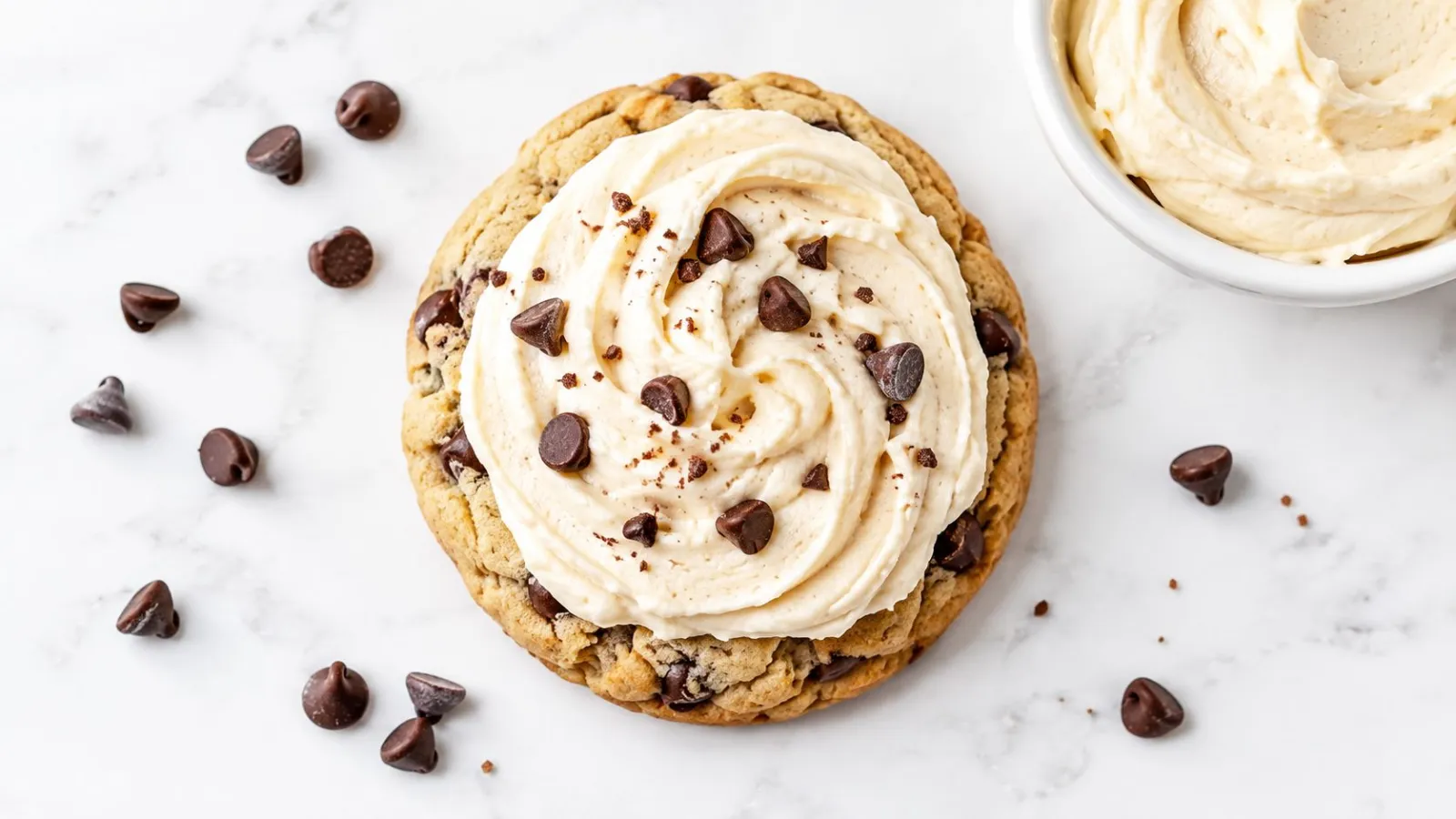
The TM7 lets you warm the flour in a controlled way before mixing the frosting base. Once the flour has cooled, cream softened butter with powdered sugar in the bowl 20 sec / speed 4, then add vanilla and a splash of milk and mix again 10 sec / speed 3 until smooth. Fold in mini chocolate chips with a brief reverse / speed 2 mix so they stay visible instead of disappearing into the frosting.
If you want a simple guide for dairy-free decorating styles later on, I'd point you toward this vegan royal icing resource for a separate topping approach. For this cookie, though, the goal is a spreadable frosting that feels rich and tastes like a treat, not a science experiment.
Keep the texture spreadable
Frosting that's too stiff drags across the cookie and tears the top. Frosting that's too loose smears at room temperature and slides toward the edges. A balanced cookie-dough frosting should hold a swirl or a small swoop, then soften just enough when served to feel creamy.
Safety rule: If you're using a frosting with flour, dairy, or cream cheese, treat storage as a food-safety issue first and a decorating issue second.
That mindset keeps the dessert enjoyable instead of anxious. It also helps you decide whether to pipe, spread, or chill before serving.
Storage Rules and Food Safety Guidelines
Most cookies are low-moisture baked goods, and Iowa State University Extension says they can usually be kept in a pantry or on the counter for three to four days in an airtight container [source]. The catch is frosting. Once dairy, eggs, custard, fresh fruit, or vegetables enter the picture, the cookie stops behaving like a simple pantry item and starts acting like a perishable dessert.
Frosted Cookie Storage Guide
Frosting Type | Room Temperature | Refrigerator | Freezer |
|---|---|---|---|
Powdered-sugar frosting | Short-term only if the room is cool and the cookie is fully low-moisture | Best if you want longer freshness | Freezes well once set |
Dairy-based frosting | Avoid long room-temp storage | Refrigerate promptly | Freezes best when tightly wrapped |
Cookie-dough-style frosting with heat-treated flour | Keep only briefly before serving | Chill if not eaten soon | Freeze after the frosting firms up |
What changes the rule
The frosting determines the storage plan more than the cookie base does. If the topping is dairy-based, the cookie belongs in the refrigerator. If the topping is a shelf-stable sugar frosting, room temperature is more forgiving, but the container still needs to stay airtight so the cookie doesn't dry out.
Simple checkpoint: If you wouldn't leave the frosting out by itself, don't leave the finished cookie out all afternoon.
Freezing is useful, but it works best when the frosting is firm first. That reduces smearing and keeps condensation from wrecking the surface texture. For batch baking, I like to freeze the cookies unfrosted when possible, then add frosting after thawing, because the finished look stays cleaner.
Serving Suggestions and Final Thoughts
A chilled frosted cookie tastes better after a short rest at room temperature, because the butter in the frosting softens and the texture becomes creamier. That's the moment when the dessert feels complete, not overly firm, not sloppy, just sweet and balanced. Pair it with cold milk, hot coffee, or serve it as the center of a dessert tray when you want something that looks a little extra without requiring a bakery trip.
Make it feel special
For gatherings, I like cookies that hold their shape on a plate and still look generous. If you've made the dough and frosting in the TM7, you've already done the hardest part, and the rest is presentation. A neat swipe of frosting, a few chocolate chips on top, and you've got a cookie that looks like you fussed more than you did.
If you're in Las Vegas and want to see the TM7 work through a dessert like this, I offer friends-night demos, video calls and personal consultation support through IT'S A CHEF!. That kind of help is useful when you want a smarter kitchen routine without guessing your way through every step.
Thermomix? It's a chef, I'm not, and that's exactly why this dessert works so well.
If you want more practical Thermomix guidance for family baking, dessert texture, and everyday meal support, visit IT'S A CHEF!. You'll find one-to-one Thermomix consulting, live demo options, and real-kitchen help that makes a recipe like this feel easy instead of intimidating.