Thermomix Recipes · November 24, 2026 · 10 min read
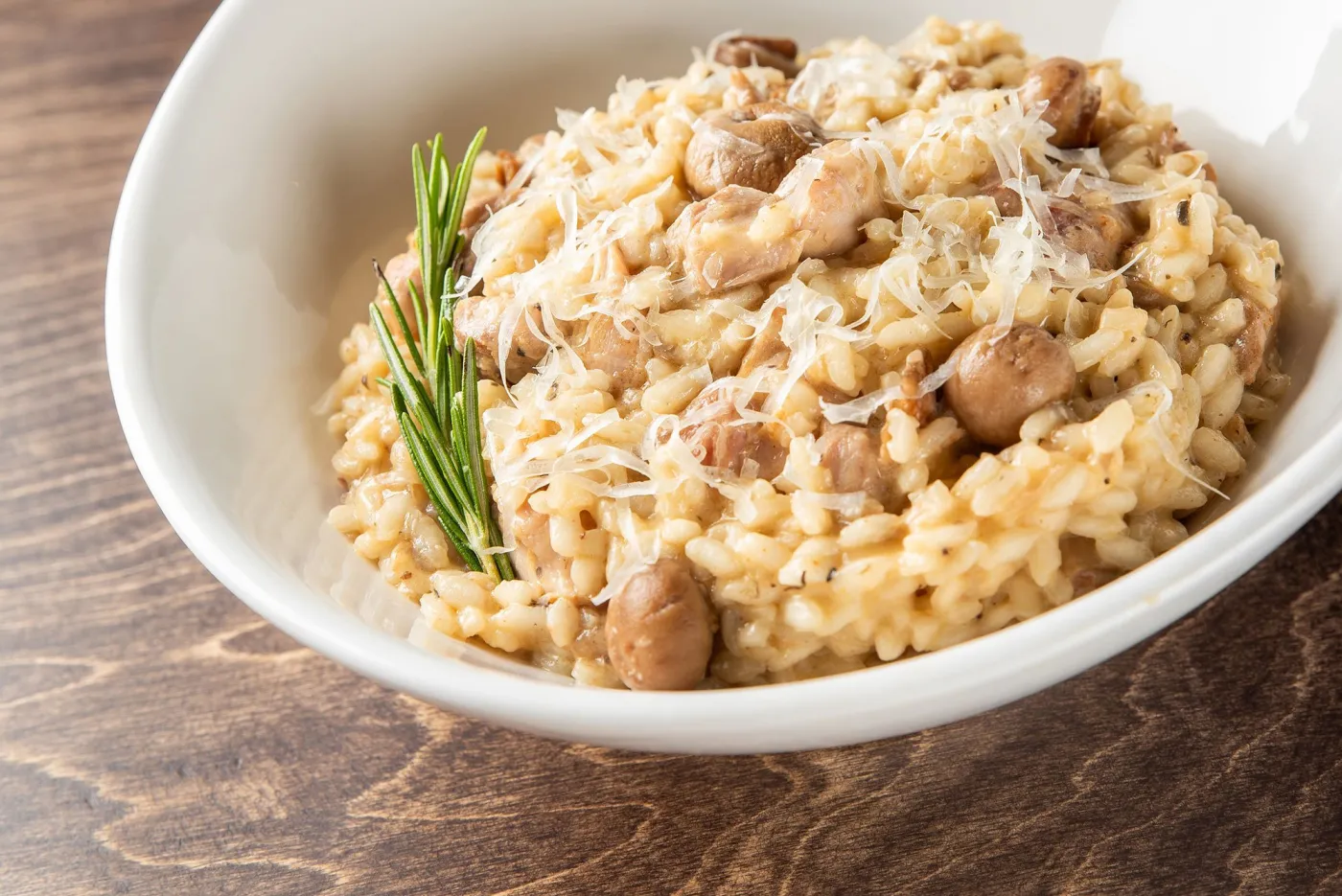
Roast Chicken Risotto: A Creamy Thermomix TM7 Recipe
There's cooked chicken in the refrigerator, dinner needs to happen, and takeout is tempting. Roast chicken risotto turns that chicken into a comforting meal when you give the rice and meat separate timing: the rice cooks in the risotto mixture, while the cooked chicken is added according to your recipe so it stays tender.
On this page
There's cooked chicken in the refrigerator, dinner needs to happen, and takeout is tempting. Roast chicken risotto turns that chicken into a comforting meal when you give the rice and meat separate timing: the rice cooks in the risotto mixture, while the cooked chicken is added according to your recipe so it stays tender.
I'm Prinal Glassman, an Independent Thermomix® Consultant. You need a reliable recipe and basic food-safety habits to make this. Keep the chicken's cooking time in check; it is already cooked and does not need a second long simmer.
Roast Chicken Risotto Ingredients and Rice Choice
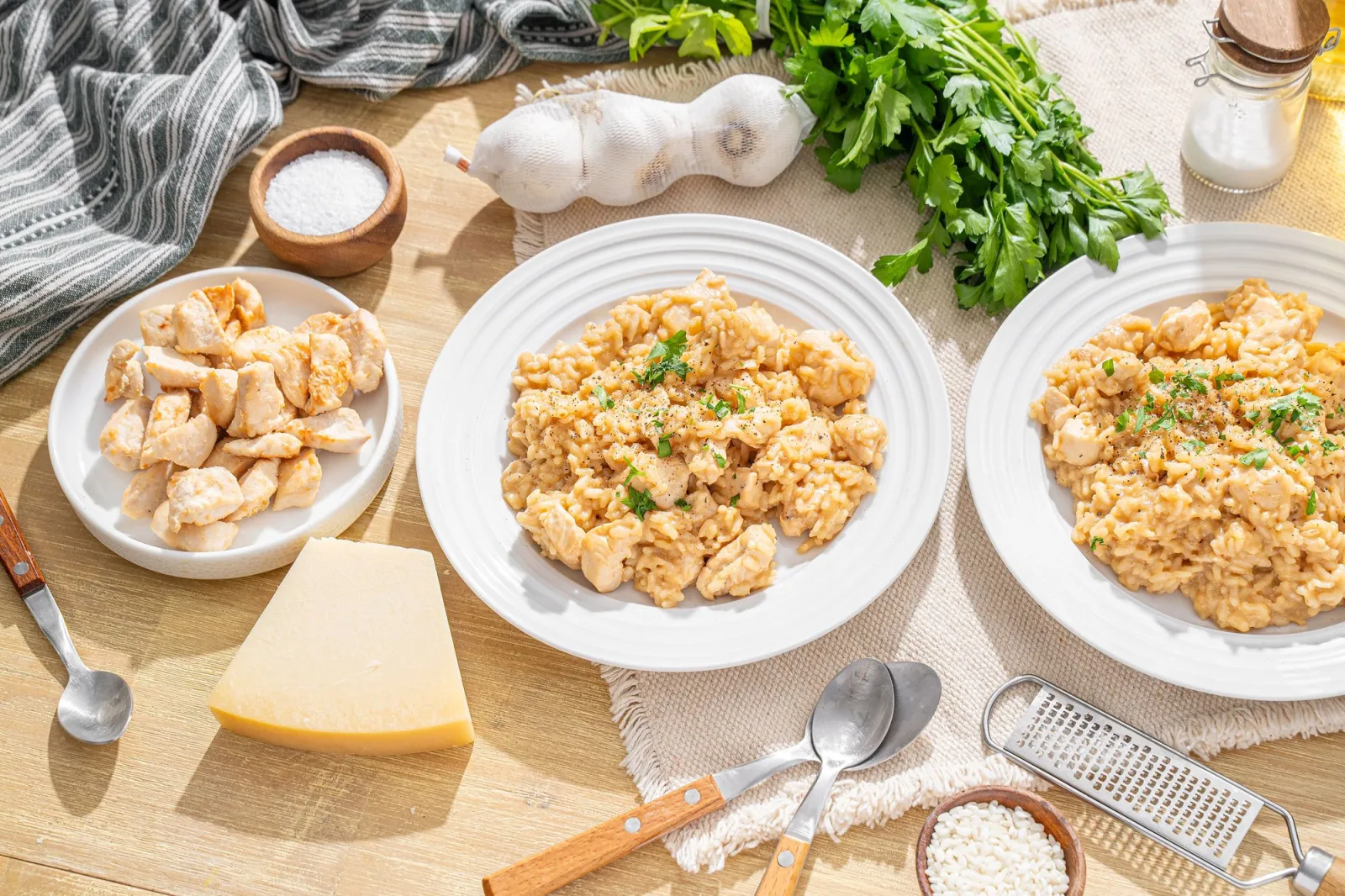
Start with chicken that's already cooked, such as refrigerated roast chicken or rotisserie meat. The Thermomix® TM7™ handles the rice mixture and finishing according to your selected Cookidoo recipe. If you can follow a step on a screen, you can make dinner.
The shopping list below is a planning framework for a family meal, not a separately tested TM7 recipe. Cookidoo's Chicken, Butternut Squash and Toasted Pine Nut Risotto provides a useful cooked-meat benchmark of 7 ounces (200 g) chicken, cut into approximately ¾-inch pieces, and serves four. Its ingredients differ from the spinach variation below, so follow your chosen recipe's complete quantities rather than combining recipes.
Roast chicken risotto ingredients for 4 to 6 servings
Ingredient | US measure (grams) | Notes |
|---|---|---|
Risotto rice | 10½ ounces (300 g) | Arborio or Carnaroli, labeled for risotto |
Hot stock | 1½ to 2½ cups (350 to 600 g) | Planning range only; use the selected recipe's exact amount |
Cooked roast chicken | 7 ounces (200 g) | Cut into approximately ¾-inch pieces |
Baby spinach | 3½ ounces (100 g) | Fresh; use only where the recipe accommodates it |
Unsalted butter | 2 tablespoons (30 g) | Follow the recipe's allocation for cooking and finishing |
Dry white wine | ⅔ cup (150 g) | Optional only if the recipe provides an omission or substitution |
Onion or shallot | 1 small, weighed after trimming | Follow the selected recipe's weight |
Parmesan | To taste | Finely grated; follow the recipe's preparation instructions |
The rice, spinach, butter, and lower liquid quantity reflect Cookidoo's TM7-compatible Chicken, Spinach and Leek Risotto. Those measurements belong to that complete recipe, not to a universal rice-to-stock ratio.
Buy Arborio or Carnaroli. Arborio is generally easier to find in US stores; Carnaroli is often favored for holding its shape while producing a creamy result, a distinction explored in AramcoWorld's account of risotto rice. Long-grain rice won't give you the same starchy sauce.
Before you press Start
Weigh first. Set out the quantities specified by the selected recipe.
Prepare the liquid. Have it at the temperature the recipe requires.
Prepare the chicken. Remove bones and skin before weighing the meat.
The TM7's 2.2-liter mixing bowl accommodates family-sized meals, and most recipes serve four to six people. That isn't permission to enlarge a recipe beyond its instructions. For another guided family dinner, try the butter chicken with rice guide.
Choosing and Prepping Your Cooked Chicken
The chicken's storage history matters more than how golden its skin looks. Rotisserie chicken, leftover roast chicken, and packaged cooked chicken can all work when they've been handled safely. This dish starts with cooked meat; it doesn't roast chicken or provide a raw-poultry cooking method.
Remove the skin, bones, cartilage, and any hard fragments before weighing. Keep the pieces reasonably even so they distribute through the rice without leaving one enormous chunk in somebody's dinner. For packaged chicken, check its storage instructions and use-by guidance as well.
Keep it chilled until needed
Return the prepared meat to the refrigerator while you organize the remaining ingredients. Don't leave it sitting beside the TM7 throughout preparation just because it's already cooked. Cooked doesn't mean immune to poor handling.
The USDA safe-temperature guidance specifies 165°F for reheated leftovers. Check a substantial chicken piece with a food thermometer; appearance and elapsed cooking time aren't dependable substitutes.
Practical rule: Adding chicken near the end protects texture, but the thermometer still decides whether it's ready.
Discard chicken with an off smell, but don't interpret a normal smell as proof that questionable leftovers are safe. If you don't know when the chicken was cooked or whether it was refrigerated promptly, choose another dinner.
Before cooking, have these ready:
Chicken: Boneless, weighed, evenly portioned, and refrigerated.
Stock: Measured and prepared as your recipe specifies.
Spinach: Washed and drained, if included.
Parmesan: Ready for the recipe's grating or finishing step.
Prefer a different destination for cooked chicken? The pozole de pollo verde guide offers another family-dinner idea. Choose one dinner, though. Your leftovers don't need a second career and a side hustle.
How to Make Roast Chicken Risotto Step by Step
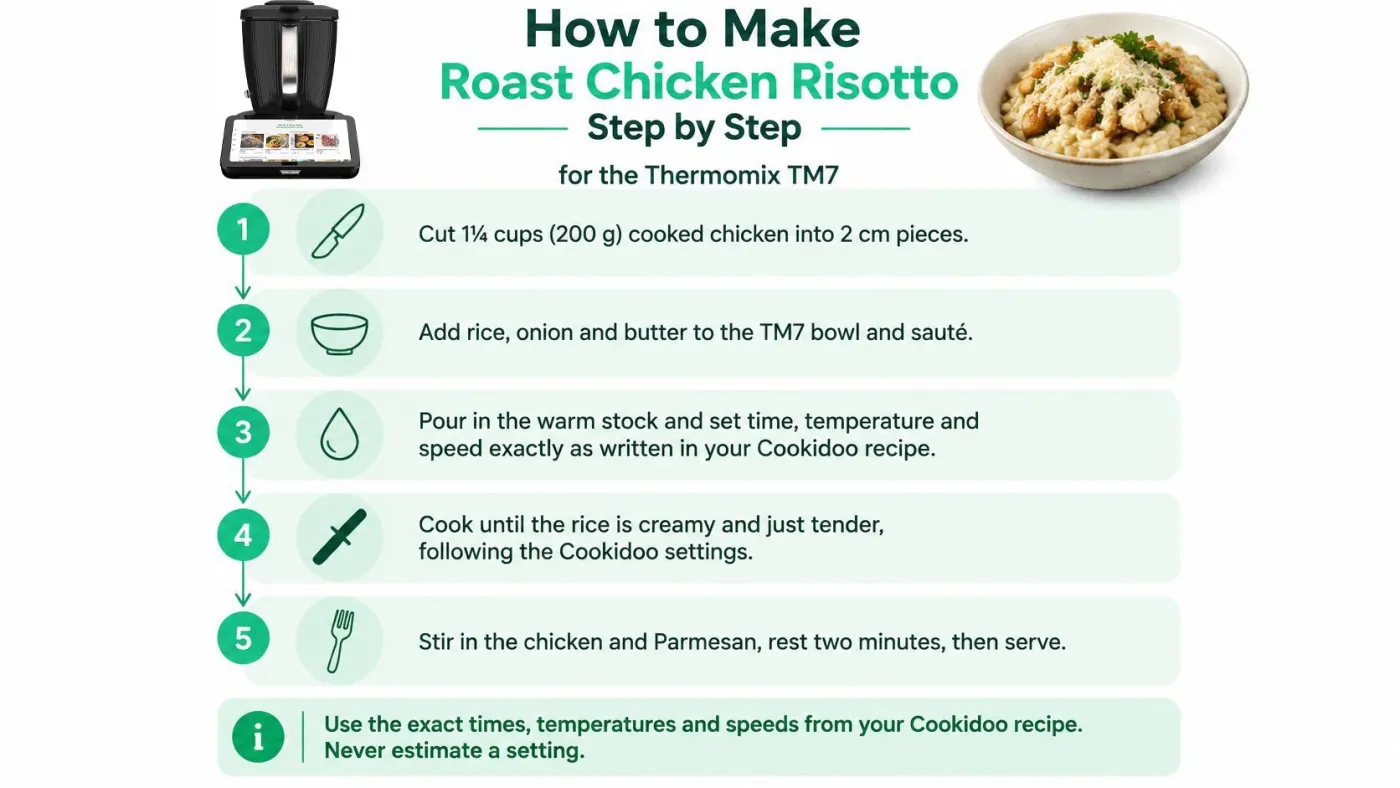
Start with cooked roast chicken already chilled and the other ingredients measured. The rice needs its full cooking time; the chicken needs only to be warmed through near the end. Keeping those jobs separate helps protect the meat without interrupting the risotto.
A spinach risotto, a squash risotto with cooked chicken, and a raw-chicken risotto use different ingredient orders and liquid amounts. Choose a TM7-compatible recipe that matches your chicken and vegetables, then use its guided settings for time, temperature, and speed. The TM7 manages the steps shown on its screen, but the recipe still determines what goes into the bowl and when.
Choose a recipe before preparing ingredients
The TM7-compatible Baby-friendly Creamy Chicken, Pea and Mushroom Risotto serves six, lists a 35-minute total time, and calls for 10½ ounces (300 g) Arborio rice with approximately 2½ cups (600 g) boiling water. It begins with raw chicken, so use a recipe designed for cooked chicken if you're working with roast leftovers. Don't transfer the raw-poultry steps to already-cooked meat.
If you want spinach instead of the listed vegetables, check the full recipe's guidance before substituting. Vegetables can change the amount of liquid and the space ingredients take up in the bowl. Have the chicken portioned and chilled, and measure the stock and other ingredients before starting.
Follow the guided sequence
Open the complete recipe and check its ingredients, serving size, and instructions. Set out what it calls for before beginning.
Keep the cooked chicken refrigerated while you prepare the aromatics and rice. Add it only at the recipe's cooked-meat stage, not alongside raw chicken at the start.
Soften the aromatics in fat as prompted. They should be softened before the rice goes in, not left raw for the liquid-cooking stage.
Add the rice when directed. The grains may still look firm and separate at this point; that is normal. Use the recipe's mixing settings rather than adding extra agitation to chase creaminess early.
Add wine if the recipe includes it, then add stock in the order and amount specified. Wine contributes liquid as well as flavor, so use the recipe's substitution guidance if you need to leave it out. Don't change a guided liquid sequence to imitate a different risotto method.
Add vegetables at their assigned stage. Keep the selected recipe's ingredient combination in mind, since spinach, squash, mushrooms, and peas don't necessarily cook or release liquid in the same way.
Add the cooked chicken near the end, at the point specified for cooked meat. The rice should be close to tender; the chicken should warm through without spending the entire cooking cycle in the bowl.
Finish with the recipe's final ingredients and any stated resting time. The risotto should look loose and gently flowing, with tender rice that still holds its shape. A stiff mound is a texture problem, not something a garnish can disguise.
This visual shows the order of work. Use the selected recipe for the TM7's exact controls.
Keeping the Chicken Tender and Fixing Common Problems
Already-cooked chicken needs reheating, not another full cooking cycle. Extended cooking can leave it stringy while the rice is still becoming tender. The practical lesson from Donna Dundas's leftover roast chicken risotto is to treat cooked meat as a late addition rather than the starting ingredient.
That principle transfers to TM7 cooking, but the operating method must still come from the selected guided recipe. Don't increase speed, extend cooking repeatedly, or add liquid without first considering what's wrong.
Diagnose before changing anything
Stiff isn't the same as undercooked. Rice can be tender but too dry because it has absorbed the available liquid. Conversely, a loose mixture can still contain grains with chalky centers.
Taste a little rice carefully and look at the consistency before making adjustments. Then use the smallest appropriate correction, following recipe-specific guidance wherever extra cooking is needed.
Risotto symptoms, causes and fixes
Symptom | Likely cause | Fix |
|---|---|---|
Gluey, sticky rice | Excessive agitation or overcooking | Avoid extra mixing; don't increase the guided speed |
Stiff, mounded rice | Too little available liquid or too much standing time | Loosen gradually with hot stock, following recipe guidance |
Dry, stringy chicken | Cooked chicken spent too long heating | Use a cooked-meat recipe and its late-addition stage next time |
Hard, chalky rice centers | Insufficient cooking or available liquid | Check the recipe's quantities and follow its corrective cooking guidance |
Bland flavor | Underseasoned stock or an incomplete finish | Taste, then adjust with Parmesan, pepper, or the recipe's finishing butter |
Butter and Parmesan help the finish, but neither can reverse overcooked rice. Adding more cheese to a gluey mixture may produce a more expensive gluey mixture. Delicious ingredients still have limits.
Cook each ingredient for the cooking time it still needs, not for the time the slowest ingredient needs.
Balance seasoning at the finish
Use unsalted stock when your cooked chicken and cheese are already salty. Taste before adding salt, especially with seasoned rotisserie meat. You can add seasoning more easily than you can remove it.
For texture adjustments, add liquid conservatively rather than flooding the bowl. Don't keep extending the cooking just to force every bit of stock to disappear; you want a sauce around the grains, not dry rice.
Serve promptly once the recipe is complete. Risotto continues to thicken while it stands, so get the family ready before dinner reaches its best consistency. This is one meal where calling everyone after plating isn't doing you any favors.
Storing and Reheating Leftovers Safely
You've got cooked chicken ready to use, but once it's mixed with rice, the finished risotto needs to follow the shorter storage window. Cooked chicken is generally refrigerated for three to four days; RTÉ Brainstorm's food-safety overview recommends eating refrigerated rice dishes within 24 hours because Bacillus cereus spores can survive cooking. Store the combined dish according to the rice guidance.
Good texture depends on how you reheat the risotto, while safe storage depends on how it was cooled and kept. Stock can loosen the rice, but it cannot correct unsafe handling.
Portion, chill, and reheat deliberately
Cool quickly. Divide the risotto into shallow containers so it doesn't sit as one large, slowly cooling mass.
Refrigerate promptly, within the safe cooling window. Don't leave the dish out while the rest of the evening unfolds.
Take only the portion you'll eat. Keep the rest refrigerated rather than reheating the whole batch.
Reheat thoroughly, following a suitable official TM7 reheating recipe or instruction. Add a little hot stock if directed, and check that the food reaches a safe leftover temperature throughout.
Don't repeatedly reheat the same portion. If you're unsure how leftovers were stored, discard them. Smell and appearance can't reliably reveal harmful contamination.
The chicken and rice have different storage guidance, so use the shorter refrigerated window for the finished risotto rather than the window for plain cooked chicken.
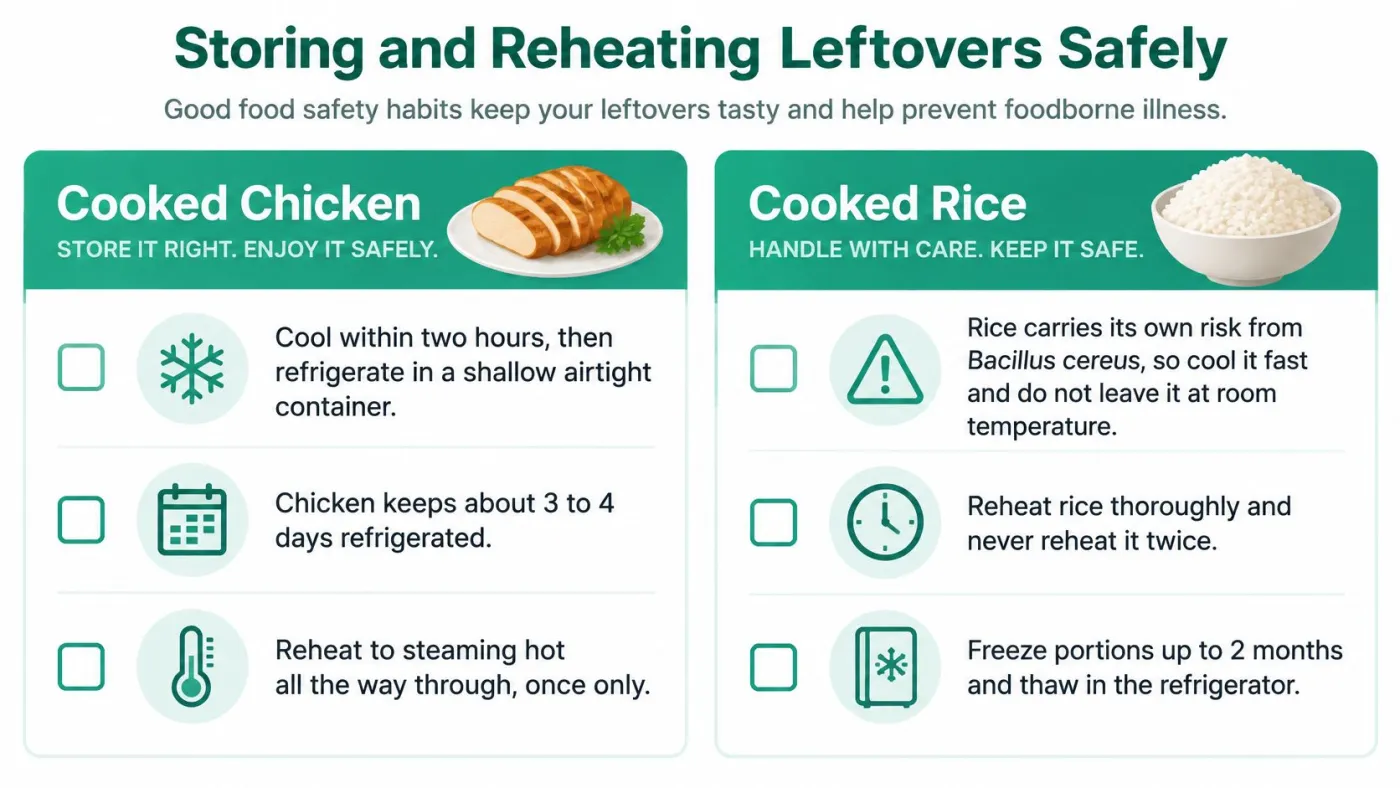
Leftover-friendly doesn't mean unlimited meal prep. Make an amount you can serve and handle safely.
The mixing bowl is shared between recipes, so clean it thoroughly when cooking for allergies. Also check the stock, chicken seasonings, and finishing ingredients for allergens already in the food.
Make Your First Batch This Week
Start with the cooked chicken you already have, and let the rice set the pace. Keep the recipe at its stated size so you can judge the texture without turning your first attempt into a capacity test. The finished rice should be creamy and tender, with the grains still distinct; if it tightens as it rests, loosen it with a little hot stock.
Give yourself a straightforward dinner plan
Check the chicken. Have it cooked, safely stored, and ready to add at the point the recipe directs. A recipe designed for raw poultry may give the chicken too much cooking time.
Shop with purpose. Use the ingredient framework, then buy the quantities required by your chosen recipe.
Plan the finish. Keep a thermometer ready, and decide how you'll handle leftovers before dinner begins.
For everyday family-cooking ideas, browse the Thermomix healthy recipes guide. Dinner doesn't need a nutritional halo. It needs to taste good and fit your household.
IT'S A CHEF! offers demonstrations that you can arrange through its website. Each Thermomix purchased through IT'S A CHEF! also comes with a free Welcome Service: a consultant sets it up, walks you through its features, and cooks the first meal with you. Visit IT'S A CHEF! to arrange a demonstration or ask about getting started. Then cook your risotto this week.